
On ‘naïve optimism v pragmatic cynicism’, life-changing advice and a strange Korea move
In our regular video series, we interview the wealth sector’s key decision-makers to discover how they think about life, both within the world of investment and beyond it; what brought them into the business and what keeps them here; and what makes them and their companies tick
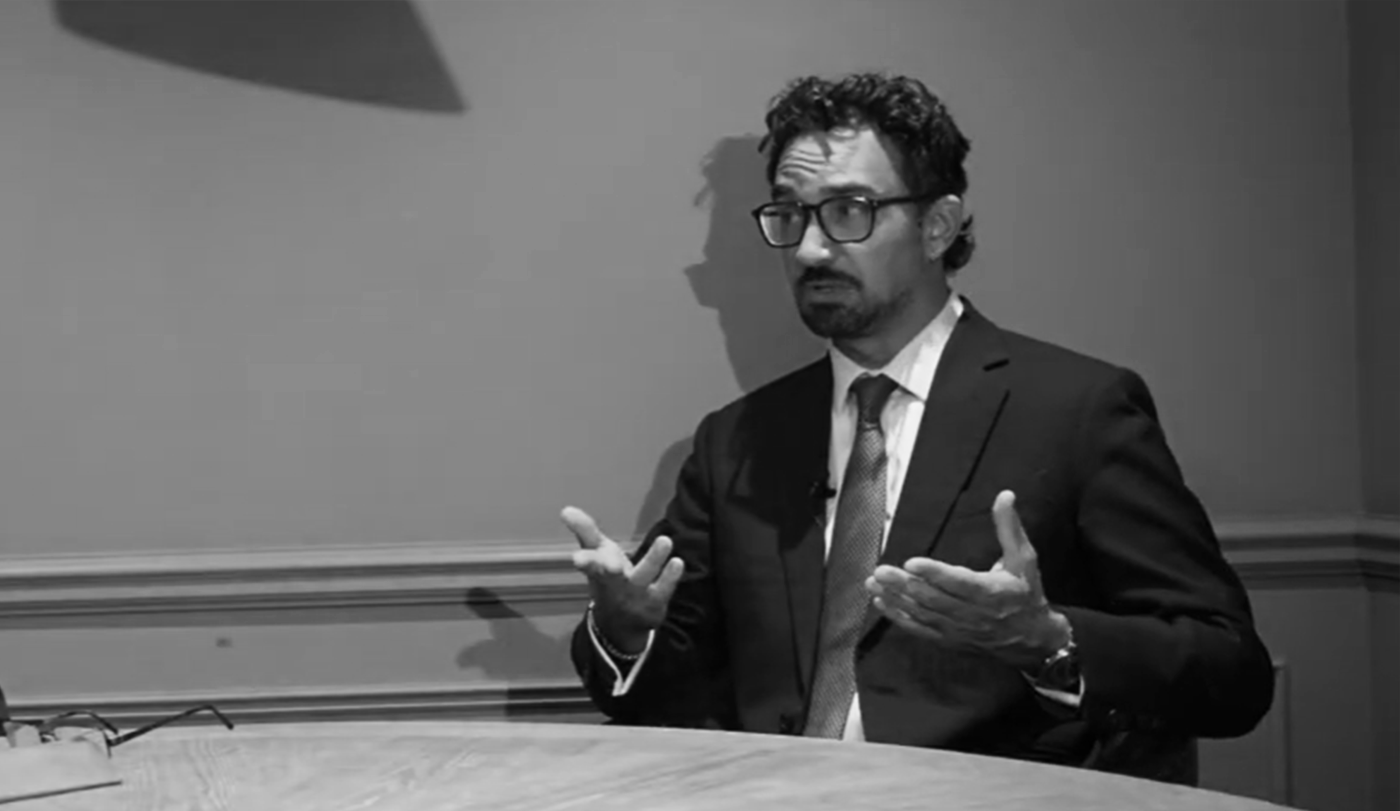
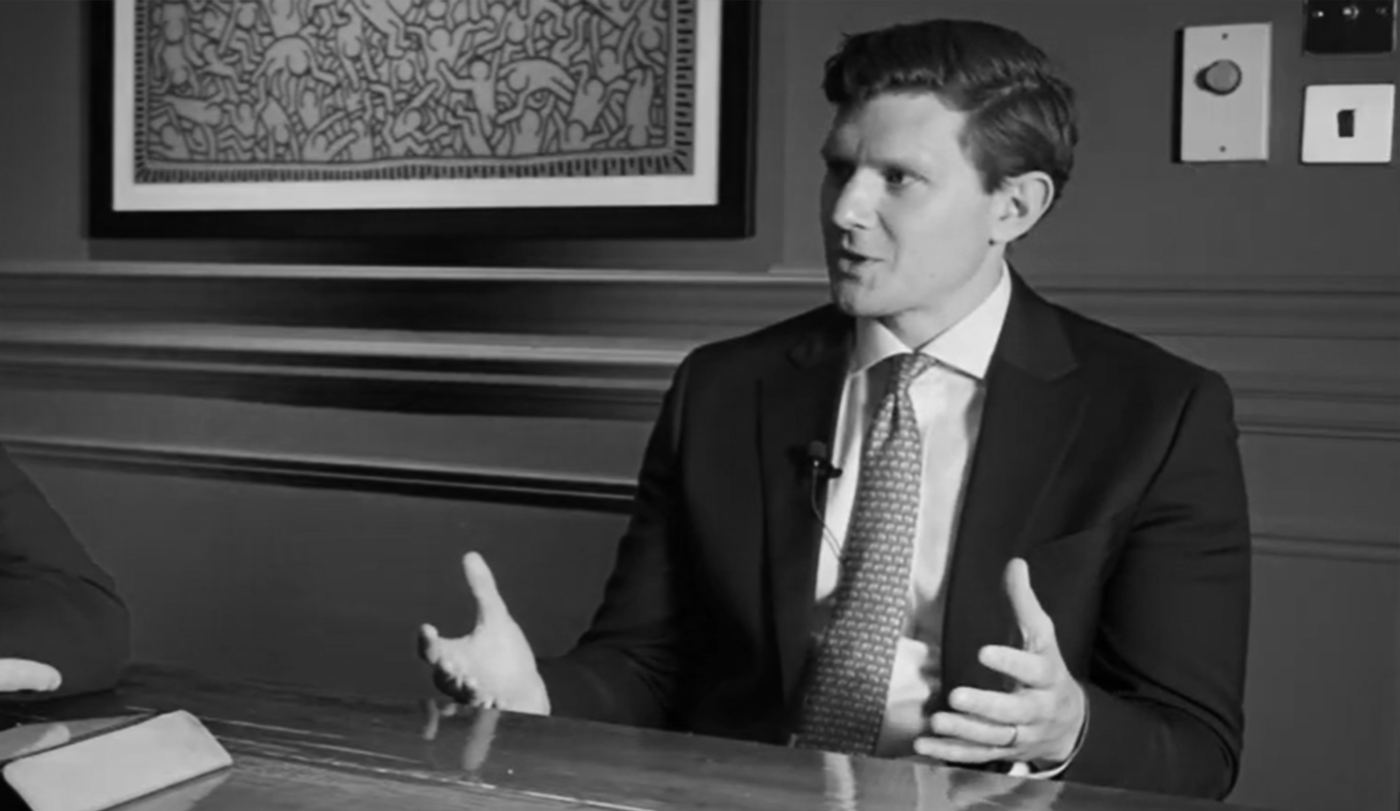
“Only time is going to tell but you find me in the optimistic camp,” says 8AM Global CIO Tom McGrath. At this point, he is speaking in the context of whether the huge sums of AI-related capital expenditure will eventually be justified but the sentiment recurs throughout the conversation.
“Over my career, one of the lessons I have learnt is it is better to be optimistic than to sound smart and pessimistic and run with the intellectual argument or the doomsayers,” he tells Wealthwise editorial director Julian Marr in the latest Choice Words video above.
“I have always felt that, when I have been optimistic, it almost sounds naïve – and yet, if you look over time where the stockmarkets have got to. I mean, I began my investment career in 1988 – 1988! – when the S&P500 was sub-300 and here we are now, flirting with 8,000. If you had been cynical throughout that journey, you would not have got far.”
As much as I might love the manager and approve of their strategy, if something is not doing well, we cut our losses.”
That is not to say the McGrath optimism is boundless. “At 8AM, we are very much a quant house – so we think the numbers do the talking,” he says. “Once upon a time, a lot of my fund selection work was interviewing managers, hearing an incredibly compelling story, going away excited and investing – and then I would be a little disappointed with myself and the manager if the fund slipped down the ranking tables.
“After about six months, I would make another appointment to see the manager – and I would get the absolute, you know, What has just happened is a buying opportunity! And you could often end up, 18 months or two years later, wondering why you still held the fund.
“So we have a very strong sell discipline and it is pretty much when the fund starts trending down our league tables. As much as I might love the manager and approve of their strategy, if something is not doing well, we cut our losses and move out and find something that is on-the-up in the tables.”
Run your winners
The flipside to cutting your losses dovetails neatly with what McGrath describes as “seriously the best lesson” he learned over his career. “Run your winners,” he counsels. “There is a temptation to believe in mean reversion in our industry and, if you are holding a company or a fund that you love and it falls 30%, you are much more likely to want to buy that than when you see the assets in your fund doing well.
“Take a company like CrowdStrike, which I bought a long time ago. You know, it goes up 100% and you think, Well, it cannot go up anymore so I am going to top-slice here – and the thing keeps running. So selling too early has been a common problem of mine and I am thankful for co-managers and people who help me in terms of saying, Don’t sell it just because it has gone up – run the winners.”
As the whole ‘AI advice’ thing becomes commoditised, people may not really know who or what to trust and they will need a human they trust to work with it.”
The conversation ends on two characteristically upbeat notes. One highlights a “life-changing” chapter on delayed gratification in M Scott Peck’s The Road Less Travelled – “Get the toughest jobs facing you out of the way first and the rest of your day will be much more enjoyable,” as McGrath sum it up – while the other relates to the future of the wealth management sector.
Here McGrath says: “The biggest threat for our clients, for financial advisers, is clearly AI and robo-advice – the new generation actually not wanting to talk to a person and just going online and, you know, some agentic AI recommending a portfolio of ETFs, which cuts out the whole wealth management thing. I think that would be the nuclear prognosis – and very scary indeed.
“Yet there has always been that worry of technology replacing humans – and, time and again, humans have found a way to work with technology. Actually, I think AI will lead to better outcomes – and in a strange way. As the whole ‘AI advice’ thing becomes commoditised, people may not really know who or what to trust and they will need a human they trust to work with it. So we will be challenged but those who embrace AI – to use it to do a lot of the mundane tasks – will find a lot more of their time is there to spend with clients and build trust.”
A full transcript of this episode can be found after this box while you can view the whole video by clicking on the picture above. To jump to a specific question, just click on the relevant timecode:
00.00: What excites you about the current investment outlook? What worries you?
02.25: What do you most look for in an individual investment? What constitute ‘red flags’?
04.30: To what degree should professional investors be thinking beyond so-called ‘traditional’ investments? Towards what?
06.13: What drives your approach to client communications? Should professional investors aim to attract the ‘right’ type of client?
07.24: What was your path into investment – and, if you hadn’t taken it, what do you think you would be doing now?
08.54: What is the biggest investment mistake you are prepared to admit to – and what did you learn from it?
11.15: Outside of work, what is the strangest thing you have ever seen or done?
12.55: What advice would you have given your younger self on your first day in this business?
14.05: How do you see the best and worst-case scenarios for the future of wealth in the UK?
15.40: Two Choice Words recommendations, please – one a book; one a free choice?
Transcript of Choice Words Episode 46:
Tom McGrath, with Julian Marr
JM: Well, hello and welcome to another in our series of ‘Choice Words’ videos, where we get to meet the great and the good of UK fund selection and UK fund research and find out what makes them tick. I am Julian Marr, editorial director of Wealthwise Media, and today I am delighted to be talking to Tom McGrath, who is CIO at 8AM Global. Hello, Tom. Great to see you.
TM: Afternoon, Julian. ‘Great and good’ – I like that introduction! That is very kind. ‘Old’, maybe?
JM: Let’s settle on ‘experienced’! And let’s use that experience – he segues effortlessly – looking at the current investment environment, what most excites you about it? And what gives you most pause for thought?
TM: Blimey! Right – it is an interesting moment to be asked that question as we saw tech stocks hit very hard last night (Editor’s note: This video was recorded on 15 October 2026) due to more concerns over whether AI is a bubble. So I guess the main topic of conversation and the thing that keeps me up at night is, Is all the money being piled into AI going to be justified?
Only time is going to tell here but you find me in the optimistic camp, actually. In fact, over my career, one of the lessons I have learnt is it is better to be optimistic than to sound smart and pessimistic and run with the intellectual argument or the doomsayers. It is almost always easier to point out what could go wrong.
And I have always felt that, when I have been optimistic, it almost sounds like naive optimism. And yet, if you look over time where the stockmarkets have got to … I mean, I began my investment career in 1988, Julian – 1988! – when the S&P500 was sub-300 and here we are now, flirting with 8,000. So I think if you had been cynical throughout that journey, you would not have got far.
JM: Oh, that is a very upbeat start. So was there an ‘excited’ bit? I suppose being excited is the optimistic element to looking ahead. OK, I will go with that and we also have life lessons thrown in already. Very reflective – excellent!
Let numbers do the talking
JM: Well, let’s drill in from that and ask about what you most look for in an individual investment – both on the positive side and what would you consider to be a red flag?
TM: Do you mean in terms of fund selection?
JM: Either funds or assets. Funds are usually what we are playing with here but I am not that prescriptive.
TM: With funds, at 8AM, we are very much a quant house – so we think the numbers do the talking. That is our experience. Once upon a time, a lot of my fund selection work was interviewing fund managers, hearing an incredibly compelling story, going away excited about the manager and investing with them – you know, they had a great track record – and then I would watch and be a little disappointed with myself and the manager if the fund slipped down the ranking tables.
So I would call them up after about six months and make another appointment to see the fund manager – and I would get the absolute, you know, This is why you want to be doubling up and buying here … what has just happened is a buying opportunity! So I would hold onto the fund – and a year later you could find yourself still holding that fund, with it sat in the fourth quartile, and going, Why am I holding this?
And even then, you could call up and you would still get the same compelling narrative as to why you should hold it – and you could often end up holding a fund 18 months or two years later, wondering why you still held it. So we have a very strong sell discipline and it is pretty much when the fund starts trending down our league tables. As much as I might love the manager and approve of their strategy, if something is not doing well, we cut our losses and move out and find something that is on-the-up in the tables.
JM: Very interesting – and you neatly combined the ups and the downs and the red flags there. Good answer.
Liquidity key
JM: To what degree should investors and, by extension, their advisers be thinking beyond more traditional equities, cash and bonds and towards however you want to define ‘alternative investments’? Is that something you are moving towards?
TM: We have always held an exposure at 8AM to alternatives – and in companies prior to that …
JM: Well, I was going to say, in a previous life, you …
TM: Yes – I was part of the original team at Miton Investments, where we had a great deal of success holding alternative investments, which held up very well in, if … well, you can remember the bear market of 2001 and 2002! But also, in the financial crisis, a lot of the alternative assets held up really well.
And, when you are building a portfolio – I mean, the traditional balanced fund is 60% equities and 40% bonds but, by adding a bit in alternatives with different correlation, you can actually enhance returns and reduce the risk of the overall portfolio. So I think absolute return funds … liquid absolute return funds – because, again, you do not want to find yourself buying something like a life settlements fund that you cannot get out of. So I think the development in, essentially, a lot of the hedge fund strategies moving into regulated, daily-dealing, liquid Ucits vehicles is great news for us as portfolio managers.
Incremental short-term outperformance
JM: Good answer. Possibly not totally unconnected, what drives your approach to client communication at 8AM? And, as an additional question, do you think there is such a thing as the ‘right’ type of client – someone who is going to stick with you for the whole investment journey so they benefit fully from the 8AM wisdom?
TM: Absolutely. I think you have to be very clear about your process – how you manage money. Get the client effectively buying into that process and understanding that, particularly us, we are unlikely to shoot the lights out in strong markets. We try and drive our outperformance through incremental short-term outperformance building into long-term, significant outperformance.
So it is just making sure the client understands what they are getting with us. Of course, our clients are actually financial advisers – so it is making sure our communication is clear with them, so they can distil it out to their private clients. But regular flow of information is important, isn’t it? So everyone understands what you are doing.
Single path
JM: Too right. More personal question now – if you can remember back to 1988, what was your path into investment and, in an alternative universe, what do you think you would be doing if you had not taken it?
TM: If I had not taken this path … do you know what? I have absolutely no idea what I would be doing.
JM: OK – in that case, maybe you were meant for this. So how did you get into investment?
TM: How I got into investment was, actually, my dad was massively into picking stocks. So this is the early 1980s and I remember him talking about MFI and FKI and all these strange stocks. And it coincided with home computers – the very first one, the Sinclair ZX80, came out in the early 1980s. My dad could not use it but I could – and so I remember building these old-fashioned charts for him of his share prices.
And he gave me small amounts of stocks in return for doing this work for him – so I was almost hooked by my father into looking at stockmarkets. And, of course, that was the 1980s when everything went up and FKI and MFI apparently paid for my education! So I cannot imagine doing anything else. I loved it from the very start.
Winners and losers
JM: A charming story – so I do not want to get into any negatives. Though investment mistakes do not have to be negative, of course, as you can learn from them. So what is the biggest investment mistake you are prepared to admit to – and what did you learn from it?
TM: Selling Apple and Amazon way too early and missing, you know, noughts and noughts of return!
JM: But that is an interesting one because was it the firm’s process – wherever you were at that moment – that made you sell because it was considered good practice and you had made so much money, theoretically? Or did you go way too early?
TM: Way too early – and, to be honest, this does dovetail into seriously the best lesson I have learned: you run your winners and you cut your losers. There is a temptation to believe in mean reversion in our industry and, if you are holding a company or a fund that you love and it falls 30%, you are much more likely to want to buy that than when you see the profits in your fund doing well.
Take a company like CrowdStrike, which I bought a long time ago. You know, it goes up 100% and you think, Well, it cannot go up anymore so I am going to top-slice here – and the thing keeps running. So selling too early has been a common problem of mine and I am thankful for co-managers and people who help me in terms of saying, Don’t sell it just because it has gone up – run the winners.
JM: That is interesting because, personally, I am much more inclined to the value side of things – and indeed mean reversion. I even write a column called ‘Mean Reversion Machine’ these days. But what you said reminds me of when I was working on a podcast and there was a value manager and a growth manager – I won’t say who.
And the value manager was talking about margin of safety and the growth manager said, That is your problem – you always say, What if it goes wrong? And he went on, As growth investors, what we say to that is, OK – but what if it goes right? And these guys did hold onto stocks that are now ‘Mag Seven’.
TM: Absolutely – and that gets back to my original point about optimism – in investment, naive optimism seems to be better than pragmatic cynicism.

Korea move
JM: It is a very warm-hearted video we have going on today! Where next? I really should know … oh yes, everyone’s favourite ‘Choice Words’ question: outside of work, what is the strangest thing you have ever seen or done?
TM: This is outside of work but there was work involved. I went with a group of financial advisers on a trip to North Korea – to Pyongyang– about 15 years ago. We were looking at the opportunity of talking about a new fund and, actually, gaining the attention of financial advisers is not always that easy – you almost have to push the boat out.
Once upon a time, when the expense accounts allowed, it was, you know, jet them off to Monaco or fly them to Cape Town! But, on a slightly lower budget, we took a group of potential investors to North Korea for a week’s guided tour. And they took our phones off us, they took our cameras off us and there was no access to Wi-Fi or anything.
In fact, we were under guard all the time there and were only taken where the state wanted us to go and see – but, in terms of an extraordinary experience, it was like going into a different world or going back 30 years. If you are stood in the centre of an Asian city and you don’t see any cars, it is most mysterious. So that will live with me forever.
JM: I like that. We have had a lot of good answers to that question but that was definitely near the top. Gosh, we are zooming through here.
Ego tip
JM: Three more questions – and a short one next. What advice would you have given yourself on your first day in the job?
TM: What advice? I think, when I first started in the industry, I took myself a bit too seriously. I mean, it is winding things back to this late-1980s, early-1990s – there was a sort of ‘Wall Street’ culture, having watched the movie. It was all about image and wearing the braces and, you know, taking myself seriously.
And I think, if I had actually been a bit less ego-focused and, rather than spouting all my ‘wisdom’ to people, listened to those experienced investors around me … so I think getting my ego and myself out of the way would have probably done me a lot more favours.
Question of trust
JM: Great answer. One-more industry-oriented question before we close – how do you see the best and worst-case scenarios for the future of wealth in the UK?
TM: In terms of the whole industry? I mean, the biggest threat for our clients – for financial advisers – is clearly the threat of AI and robo-advice coming in. And the new generation actually not wanting to talk to a person and just going online and, you know, some agentic AI recommending a portfolio of ETFs, which cuts out the whole wealth management thing. I think that would be the nuclear prognosis – and very scary indeed.
I think, however, there has always been that threat and worry of technology replacing humans yet, time and again, humans have found a way to work with technology – and, actually, I think it will lead to better outcomes. And in a strange way, as the whole ‘AI advice’ thing becomes commoditised, you may not really know who or what to trust in that commoditised way and you need a human you trust to work with it. So we will be challenged but I think those who embrace AI – to use it to do a lot of the mundane tasks – will actually find a lot more of their time is there to spend with clients and build trust.
Roads less travelled
JM: Well, I will certainly go with that level of optimism – or just being hopeful. Last question, then. We call this series ‘Choice Words’ because of what you do for a living but I am now looking for two personal choices. We ask for a book, which can be investment-related – does not have to be – and the other one is literally a free hit. It can be anything tangible, anything cultural or any sort of advice – but the book first.
TM: My favourite book is Shantaram by Gregory David Roberts. I don’t know if you have read it – it is a long fiction book.
JM: Cherry has – and I saw there was a television series recently as well. But I know what you are talking about.
TM: I think the series is terrible and does not do the book justice. Anyway, this was back in the day when I mainly read books – I am mainly an audiobook person these days – but it was just the escape into a fantasy world of an anarchic lifestyle of a guy fighting terrorists, living in Japan and different cultures. It was pure escapism and it is a thick book – so it is a good holiday read. I loved it. I loved that book.
JM: Excellent. And the free hit?
TM: The free hit is something that changed my working life. It was the book The Road Less Travelled, M Scott Peck’s sort of philosophical discussion on things you could learn that could improve your life – and this honestly changed my life. It was the chapter on delayed gratification and it was basically the notion that, if you hit the toughest things first and get through those, then actually the rest of your life or your day would be easier.
I remember, as a kid, when I came back from school, I didn’t do my homework. My sister went and did her homework – I just went straight out and played. But there was always the nagging worry I had the homework to do – nagging worry, nagging worry, nagging worry – and maybe I did the homework, maybe I didn’t, and it didn’t help me.
And what I learned was – all the tough things I had to do on my desk that I left to the end of the day or put in the drawer to do the following day, actually, if I hit them first thing in the morning and got those out of the way, then the rest of the day was enjoyable. And I am stuck with that discipline – you know, it just works for me so much better. So delayed gratification – The Road Less Travelled.
JM: Excellent. There is so much good advice in this session! I never really thought this was supposed to be more than an entertaining video – but now we are turning into a lifestyle programme.
TM: We are. Let’s do this, Julian!
JM: Yes – we will have a whole new podcast coming out now! Still, for the time being – before I go off and sketch that out – it has been a great conversation, Tom. Thank you.
TM: A real pleasure. Nice to chat to you – and cricket again one day! Are you still playing?
JM: No!. Let’s shut the camera down and then go back to our playing days – the Hackattack v Miton cricket matches! Great days – or at least moments of greatness. Great catches behind the wicket by you – in fact, we both had good moments.
TM: We did.
JM: Anyhow, thank you, Tom.
TM: A real pleasure.
JM: And thank you very much for watching. Do look out for further ‘Choice Words’ videos as they are published.