
On competition for capital, a margin of safety and ‘morphing’ liquidity
In our regular video series, we interview the wealth sector’s key decision-makers to discover how they think about life, both within the world of investment and beyond it; what brought them into the business and what keeps them here; and what makes them and their companies tick
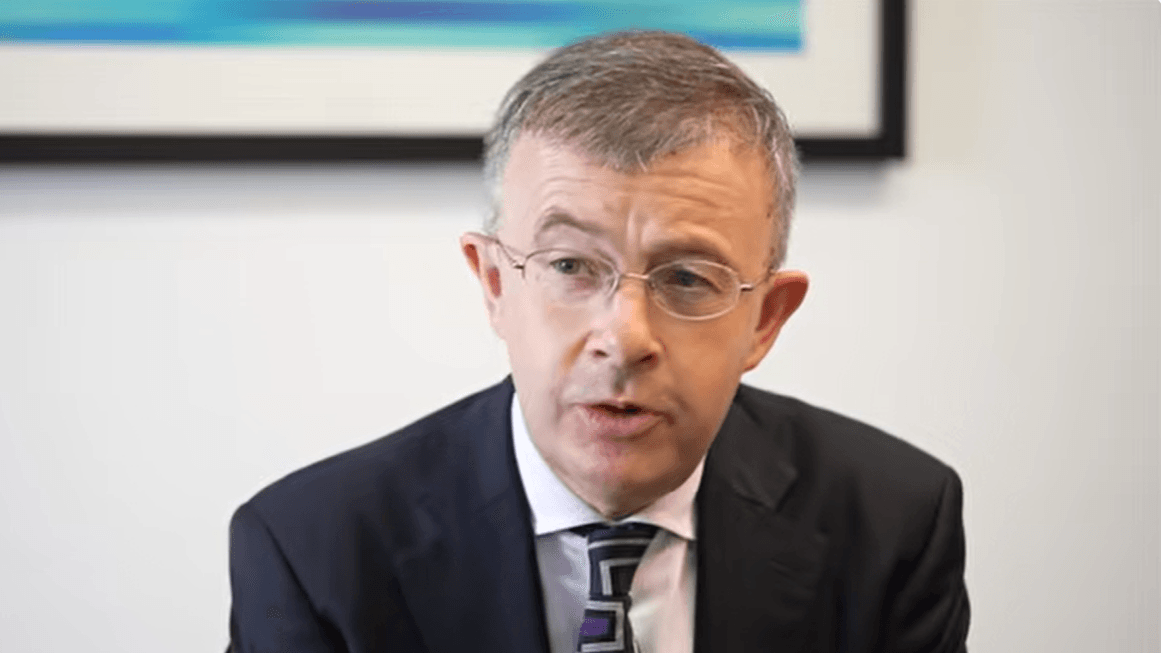
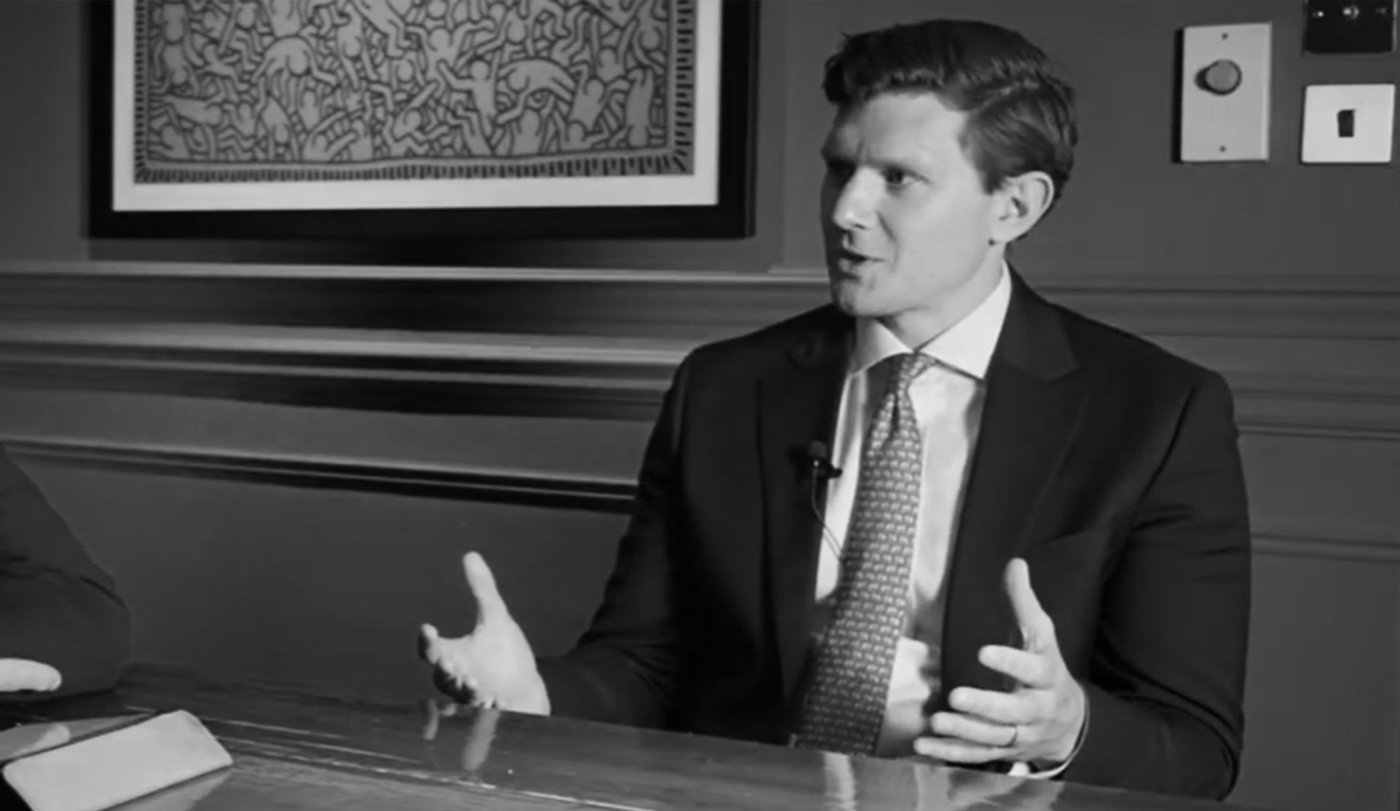
The opportunities being created by the increasing competition for capital ought to be good news for active managers, suggests Momentum Global senior portfolio manager and investment strategist Alex Harvey.
“We have had this big push up in real yields, which have come from hugely negative levels,” he tells Wealthwise editorial director Julian Marr in the latest Choice Words video above. “And while that is a big shock to the financial system, I think it is actually quite healthy.
“You now have competing forces – in the private sector as well as governmental – fighting for people’s capital. That competition is going to create winners and losers – and that is going to create dispersion. It is going to create opportunities. So I think that is a good foundation going forward for active management and asset allocation as well.”
That margin of safety helps you build a bit of asymmetry into portfolios over time.”
Harvey acknowledges such an environment embeds risk but continues: “We have been in a decade-plus – at least until the last few years – of this financial repression that pushed yields lower and lifted all boats.
“Capital is more discerning today and I think, if you combine that with the elevated volatility we are seeing – and the influence of social media and fast money and so on – that creates risks and opportunities. So I am mindful of that and do think risk is a bit underpriced today.”
Asked what he most looks for in investments, Harvey replies: “For a trade idea, I have learned over the years that having a ‘margin of safety’ built in is definitely a good starting point. You are never going to pick the bottom and you are never going to get out at the top so you need to have a bit more capacity to move around. That margin of safety helps you build a bit of asymmetry into portfolios over time.”
‘Wolf in sheep’s clothing’
Turning to the degree to which investors should now be looking beyond the more traditional asset classes of equities, bonds and cash, Harvey sounds two warnings – on the changing nature of liquidity and the need to be adequately compensated for any extra risk taken.
“I lead the multi-asset team at Momentum and we are blessed to have this huge smorgasbord of investments we can choose from,” he begins. “We offer those to our clients largely in very liquid, daily-traded funds so we have to be mindful of that. That said, there is plenty out there you can use to diversify portfolios and we make use of that.
“We are getting to that period, perhaps, through the market cycle, where liquidity is morphing. Liquidity is a sort of ‘wolf in sheep’s clothing’, if you like, in that as we get towards the end of the cycle, people can think they have liquidity and then it is not there – so we are very cognisant of that.
“And I would caution investors as well to be careful what they are buying. Can they get their money out – or are they being paid well enough for that risk? With alternatives, the bar is much higher now as well. Cash and relatively low-risk investments are paying you a decent return so the additional hurdle you need to get from your alternatives – both for the return and diversification – is higher.”
A full transcript of this episode can be found after this box while you can view the whole video by clicking on the picture above. To jump to a specific question, just click on the relevant timecode:
00.00: What excites you about the current investment outlook? What worries you?
02.14: What do you most look for in an individual investment? What constitute ‘red flags’?
03.37: To what degree should professional investors be thinking beyond so-called ‘traditional’ investments? Towards what?
05.17: What drives your approach to client communications? Should professional investors aim to attract the ‘right’ type of client?
07.02: What was your path into investment – and, if you hadn’t taken it, what do you think you would be doing now?
09.30: What is the biggest investment mistake you are prepared to admit to – and what did you learn from it?
11.05: Outside of work, what is the strangest thing you have ever seen or done?
12.29: What advice would you have given your younger self on your first day in this business?
13.02: What can the industry do to attract the next generation of talent?
14.01: Two Choice Words recommendations, please – one a book; one a free choice?
Transcript of Choice Words Episode 45:
Alex Harvey, with Julian Marr
JM: Well, hello and welcome to another in our series of ‘Choice Words’ videos, where we get to speak to the great and the good of UK fund selection and UK fund research and find out what makes them tick. I am Julian Marr, editorial director of Wealthwise Media, and today I am delighted to be talking to Alex Harvey, senior portfolio manager and investment strategist at Momentum Global Investment Management. Hello, Alex. How are you?
AH: I am very well, thank you. Good to be here.
JM: Delighted to have you here. Let’s jump straight into our first question – what excites you about the current investment outlook – and what gives you pause for thought?
AH: Sure. There is increasing commentary around the competition for capital at the moment – I think that is fascinating. We have had this big push up in real yields that have come from hugely negative levels – and, while that is a big shock to the financial system, I think it is actually quite healthy.
And so you have competing forces – the private sector as well as governmental – fighting for people’s capital. That competition is going to create winners and losers – and that is going to create dispersion. It is going to create opportunities. So I think that is a good foundation going forward for active management and asset allocation as well.
JM: That is very interesting. You mentioned winners and losers – is that also then slightly the ‘pause for thought’?
AH: It is. Within that, there is embedded risk, certainly. We have been in a decade-plus – at least until the last few years – of this financial repression that pushed yields lower and lifted all boats. Capital is more discerning today and I think, if you combine that with the elevated volatility we are seeing – and the influence of social media and fast money and retail money and so on – that creates risks and opportunities. So, yes – I am mindful of that. I think risk is probably a bit underpriced today.
Portfolio assymetry
JM: Great stuff – great start! Let’s switch from the top-down to the bottom-up – what most excites you about or most interests you in an individual investment? And what do you see as a ‘red flag’?
AH: For individual investments – we can get on to, say, a fund – but for a trade idea, I have learned over the years that having a ‘margin of safety’ built in is definitely a good starting point. You are never going to pick the bottom and you are never going to get out at the top so you need to have a little bit more capacity to move around and have that margin of safety built in. That, I think, helps you just build a bit of asymmetry into portfolios over time.
When it comes to the actual funds we are looking at – we look for a very strong investment discipline and a clear philosophy – and one that can be implemented and repeated and that is understandable. If we cannot understand the strategy – well, we need to tell it to our clients as well but it is probably too complicated. We like nice simple things – and we blend those ideas and those managers together to create our optimal portfolio.
Wolf in sheep’s clothing
JM: Excellent – thank you. A question now on ‘alternatives’ – however you want to define that. To what degree do you think investors – and, by extension, those who advise them – should be considering alternatives or looking beyond traditional assets?
AH: I lead the multi-asset team at Momentum and we are blessed to have this huge smorgasbord of investments we can choose from. We offer those to our clients largely in very liquid, daily-traded funds so we have to be mindful of that. That said, there is plenty out there you can use to diversify portfolios and we make use of that.
We are getting to that period, perhaps, through the market cycle, where liquidity is morphing. Liquidity is a sort of ‘wolf in sheep’s clothing’, if you like, in that as we get towards the end of the cycle, people can think they have liquidity and then it is not there – so we are very cognisant of that.
And I would caution investors as well to be careful what they are buying. Can they get their money out – or are they being paid well enough for that risk? I think , with alternatives, the bar is much higher now as well. Cash and relatively low-risk investments are paying you a decent return so the additional hurdle that you need to get from your alternatives – both for the return and diversification – is higher.
Lasting the journey
JM: Well-communicated – which leads me neatly on to my next question, which is on the Momentum approach to client communication. And then, as a sub-question on top of that, do you think there is such thing as the ‘right type of client’, by which I mean someone who is going to come along on the whole journey with Momentum – in at the beginning, out at the end – and therefore ensure they enjoy the full benefit of your wisdom?
AH: So our clients directly, really, are the adviser community who we distribute our products through and we have close relationships with them. We use all the channels available to us but I think face-to-face contact is still what people want. We may come on to talk about the future of the industry – and I think that is really important today in a marketplace and an environment where a lot of people take their advice, shall we say, not from humans. So, increasingly, it is really important to have those ‘touch points’.
In terms of the lifecycle for our investors and our journey with them – we talk about ‘the journey’ a lot, actually. We are delivering client outcomes and we want to manage client expectations on that journey. We do not want them to have those shocks and surprises and drawdowns that we know humans do not like – the pain of loss and that loss-aversion bias. The last thing we want is our clients to be coming out of the strategies near the bottom – because we know what happens then. So it is really about making them last the journey because that is the best way to ensure they meet their financial goals.
The beauty of compounding capital
JM: Very good. A more personal question now – what was your path into investment and, in an alternative universe, what do you think you would be doing if you had not taken that path?
AH: My father was a stockbroker in the City. He was born in North London – a grammar-school boy, who grew up during the war. He worked hard and worked his way up on the floor – that sort of ‘old school’ way. So I shared his passion – or it rubbed off on me – and I was always fascinated by the work he was getting involved with. I also used to have some shares from an early age, which piqued my interest, and I have always enjoyed the maths, if you like, around investment and the beauty of compounding capital over time.
So I was pretty set on that as a career and studied economics with French at university. I came out of uni and, soon after that, did what other people did and wrote a lot of letters – I can’t remember how many. We don’t necessarily write letters as much today – you know, it is a different way now that people apply for jobs – but that is what I did back then. You throw spaghetti at a wall and something sticks!
And I was fortunate that J.P. Morgan were looking for an investment assistant in their asset management business back when it was J.P. Morgan Investment Management, down in St James’s. So I joined them – not on the graduate scheme, but just in a graduate position, running around on the floors, getting paper tickets signed – and that was my pathway in. It was a great opportunity.
JM: Alternative universe?
AH: Alternative universe – I do enjoy creating solutions. That is a lot of what I do in my current role – but also the creativity that comes with it. I did a lot of art when I was younger and I think, if you combine that with the maths and the technical side, maybe it would be engineering or architecture or something like that.
JM: OK – it sounds like you were destined for the finance space.
On the edge
JM: Now, what is the biggest investment mistake you are prepared to admit to and what did you learn from it?
AH: Well, over the years, you know, it is a learning process … but I do still remember, back in what would have been January 2008 – back in the financial crisis – when there were these rumours going around that there was going to be this massive emergency US rate cut … 75 basis points. I had not seen that because my career was still pretty young then but, in the few decades before that too, it had not happened – let alone an emergency one.
And I think, in our portfolios, we were positioned slightly for two cuts – and then three came. So we were caught offside with that. It did not break the bank but, you know, the lesson from that was, Well, we do not have an ‘edge’ here. This is the biggest market in the world and we are a small team in London – so what is our edge on that?
And it comes back to that margin of error I spoke about earlier – it was not there. So the lesson? Probably, don’t fight the Fed. And it went on – you know, at the end of that month, two weeks later, another 50 basis points. And the market had another 50% fall – even from there – and that was just January.
Moscow rules
JM: OK. Everyone’s favourite ‘Choice Words’ question now – outside of work, what is the strangest thing you have ever seen or done?
AH: The strangest thing I have done – it would have been in the late 1990s. I was going on holiday with a friend to Thailand – but by the cheapest route possible, pretty much, which was with Aeroflot via Moscow back in those days. So we thought, Well, if we are going to Moscow, let’s stop and have a few days there and see what that is like. So there are stories throughout that 48-hour episode – some of which I will go into and …!
JM: Yes – I can see you are self-censoring a little, which is a good thing, as we have a high demographic among the CBeebies audience, here on Choice Words!
AH: Well, seeing Aida at the Bolshoi Theatre – I never expected that to happen and it was an amazing experience. It balanced out the previous 24 hours very well – and on we went to Thailand!
JM: On the one hand, Aida at the Bolshoi, on the other, ‘balanced out the previous 24 hours very well’! Excellent.
Human interraction
JM: Good answer. Where do we go next? Oh yes – what advice would you give to your younger self on your first day in the business?
AH: Probably ‘Talk to people as much as possible’. Go and have lunch with your colleagues and just have that human interaction. I think that is more important than ever today, with people working from home – but, I mean, it will always be important. I did that a lot but still could have done it more.
Capital idea
JM: Let’s stay with your younger self – or at least the younger generation. We touched earlier on looking to the future so what more do you think asset managers and wealth managers can be doing to attract the next generation of talent? I know it is such a big question but, just briefly, what would be your thoughts?
AH: I mean, I still meet a lot of advisers – and they are of a certain sort of generation or demographic – and I think, We need to get more young people in. How can we do that? It is starting to happen – but it is sharing that business creation, I think.
Give them a stake in those businesses or in what they are building. And I think that applies more universally to everything we do – you know, that division of capital, between those who own it and those who create it – to create more of a vested interest for those folk and get them on board with the journey.
What people will do
JM: Very nice. Last question then – we have zipped through this – we call this series ‘Choice Words’ because of what you do for a living but we are now looking for two personal choices. One is a book – it can be investment-related but does not have to be – and one is a ‘free hit’. So just any piece of wisdom – an idea or a thought – to pass on to our audience?
AH: Sure. In terms of a book – and we are largely talking investment and finance – I have always loved the Michael Lewis books, which are fantastic. Even for people outside the industry, they are very accessible – from the early days of Liar’s Poker – and everyone knows the film, The Big Short. I think Flash Boys was a great one – I really enjoyed that because I enjoy those narratives and stories around the pursuit of what people will do to be first. I think that is fascinating – so that was a good book.
Piece of wisdom? I am not a trader or a dealer as such, I am a portfolio manager – but we interface with that community and someone once told me, Always leave something on the table for the next person. And, you know, you are always building relationships so there is a good lesson there, I think.
JM: Nice ending. Very true and I cannot argue with that. Alex, it has been great to chat to you. Thank you so much.
AH: Thank you.
JM: And thank you very much for watching. Do look out for further ‘Choice Words’ videos as they are published.