

Summer is here and for Defaqto, among other things, that means carrying out our annual review of financial advisers’ satisfaction with discretionary fund managers. This study is carried out among hundreds of advisers to gauge their perception of the service they receive from their preferred DFMs.
We will get into the detail later but, broadly speaking, advisers have generally been happy with the service they receive. There are always areas that could improve, of course, but the scoring in the latest study indicated a general contentment.
This year may be different, however. As we discussed last time, the FCA is carrying out a review of the MPS market and, in preparation for this, has sent out a questionnaire to DFMs asking for detail on some of the aspects of their operation.
We can deduce from this questionnaire where the main areas of concern are. If we add to this the issues that Rathbones have had and the likely cost to the business of putting things right, then I think the whole industry will be paying much more attention to their levels of service and operations.
While our study is conducted among advisers, the penny will likely drop that this review could affect them as much as the DFMs. In most cases with MPS, it is the adviser who has taken on responsibility for suitability. This means they should be aware of any weaknesses in the DFM operations and service delivery – particularly if it is likely to affect the client either directly or indirectly.
So, let’s start by reminding ourselves of the results of the last satisfaction survey, which carried out well before the FCA issued its questionnaire and Rathbones had been taken to task on a number of issues.
The survey itself had 330 adviser respondents – with no direct employees or appointed representatives of discretionary managers included – and we focused on a total of eight service disciplines:
* Existing business administration
* Online facilities
* Accessibility
* Quality of staff – administration
* Quality of staff – investment
* Quality of literature
* New business administration
* Reporting
It was clear from the scoring detailed a few months back that, while all aspects of service are important to advisers, you can discern that some are more important than others. The most important is how the DFM administers the portfolio once on board –the smoother the relationship, of course, the happier the client will be. Equally as important at the top is the quality of the staff on the investment side – highly supportive investment personnel and zero administrative problems is the ultimate goal.
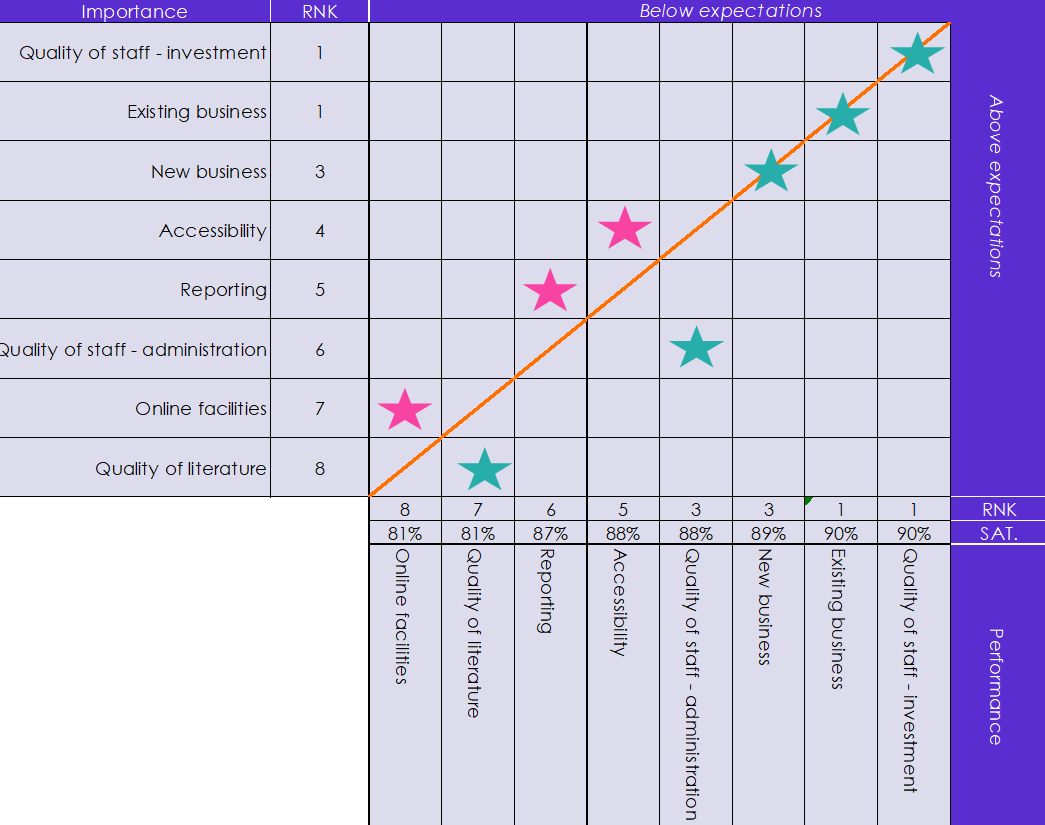
The following graphic, which you may also recognise from the Are you being served? column, demonstrates how we asked advisers to score their preferred providers on those eight categories. In this way, we are able to calculate a service rating for all the DFMs that qualify, an individual score for each category and, finally, an indication of how the industry as a whole is stacking up against adviser expectations. The results of our survey were released earlier this year.
“If the adviser is responsible for suitability of the portfolios selected, then it is incumbent on them to undertake robust due-diligence on behalf of the client.
Source: Defaqto
It was gratifying to see that the top three categories were all meeting expectations. It seems that advisers felt the DFMs could do better in terms of accessibility, reporting and online facilities. Both quality of staff – administration and quality of literature were viewed exceeding expectations.
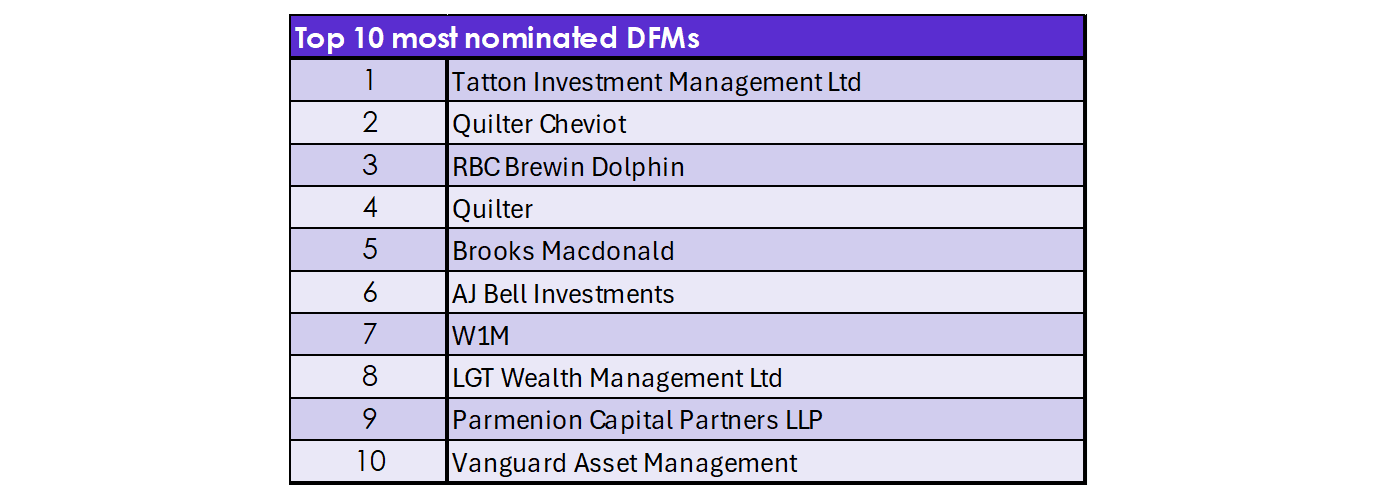
So who were the winners from the most recent survey? In terms of most nominated DFMs, the top 10 were:
Source: Defaqto
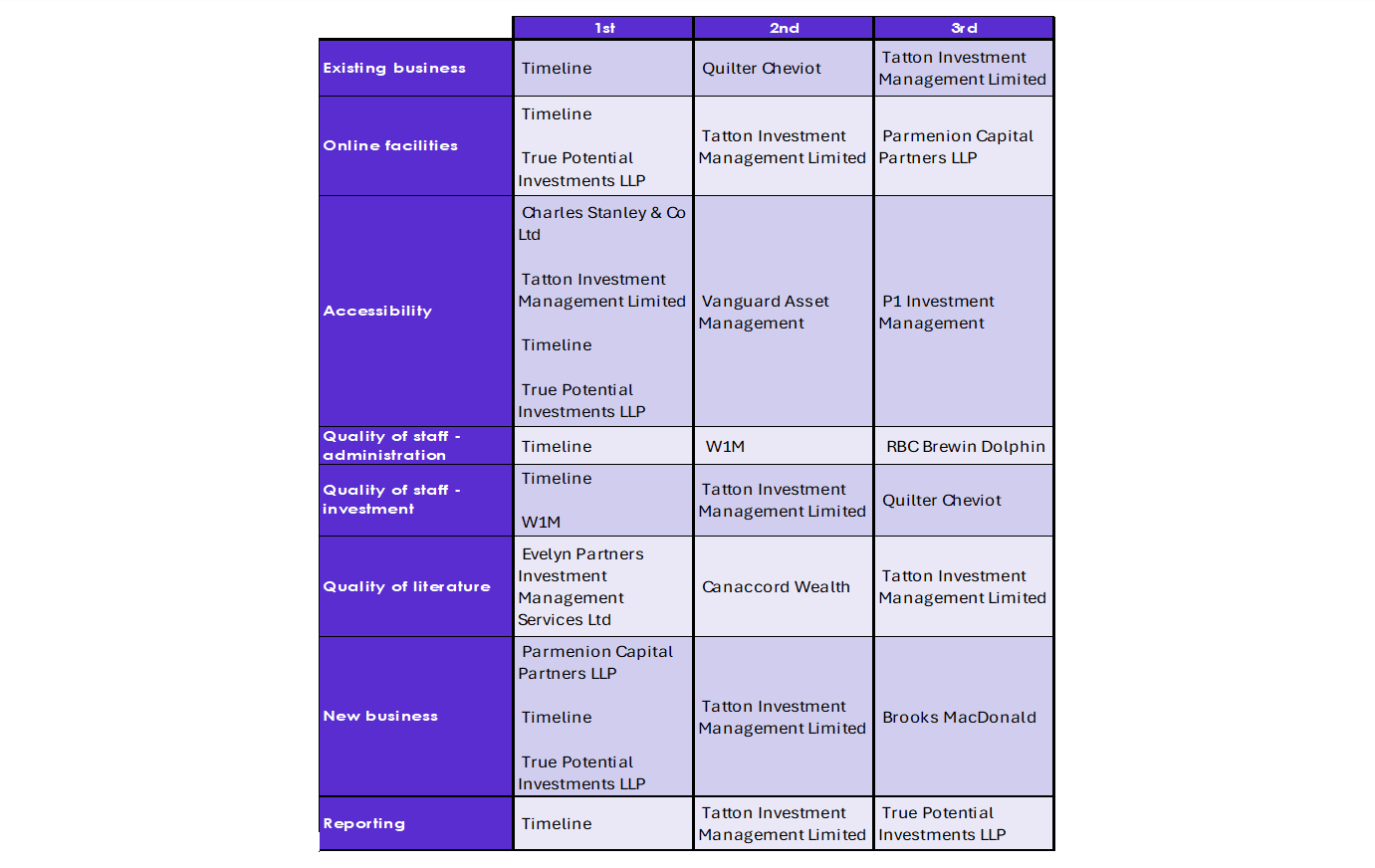
As for the top scoring DFMs in each category, they emerged as:
Source: Defaqto
Since these results were announced, of course, we have seen the questions the FCA has issued to DFMs in preparation for the MPS review. In many cases there is a link either directly or indirectly between our service categories and the focus and implications of the FCA questions.
As mentioned at the start, it will be interesting to see if this review changes advisers’ perceptions of the service they are receiving – perhaps putting doubts in their minds as to whether DFMs could be doing better and whether there are any weaknesses in how they operate, which perhaps had not previously occurred to them. It should certainly make advisers think more carefully about the due-diligence they are undertaking.
Conflicts of interest
So let’s take a look at some of the questions the FCA is putting to the DFMs. A number of these are around what solutions the DFMs are offering, what ranges there are, how they are constructed in terms of the building blocks and how conflicts of interest are managed.
Conflicts of interest could potentially arise where portfolios are constructed using internal funds only. It raises the question as to whether the decision has been taken purely for cost purposes versus, say, a slightly higher-charging and better-performing external offering.
Additionally, advisers need to be mindful of and questioning whether the proposition is any more beneficial than that of a formally structured and regulated existing mirror fund. This leads to questions around governance, investment oversight and who or which committees approve the MPS portfolios.
What has been of particular interest is that, when comparing the questions Defaqto has been asking on an annual basis for many years to those the FCA has asked in its recent survey, we find there is a strong correlation to the type of information being sought.
Examples include trading and rebalancing frequency, risk management, literature, transparency and accessibility – all of which, as previously outlined, clearly align with the categories within the Defaqto annual DFM survey.
There are of course many aspects to the MPS review and we have mentioned just a few. Nevertheless, advisers should have answers to all these questions and be comfortable with the answers. If, as we have said, the adviser is responsible for suitability of the portfolios selected, then it is incumbent on them to undertake robust due-diligence on behalf of the client.
Our previous surveys have indicated advisers are generally happy with the support they receive from DFMs – and this is also reflected in the satisfaction numbers outlined above. Could the regulators’ MPS review change this perception, though?
We await the conclusions of the review and the obligatory good and bad practice guidance. Armed with this, advisers are likely to have to up their game on due-diligence to satisfy the regulatory requirements – while the continued opaqueness of some DFMs fundamentally will have to change.
Andy Parsons is head of insight at Defaqto