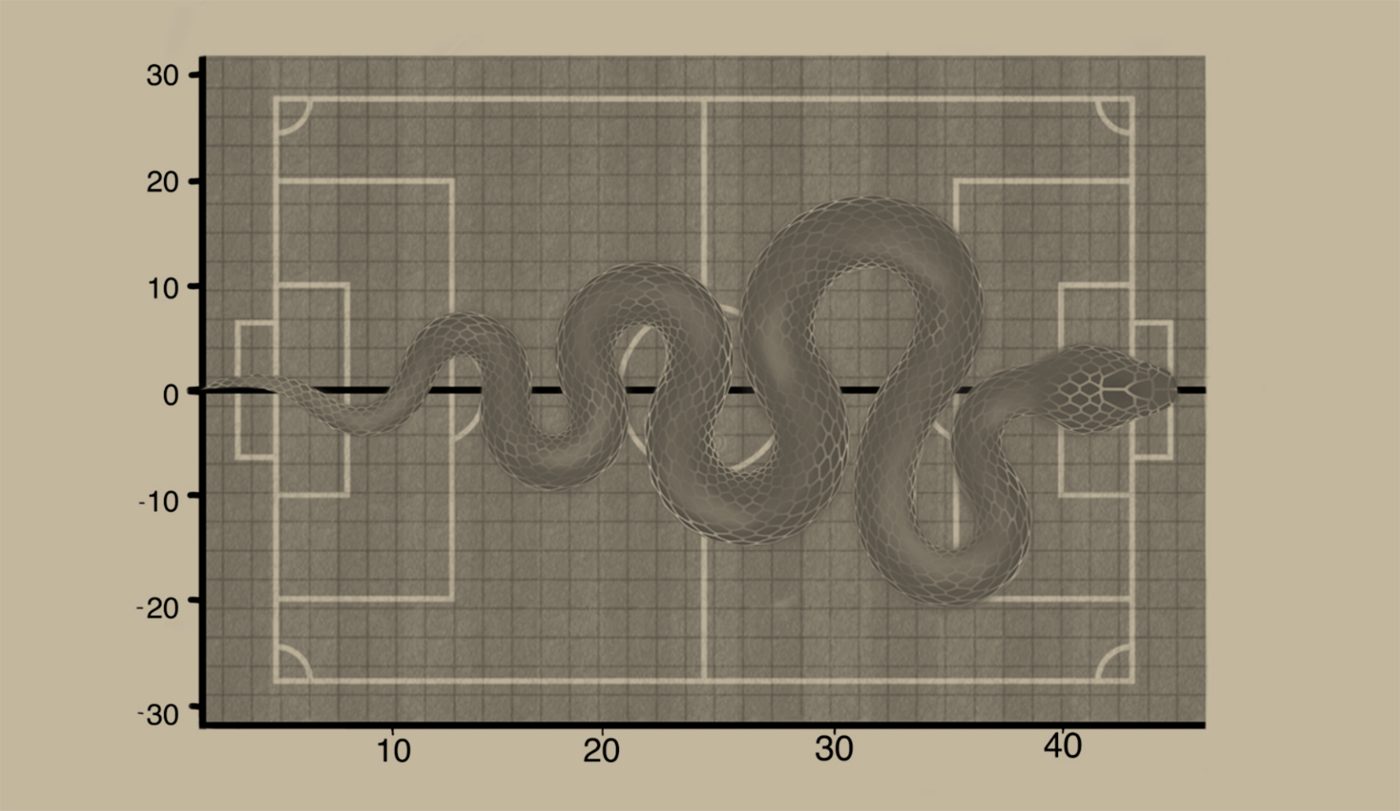


It is the great grail of our industry to deliver inflation-beating returns over time and yet somehow deliver them in a way that is more predictable, more consistent, more … smooth? Volatility is back in fashion, dear reader, not because investors enjoy it, but because markets insist upon it.
‘Big tech’ distortions, inflation shocks, rate whiplash, geopolitical tremors: all have conspired to make the traditional 60/40 portfolio feel at times a relic of a bygone era. Just like that old rock vinyl record rediscovered in a loft, smoothing has returned to the UK retirement market and, in essence, is asking advisers and trustees to once again be … with-profit.
Today, the rise of smoothing funds hinges on a belief that volatility can be ‘managed’ by lagged pricing and reserve accounting. Smoothing then is not new – nor is the industry’s habit of reinventing old tools with new marketing.
There are different ways to create ‘smoothing’, however – be that at the asset level or within a product structure. To develop one is to ask advisers to favour over another. Clearly insurers are well-equipped to create such structures since they operate essentially as long-dated risk balance sheets.
“Absolute return has been misunderstood, mis-sold, and mis-executed. Too many funds have been benchmark-hugging wolves dressed in market-neutral clothing.
DFM and defined contribution investors approaching retirement face a brutal reality: sequencing risk.”
Like structured products and annuities, smoothing funds ask the investor a fundamental question: can you stomach the volatility? Are you happy to buy or sell the volatility yourself or would you prefer to transfer it onto another party and, in doing so, devolve away those risk decisions? All routes play into uncertainty relating to future markets – yet smoothing funds come with few guarantees.
The question then is not whether smoothing works (it does, albeit in specific contexts) but whether advisers and trustees have alternative routes – whether we can engineer smoothing synthetically, using transparent, liquid, multi asset and absolute return components rather than relying on proprietary black boxes. In doing so, fiduciaries retain both transparency and control over the portfolio. Smoothing is simply engineering and that engineering can be replicated.
Why smoothing is back
DFM and defined contribution investors approaching retirement face a brutal reality: sequencing risk. A sharp market fall in the early years of withdrawal can permanently impair outcomes. Smoothed funds attempt to solve this by: averaging returns over 26 to 60 weeks; holding reserves in strong markets; and using lagged pricing to soften shocks.
A smoothing fund is designed to soften the ups and downs of the stockmarket. Instead of prices jumping up and down every day with markets, the fund aims to give a steadier, calmer journey. This can be particularly useful for income investors and those who are net sellers of volatility and covet stability over outright growth.
These mechanisms reduce the jaggedness of the journey although smoothing does have some drawbacks, such as opaque reserve mechanisms, potential liquidity restrictions during step downs, provider dependency, higher costs limited customisation. Synthetic smoothing avoids these pitfalls.
Misunderstood ingredient
Absolute return, meanwhile, has been misunderstood, mis-sold, and mis-executed. Too many funds have been benchmark-hugging wolves dressed in market-neutral clothing. When done properly, however – with genuine diversification, disciplined risk budgeting and uncorrelated strategies – then absolute return becomes the missing ingredient in smoothing.
Here, the Fortem Capital Absolute Return Fund is a useful example on account of features, including: systematic 100% long MSCI factor index and 70% short MSCI World; low correlation to equity/bond beta; target volatility around 4% to 6%; daily liquidity; and high-quality collateral producing income. This is precisely what smoothing needs – return streams not hostage to equity beta.
Building synthetic smoothing portfolios
Synthetic smoothing portfolios can be constructed from platform, centralised investment propositions and model portfolio services to combine:
1. Absolute return
2. Multi-asset low volatility
3. Controlled equity beta
4. Systematic overlays
5. Cashflow aware decumulation buckets
These components replicate the behavioural and risk management benefits of smoothed funds while offering the DFM, adviser, scheme and end-investor more transparency.
Smoothing is not magic. It is mathematics, behaviour and design. Synthetic smoothing portfolios built around absolute return, low-volatility multi-asset components and systematic overlays can match or exceed proprietary smoothing outcomes while offering: greater transparency, better liquidity, lower sequencing risk, customisation and governance alignment.
Given the growth in the platform and MPS space, the opportunity now exists for advisers to construct their own synthetic smoothing portfolios as a substitute to in-housed smoothing funds provided by pension providers.
JB Beckett is a consultant and the author of New Fund Order