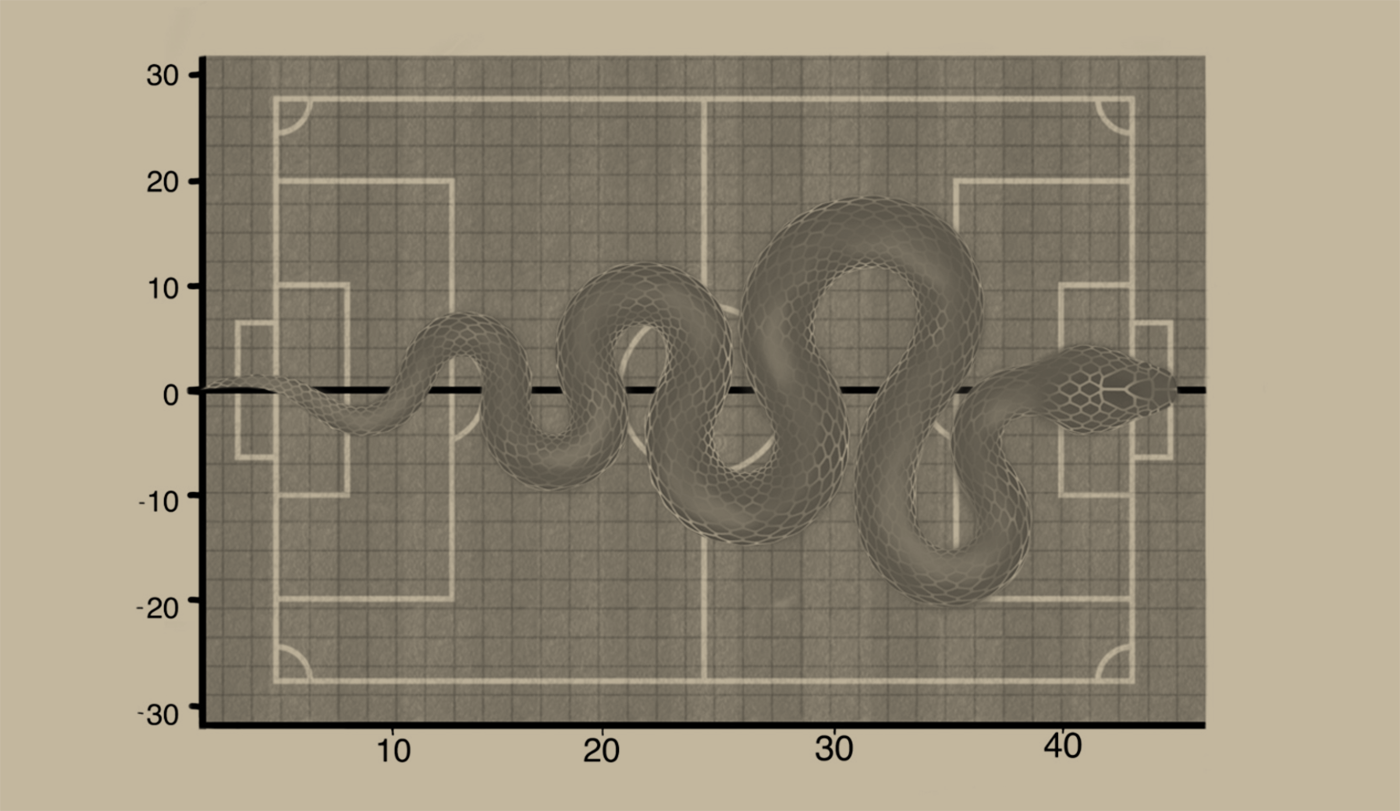

Our central scenario is one of gradual and selective disinflation. The pace will differ across regions – reflecting their respective exposure to energy, supply chains and domestic demand – but the broader direction should remain one of inflation normalisation. This should ultimately allow interest rates to stabilise and, potentially, decline gradually.
The recent rise in interest rates has nevertheless paused the equity-market rally. The issue is not only the level of yields, but the speed of the adjustment and its underlying causes. A gradual increase driven by stronger growth can be absorbed by equities. A sharp rise in real rates driven by inflation concerns, geopolitical uncertainty, tighter expected monetary policy and fiscal risk is more damaging – it raises discount rates while weakening confidence in the macroeconomic outlook.
This is broadly the environment investors have recently faced. Geopolitical tensions have clouded the outlook for energy prices and inflation, while markets have reassessed the likely path of Federal Reserve policy. The rise in longer-dated yields also reflects a higher term premium, as investors demand greater compensation for holding duration amid uncertainty over monetary policy, public deficits, bond issuance and the investment needs of the next technological cycle.
At some point, the consequences for equities can be material as higher real yields put pressure on valuation multiples – particularly for long-duration growth stocks. As a broad historical rule of thumb, a 50-basis-point increase in real rates can reduce equity valuations by close to 3% – although the effect depends on starting valuations, sector composition and the stage of the economic cycle.
Inflation scenarios
If, as we believe, disinflation continues, energy prices stabilise and geopolitical risks cease to deteriorate, yields may be close to their peak. This would allow investors to refocus on earnings, productivity and valuation opportunities.
Conversely, persistent inflation and higher-for-longer rates would favour companies with strong cashflow visibility, pricing power and solid balance sheets. The most adverse scenario would combine an energy shock, rising inflation expectations, higher real yields and a monetary-policy mistake. In such a regime, equities and nominal bonds may decline together, making traditional equity-bond diversification less reliable.
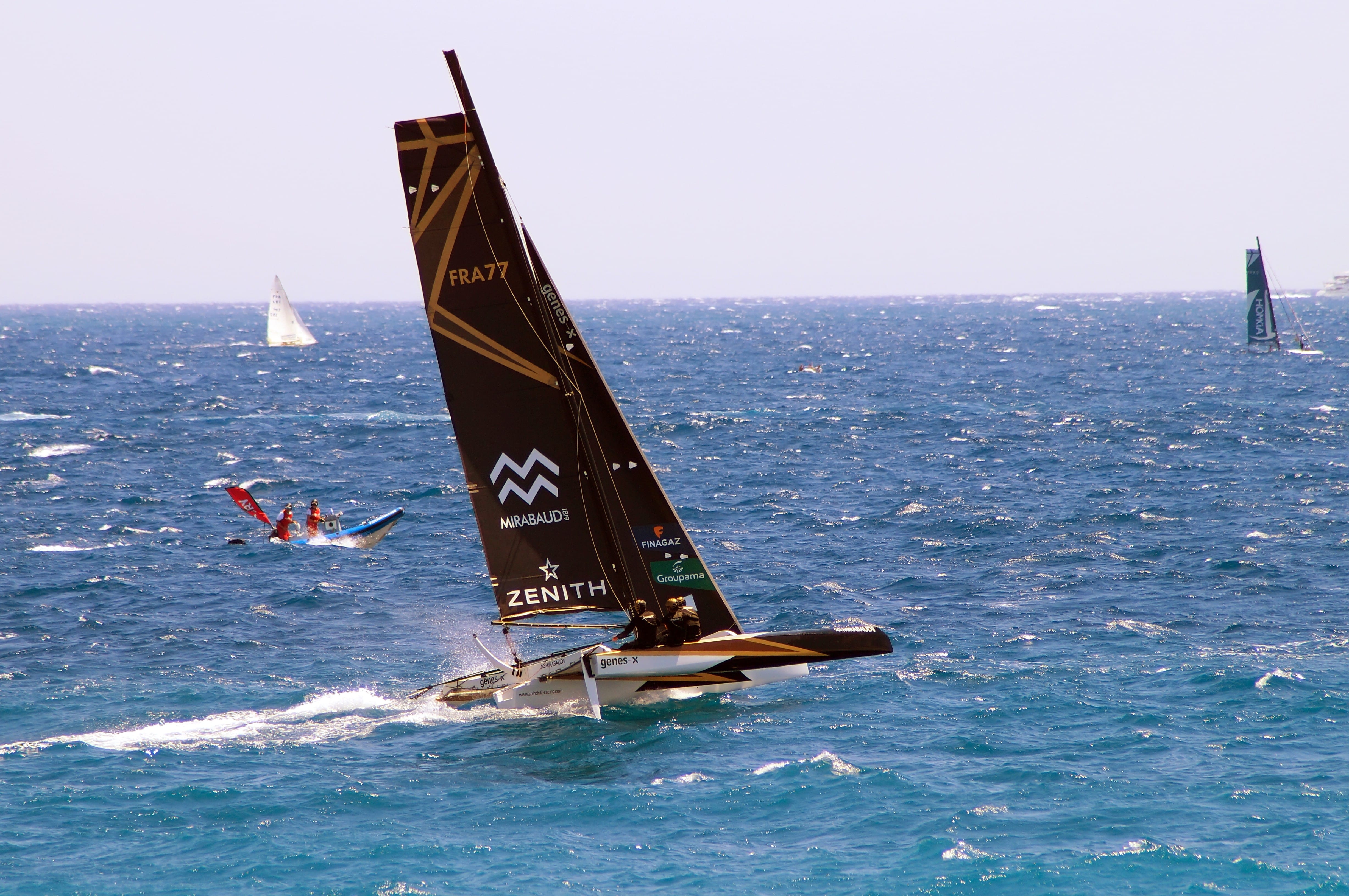
The appropriate portfolio management response is not to abandon risk assets but to build a portfolio capable of navigating several market regimes. Like a foiling trimaran built for ocean racing, the portfolio must combine speed, stability and endurance. Its three hulls work together: growth assets provide propulsion; reserve assets preserve control in heavy seas; and carry assets reward patience along the journey.
“A multihull vessel does not eliminate the force of the wind or the waves – rather, it is designed to remain balanced when conditions change and to maintain speed without sacrificing control.
Growth and efficiency assets
This first ‘hull’ includes equity investments exposed to long-term structural transformations – so ‘big data’ and artificial intelligence, economic resilience and industrial sovereignty, the potential revival of European small caps, healthcare innovation and gold-mining equities.
These exposures seek to capture long-term value creation through productivity gains, technological transformation and shifting geopolitical priorities. They remain sensitive to abrupt increases in real yields but also represent important sources of long-term earnings growth.
Gold-mining equities have a particular role within this hull. They can be volatile but companies that successfully improve operational efficiency, margins and return on equity may offer leveraged exposure to an environment in which real assets and monetary hedges regain importance.
More broadly, gold can provide diversification during periods of geopolitical stress, monetary uncertainty or declining confidence in fiat currencies. It should not be seen as a substitute for income-producing assets, but as an additional stabiliser when conventional correlations break down.
Reserve assets
The purpose of the second hull is to preserve freedom of action during periods of heightened volatility and market stress. Liquidity is central in this respect as it helps prevent investors from becoming forced sellers and provides the capacity to deploy capital when market dislocations create opportunities.
Derivatives across equities, rates, credit and currencies can be used to manage targeted risks, while equity option strategies can provide asymmetric protection during sharp drawdowns.
Within this hull, volatility deserves particular attention. When an equity shock is driven by rising rates and inflation, bonds may no longer provide the protection investors usually expect. In such conditions, volatility has remained the most reliable line of defence during acute stress episodes.
Properly structured option strategies can provide convexity: they carry an identifiable cost in benign markets but may appreciate significantly when markets fall abruptly. Volatility is therefore not simply a tactical hedge – it is an ultimate diversification strategy for a world in which the correlation between equities and bonds can turn positive at precisely the wrong moment.
Carry assets
The third hull comprises assets that ‘put a price on time’ – carry strategies designed to generate returns while investors wait for clearer opportunities associated with a major change in market regime. Higher yields have restored the appeal of fixed income – provided investors remain selective and actively manage the balance between carry, duration and credit risk.
Investment-grade credit, high-yield bonds, corporate hybrid debt, emerging-market credit, sovereign bonds and inflation-linked securities can all contribute to portfolio income. Absolute-return strategies, including global tactical asset allocation and systematic models, can complement these exposures by diversifying sources of return beyond traditional equity and bond beta.
Inflation-linked securities play an important role in this third hull. They offer a more direct response to unexpected inflation and can help offset the erosion of purchasing power when inflation proves more persistent than expected. Their performance remains sensitive to real-yield dynamics and duration, but they provide a useful complement to nominal bonds – particularly in a regime shaped by energy shocks and volatile inflation expectations.
A multihull does not eliminate the force of the wind or the waves – rather, it is designed to remain balanced when conditions change and to maintain speed without sacrificing control. The same principle applies to portfolio construction: growth assets provide the propulsion, reserve assets help absorb shocks and retain manoeuvrability, while carry assets allow the portfolio to generate returns over time.
In a world where rates, inflation and geopolitical risks can alter market conditions rapidly, diversification must go beyond the traditional equity-bond mix. It requires several complementary hulls: structural growth assets to participate in upside, carry assets to reward patience, reserve assets to preserve flexibility, and volatility protection to withstand the moments when the sea becomes roughest.
Change can create opportunity. Investors should remain invested but should not become complacent. Adapting portfolio construction to this new global macro regime is not a defensive retreat; it is a necessary condition for navigating it successfully.
Michaël Nizard, head of multi-asset & overlay at Edmond de Rothschild Asset Management