


The week that was …
Economic round-up
Gilt market stable after uneventful Budget
UK chancellor John Healey emphasised fiscal prudence in an uneventful Budget last Wednesday that kept the gilt market stable. The government is forecast to have £15bn of headroom in 2029/30 and £22bn in 2030/31, according to the Office for Budget Responsibility, while government borrowing will be 4.2% of GDP this year, falling to 3.4% next year. Balancing the books came at the expense of landlords and cash savers. Read more in ‘In focus below’ and from HM Treasury here
Fed leaves US rates unchanged – for now
US interest rates were left unchanged at 3.75%-4% last week although the Federal Reserve signalled it remained concerned about rising prices and that further rate rises were likely. Two out of the central bank’s 12-member Federal Open Market Committee did, however, vote to increase rates while Fed chair Kevin Warsh said inflation was “too high” for US households. Read more from the BBC here
Key index puts US inflation at 0.5% for September
The Personal Consumption Expenditures (PCE) Price Index – the Federal Reserve’s preferred measure of US inflation – climbed 0.5% in September, following an unrevised 0.3% rise in August. The increase was in line with economists’ expectations. In the 12 months to the end of September, PCE inflation advanced 3.6% after an unrevised 3.4% rise in August. Read more from Reuters here
Gas-price drop buoys US consumer confidence
American consumers’ confidence in their economy moved higher last month as gas prices fell modestly. The Conference Board revealed its consumer confidence index rose 7.5 points to 91.7 in October, up from 84.2 the month before. September’s reading was the lowest in the board’s survey since April 2014 – even below the levels reached during the pandemic. Read more from the AP News here
ECB holds rates; Lagarde to step down early
As had been widely expected, the European Central Bank left Eurozone interest rates unchanged although it clearly hinted at another hike in December with a warning that high and rising energy costs were fuelling inflation risks. The central bank’s president Christine Lagarde also announced she would step down early. Read more from Reuters here
France’s economy suffers surprise Q3 contraction
The French economy unexpectedly shrank 0.1% in the third quarter of 2026, as a steep rise in borrowing costs, high energy prices and rising political instability hit the Eurozone’s second-largest economy. GDP in the wider 21-country euro area meanwhile grew 0.4% over the same period – double the rate expected by analysts – with Germany surpassing expectations and Spain also reporting a strong quarter. Read more from the FT here
Japan inflation hits long-awaited 2% target
Underlying inflation has reached the Bank of Japan’s 2% target. The long-awaited breakthrough was announced on Friday in the central bank’s quarterly outlook for economic activity and prices, alongside a decision to keep interest rates on hold at 1.25%. The rate decision was passed by an 8-1 margin. Read more from the FT here
Lula wins surprise fourth term as Brazil’s president
A shock result in Brazil’s presidential election last week saw incumbent Luiz Inácio Lula da Silva returned to office for a fourth term after beating Flávio Bolsonaro. Brazil’s stocks, currency and government bonds sold off sharply after the outcome was confirmed. Analysts expect Lula to signal fiscal restraint initially but his spending agenda and a hostile Congress could complicate efforts to stabilise markets. Read more from CNBC here
Markets round-up
US stocks slide on AI worries
US markets tumbled on Friday, following disappointing quarterly results from Amazon and Intel. The results amplified growing worries surrounding AI-related companies’ massive spending programmes, with the Nasdaq suffering its largest one-day percentage drop since 5 June. All three major US stock indexes slumped, with the Nasdaq down 2.9%. Read more from Reuters here
Sharp drop for Alphabet shares
Shares in Google parent company Alphabet sank by 12.6% on Thursday, marking the stock’s worst one-day drop ever and wiping out $500bn (£373bn) in market value. It was also the latest sign of broader anxiety across Wall Street over how long it will take big artificial intelligence companies to see consistent returns on investments worth hundreds of billions of dollars. Read more from NBC here
Binance responds to crypto hack
Cryptocurrency exchange Binance announced on Saturday it had been able to replace 90% of the amount stolen after a record $6.3bn hack of its platform, by using company money to buy new tokens. The remaining 10% consists of tokens that are less liquid, which means they may take longer to buy, the platform said in a statement posted on X. Crypto prices fell on Friday. Read more from Reuters here
BP benefits from oil-price hike
BP’s quarterly profits have almost quadrupled to $8.5bn – their highest level in 18 years – as the Iran war drives up oil, gas and fuel prices. The oil major was boosted by record refining margins and a strong performance by its energy traders, helping it to significantly beat analysts’ expectations of $7.3bn. Read more from the Times here
AstraZeeneca reveals cost-cutting plans
Pharmaceutical giant AstraZeneca has unveiled plans to slash costs by $1.5bn a year as part of a major restructuring to boost investment in its new drug pipeline. The group expected the three-year overhaul would cost up to £2bn in restructuring charges but declined to provide details on where the savings would come from and whether jobs would be impacted. Read more from the Independent here
Gold falls to lowest level in a year
Gold plunged to its lowest level in a year last week in spite of the potential for more turmoil in the Middle East following the US midterm elections. Investors have previously used gold, treasuries and the US dollar as safe havens when regional conflict or war between nations looked imminent or likely to intensify. Read more from Yahoo Finance here
“Anthropic is a market leader in a rapidly-growing industry. We can debate whether the figures are justified but the firm at the very least has proof of concept.
Selected equity and bond markets: 23/10/26 to 30/10/26
| Market | 23/10/26 (Close) |
30/10/26 (Close) |
Gain/loss |
|---|---|---|---|
| FTSE All-Share | 5760 | 5784 | +0.4% |
| S&P500 | 7624 | 7580 | -0.6% |
| MSCI World | 4874 | 4922 | +1.0% |
| CNBC Magnificent Seven | 452 | 441 | -2.3% |
| US 10-year treasury (yield) | 5.00% | 4.93% | |
| UK 10-year gilt (yield) | 5.37% | 5.29% |
Investment round-up
JOHCM launches emerging markets fund
J O Hambro Capital Management has launched the JOHCM Emerging Markets fund. It will be managed by Emery Brewer, Ladislav Sabo and Dalibor Kováč, who currently run $1.2bn (£900m) in emerging market equities. The fund will use a high-conviction, all-cap approach and not be tied to its MSCI Emerging Markets benchmark.
BlackRock extends fixed income active ETF range
BlackRock has launched two actively managed fixed income Ucits ETFs, extending its range into euro investment grade and European high yield credit. The iShares € Investment Grade Corp Bond Active and iShares European High Yield Corp Bond Active ETFs carry a total expense ratio of 0.25% and 0.4% respectively.
St James’s Place reports £5.2bn of inflows in Q3
St James’s Place has reported £5.2bn in gross inflows during the third quarter of the year in its most recent trading update. Assets under management have reached £242.4bn – a record high for the group.
Impax AM adds to listed equities team
Impax Asset Management has added Sebastien Bidault and Paul Byrne to its listed equities team. Bidault joins Impax from Redwheel, where he was co-portfolio manager of the firm’s Biodiversity and Clean Economy strategies, while Byrne joins from BNY Investments Newton.
First Eagle grows international wealth business
First Eagle Investments is expanding its international wealth business to attract family office capital into specialist private credit strategies. The US asset manager, which oversees $217bn in assets, is set to be acquired by US-listed investment firm Victory Capital. It has made its first hires in London.
… and the week that will be
All eyes on US midterms …
Americans head to the polls on Tuesday for the US midterm elections, casting their first national verdict on US president Donald Trump’s turbulent second term, which has been marked by high inflation, tariffs and war. US Democrats look very likely to claw back the House of Representatives, according to prediction markets. If they do, they could stymie the US president’s ability to pass legislation as well as launching probes into his conduct in office. It could also spell bad news for AI data-centres. Read more from the FT here
… and further trials for AI trade
A heavy slate of corporate earnings and the monthly jobs report will further test stock investors in the coming week, after a series of setbacks for the market-leading AI trade. The most recent round of AI turbulence has stemmed from the disappointing quarterly results posted by Alphabet and Amazon, while shares in semiconductor company Intel also dropped after its earnings report. Read more from Reuters here
The week in numbers
UK interest rates: The Bank of England is widely expected to raise UK interest rates by 25 basis points to 4% when its rate-setting Monetary Policy Committee meets on Thursday.
US midterms: The Democrats are widely expected to do well in the US midterm elections, potentially taking control of the Senate as well as the House of Representatives.
US business sentiment: Consensus forecasts have the US ISM manufacturing purchasing managers index (PMI) rising to 54.7 in October, from 54.5 the month before, with the services equivalent expected to fall to 54.5 from 54.9.
US employment data: Consensus expectations have US new non-farm payrolls up to 40,000 in October from 29,000 the previous month. The unemployment rate is meanwhile expected to hold at 4.2%, while average hourly earnings are forecast to rise 0.2% month-on-month, versus 0.1% previously, and 3% year-on-year – in line with the previous month.
Eurozone inflation: Consensus expectations for the flash October reading of Eurozone inflation have prices rising 3.8% year-on-year, in line with September, and 0.2% month-on-month, versus 0.6% previously. Core inflation is expected to be 2.6%, versus 2.5% previously.
China business sentiment: Consensus expectations have the China RatingDog manufacturing PMI edging down to 52 in October from 52.1 in September.
In focus: AnthrIPOc
Anthropic released its IPO document to the US Securities and Exchange Commission last week and a valuation target of $1.5tn to $2tn (£1.12tn to £1.49tn) suggests an imminent bumper payday for those investment trusts – including RIT and Scottish Mortgage – with exposure to the AI giant. Less positively, the announcement has collided with a global sell-off in AI-related stocks, which casts some doubt around the IPO’s prospects.
There are a good number of investment trusts with significant stakes in the business – for example, according to AIC/Morningstar data, Baillie Gifford US Growth and the Schiehallion fund both have a weighting of more than 6%, while Scottish Mortgage and RIT have 2% and 1.7% respectively. Some of the private equity trusts, including HarbourVest Global Private Equity and Pantheon International, also have exposure.
Anthropic has been at the forefront of AI development. It was founded in January 2021 by a group of ex-ChatGPT executives, who did not believe their previous employer was doing enough around safety. It is structured as a public benefit corporation – meaning that, while it is still expected to seek a profit for its investors, the directors are also required to take into account its stated mission, plus the interests of those materially affected by its conduct. In the case of Anthropic, of course, this includes pretty much everyone.
Over the last five years, Anthropic has been at the forefront of large language model development through its flagship product Claude, which has shown the potential to disrupt a broad swathe of industries – from software to law and financial services. The company has duly shown explosive growth, with sales rising 1,088% to $4.59bn in 2025. Many of the investment trusts involved have already made two or three times their money – and they stand to make a good deal more when the business floats.
Nevertheless, as Tatton Asset Management chief investment officer Lothar Mentel points out, it is less than ideal timing for the blockbuster IPO. “Investor confidence in the AI boom has waned in recent weeks, following reports – albeit disputed – of plateauing demand for computing power, and increasing nerves about whether the big tech firms’ AI-related spending will meet the lofty profit expectations of the underlying business cases,” he continues.
“If the rumours about a renewed US bombing campaign against Iran following the midterm elections are to be believed, Anthropic could also be debuting into a volatile stockmarket.” Analysts and commentators look “pretty evenly split” on the IPO, Mentel suggests, adding: “Some are negative, citing the spending commitment and losses. Others note the surprising amount of cash on Anthropic’s balance sheet – some $141.1bn – and say it is already in a good position.”
Anthropic’s 900% net revenue retention implies existing customers would increase their spending by nine times on average year-to-year, which would make the IPO valuation look less ambitious.”
Certainly, a multi-trillion IPO for a company boasting $693m in operating losses and just $4.6bn in revenues has the potential to stretch credulity. Furthermore, investors’ optimism may already have been tested by the SpaceX IPO, where the share price has hovered consistently below the $160 launch price.
For Charles-Henry Monchau, chief investment officer of Syz Group, Anthropic’s price tag emphasises future sales rather than past ones. “This growth came from wider enterprise adoption of the API, more paid subscriptions and the take-off of Claude Code,” he argues. “Anthropic’s annual revenue run rate passed $65bn by the end of July, and the company projects 2028 revenue of about $190bn to $200bn. At $2tn, Anthropic would be valued at roughly 31x its July run rate and about 10x the revenue it projects for 2028.”
In Mentel’s view, the figure that has created the most buzz is Anthropic’s 900% net revenue retention. This implies existing customers would increase their Anthropic spending by nine times on average year-to-year, which would make the valuation look less ambitious.
And yet the business does have its vulnerabilities. Monchau points out Anthropic is reserving long-term computing capacity with the major cloud providers, covering chips, servers, data-centre space, networking and power. “These are largely fixed contracts, with around 80% non-cancellable or payable regardless of actual usage,” he explains. “The filing states that, if actual spending falls short, Anthropic must pay Google the difference, with similar terms set for Amazon.”
This means that Anthropic’s cost base is largely fixed rather than variable. That will not matter very much if demand keeps expanding – capacity will be absorbed and margins should improve – yet, as Monchau says, if demand or pricing power disappoints, Anthropic will still owe the bills.
There is a further problem inherent in these arrangements – it means that Anthropic is a customer of the hyperscalers, while also being a competitor. Needless to say, companies such as Alphabet are developing their own AI models.
As investors, Google and Amazon want Anthropic to succeed. As suppliers, they are paid for reserved capacity either way. As competitors, they may favour their own models.”
“Money invested by the cloud giants partly returns to them as compute payments, while their platforms help generate the revenue that justifies Anthropic’s valuation,” says Monchau. “As long as demand grows, the arrangement benefits everyone. If demand slows, incentives might diverge. As investors, Google and Amazon want Anthropic to succeed. As suppliers, they are paid for reserved capacity either way. As competitors, they may favour their own models.”
Anthropic’s big advantage over its rivals has been its attention to safety – indeed, it has an ongoing legal case with the US government over the use of its products in warfare. The Pentagon has stopped using its products after it refused to remove its safety guardrails. Anthropic has also previously blocked possible attempts to use AI to make biological weapons.
This caution was also in evidence in the SEC filing. Around 80 of its 261 pages cover risk factors – nearly double the 48 pages describing the business. On the one hand, such transparency is reassuring – at least it is considering the risks and addressing them. That said, the risks are genuinely scary – for example, that models can display self-preserving behaviour, including “resisting shutdown, hiding or manipulating information and actions resembling blackmail”.
“Anthropic’s pitch is at least more down to earth than SpaceX, whose IPO size record it will likely take,” concludes Mentel. “Anthropic’s Claude models are already used by many businesses and those businesses find Claude so helpful they rapidly up their usage. It is a market leader in a rapidly-growing industry. We can debate whether the figures are justified, but the firm at the very least has proof of concept.”
Ben Rogoff, manager of Polar Capital Technology and a self-confessed ‘AI maximalist’ has said he will be watching the IPO closely. For their part, RIT Partners has said it is a “happy holder” of its £3bn stake while the Baillie Gifford US Growth team continue to see real potential in the group. “It is one of a small group of laboratories whose models operate at the frontier of artificial intelligence,” they explain. “Anthropic has scaled at exceptional speed and is now one of the trust’s largest holdings.”
Anthropic is an unusual company while its growth trajectory has been extraordinary. It also appears more professional and well-managed than some of its peers, with a clear-eyed assessment of the risks of AI. This may act in its favour at IPO and in comparison to its wilder peers.
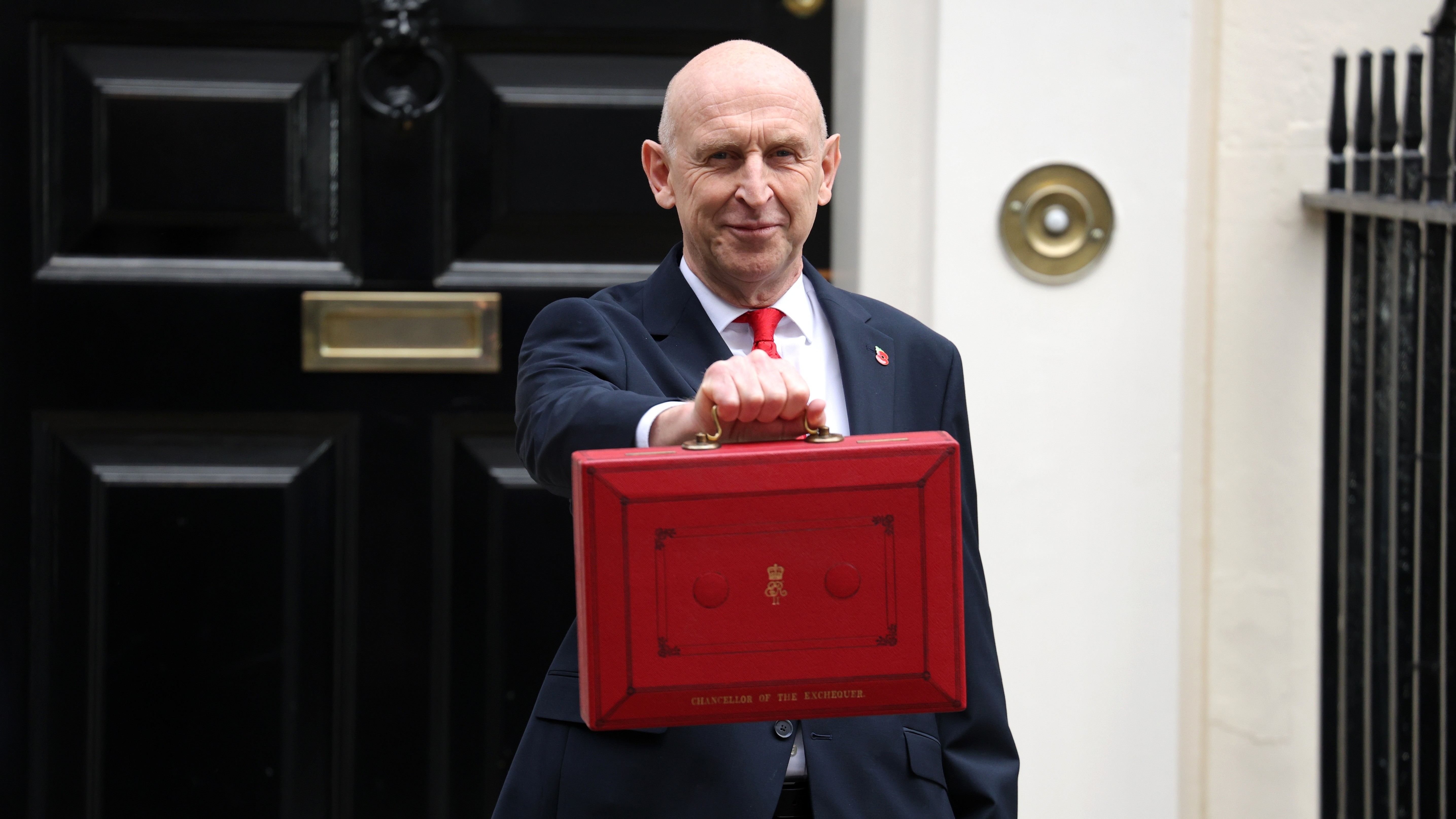
In focus: Budget in beige
UK chancellor John Healey sought to deliver a dull Budget last Wednesday – and, as far as investors are concerned, he largely succeeded. There were no shocks for individual sectors or for government bond markets; there were no hikes in dividend taxation or on capital gains; and pensions tax credits remained in place and in full. Even so, Healey’s first Budget was not without consequences.
One significant change is that it is now extremely disadvantageous to hold any cash outside an ISA. While the government scrapped plans to cut the cash ISA limit to £12,000, it did hike tax rates for savers by another 2%. As a result, the highest taxpayers are now paying 49% on their savings income, which means their effective interest rate is almost halved and could end up significantly below the level of inflation. Large weightings in cash no long look ‘safe’ on any reasonable measure, which should push people into the stockmarket at the margins.
It is a similar picture with buy-to-let assets, which now looks unappealing. Interest rates are high, regulation is onerous and tax rates have now jumped up another 2%. There are few incentives to invest in buy-to-let today and those with existing buy-to-let properties they can sell are likely to do so. Again, this capital might find its way back into the stockmarket as landlords seek to redeploy their capital.
Elsewhere, there was only one significant additional tax on companies – a 3% additional, time-limited, surcharge on the banks. This was better news than analysts had anticipated and – even if they have been caught up in the wider market sell-off since – most banking shares rallied on the day. Gambling group Entain also saw its shares gain on the day as gambling taxes did not hit, as had been feared.
The FTSE 100 has performed better than most major markets since the Budget, but this is likely because of its ‘anti-AI’ status rather than anything the chancellor did. On the other hand, at least Healey did nothing to interfere with its success. The FTSE 250 also gained on the day but was caught up in the market sell-off on Thursday and Friday.
The chancellor also achieved his principal aim – to keep bond markets happy. Gilt yields have started to fall, even though they remain high by historic standards. The two-year gilt yield, for example, still appears to be pricing in more than four interest rate hikes in the near term, which Bank of England economists have said is unlikely. There is still room for it to drop further and this ‘neutral’ Budget might see this happen over the next few weeks, particularly if the AI trade continues its run of volatility.