
On long-term thinking, blending portfolios and a brush with a gun-toting priest
In our regular video series, we interview the wealth sector’s key decision-makers to discover how they think about life, both within the world of investment and beyond it; what brought them into the business and what keeps them here; and what makes them and their companies tick
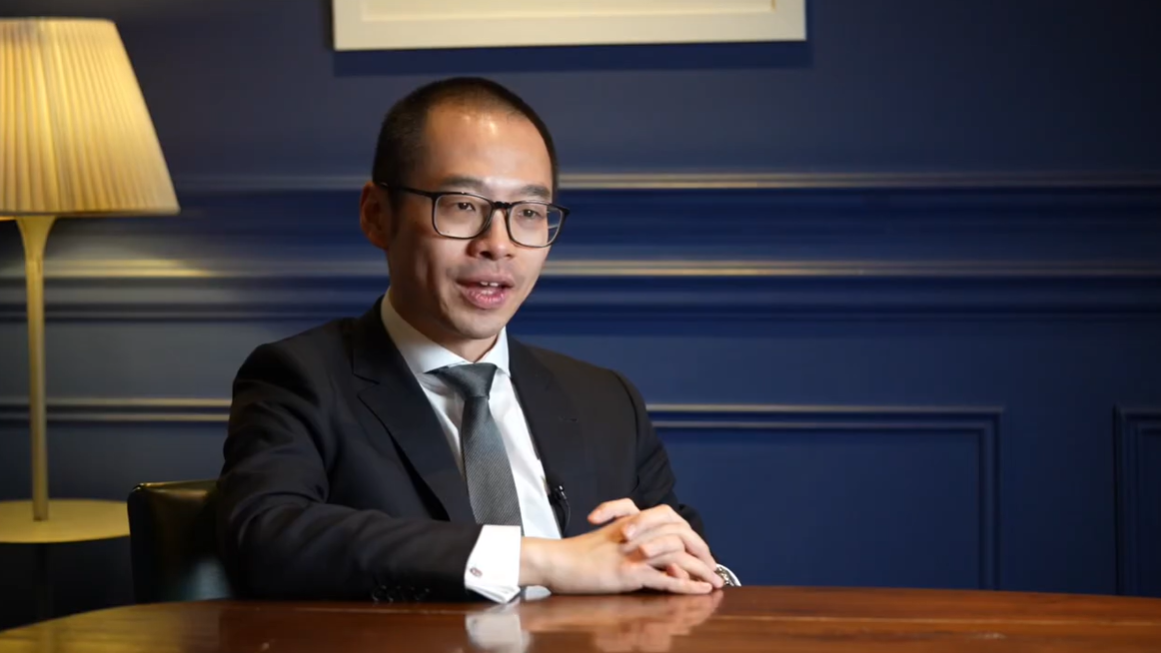
When it comes to quotations on the world of investment, Princess Diana does lag Warren Buffett somewhat but, while discussing client communications, James Klempster, deputy head of multi-asset at Liontrust, points to the relevance of her famous line about there being “three of us in this marriage”.
“Often the multi-asset conduit to the market is via an adviser so we have to look after them while always bearing in mind our duty to the end-investor,” he tells Wealthwise editorial director Julian Marr in our latest Choice Words episode, above.
“As such, we want to make sure we communicate at a level that is sophisticated enough for intermediaries to really derive value from but, at the same time, we need to make sure we have either the same or parallel communications that speak in the right language to the end-investor.”
For Klempster, the purpose here is threefold. “It is about education; it is about reassurance; and it is about keeping people on the journey,” he explains. “After all, long-term results from markets have historically been good and, if you capitulate on the way – which is very easily done when the going is tough – your ability to realise that gain over the long run disappears.
“So a lot of our communication is focused on expectation management – making sure people know that, when the going is good, it is not always like this and there will be periods when it is tougher. Equally, when the going is tough – again, it is not always like this and, you know, historically, there has always been a sunlit upland somewhere down the track. And it is a case of holding your nerve until you get there.”
Ultimately, where we derive the most comfort is through time horizon, diversification and making sure there is a patient, robust and repeatable approach to what we see.”
The importance of a longer-term outlook is something Klempster stresses right from the start. Asked what gives him cause for hope and pause for thought about the current environment, he replies: “If I look back over my career, and indeed the history of markets, there are always reasons to be cheerful and there are always reasons to be fearful – and you have to try and weigh those balancing forces up.
“Ultimately, in the Liontrust team, where we derive the most comfort is through time horizon, diversification and making sure there is a patient, robust and repeatable approach to what we see. So while, in the coming weeks and months, you can paint a fairly negative picture, if you want to, the reality is, in the short term, no-one really knows how these things pan out.“
If you have a reasonable time horizon, though – and clearly past performance is no indication of the future – if you look back through the decades, generally markets go through these challenges fairly well. As an example, if you look at the daily returns of the UK market, it is not far off 50/50 up or down – it is pretty random – but, the longer your holding period, the greater chance you have of a rolling positive return.”
Indeed, Klempster notes, you can go back to the 1980s and roll a 15-year window forward day by day and not find a single such period where the UK market ended in negative territory. “You could have bought the absolute zenith before the financial crisis or Covid or even the dotcom bubble but, roll forward 15 years, and you would have sort of been all right,” he adds. “Now, clearly, a lot happens in the intervening period but that is really where diversification comes in to help us weather that storm.
“Over a reasonable time horizon, then, we are broadly constructive on the world. We always start from the top down and then we worry about the asset classes beneath that, once we have formulated our overall view – and the overall view remains cautiously and conditionally optimistic.”
Three legs good, one leg bad
Towards the end of our conversation Klempster is asked what – aside, of course, from Princess Diana’s words of wisdom – is the best advice he has ever received? Here he recalls being told on his first-ever day in the business there are three things professional investors should always seek to get right: performance, relationships and administration.
“My first boss used the analogy of a stool, where one leg can get a bit wobbly from time to time but, if two go, the stool is falling over – and you are losing the client,” he adds. “And the key point, of course, is, of those three, the one you do not have direct daily control over is performance. The other two, though – the relationship side and the administrative side – they are the bits that are in your gift or control. So never let them slip.”
A full transcript of this episode can be found after this box while you can view the whole video by clicking on the picture above. To jump to a specific question, just click on the relevant timecode:
00.00: What excites you about the current investment outlook? What worries you?
05.20: What do you most look for in an individual investment? What constitute ‘red flags’?
09.41: What drives your approach to client communications? Should professional investors aim to attract the ‘right’ type of client?
12.50: How would you explain risk to someone who does not work in investment?
15.04: What was your path into investment – and, if you hadn’t taken it, what do you think you would be doing now?
19.04: What was the biggest investment mistake you are prepared to admit to – and what did you learn from it?
22.12: Outside of work, what is the strangest thing you have ever seen or done?
25.29: What advice would you have given your younger self on your first day in this business?
26.28: And what is the best piece of advice you have ever been given?
27.40: Two Choice Words recommendations, please – one a book; one a free choice?
Transcript of Choice Words Episode 28:
James Klempster, with Julian Marr
JM: Well, hello and welcome to another in our series of ‘Choice Words’ videos, where we get to speak to the great and the good of UK fund selection and UK fund research. I am Julian Marr, editorial director of Wealthwise Media, and today I am delighted to be talking to James Klempster, who is deputy head of multi-asset at Liontrust. Hello, James.
JK: Hi, Julian.
JM: Just checking my iPad to make sure I got that vaguely right – having checked with you in advance!
JK: Sounds all right to me.
JM: Then we will kick on with my first question. I always faff around – just like I am doing now! – and I should really just get into that first important question about the current investment outlook. What gives you cause for hope and what gives you pause for thought?
JK: As always, I suppose, it seems easier with the benefit of hindsight than it does at the time. And if I look back over my career, and indeed the history of markets, there are always reasons to be cheerful and there are always reasons to be fearful – and you have to try and weigh those balancing forces up. And ultimately, in the Liontrust team, where we derive the most comfort is through time horizon, diversification and making there is have a patient, robust and repeatable approach to what we see.
And so, in the coming weeks and months, you can paint a fairly negative picture, if you want to. The reality is, in the short term, no-one really knows how these things pan out but, if you have a reasonable time horizon, the chances are historically at least – and clearly past performance is no indication of the future or anything else – but, if you look back through the decades, generally markets go through these challenges fairly well.
As an example of that, if you look at the daily returns of the UK market, it is not far off 50/50 up or down – it is pretty random – but, the longer your holding period, the greater chance you have of a rolling positive return. You know, if you go back to the 1980s and move a rolling 15-year window forward day by day, I don’t think there is a single rolling 15-year period that is negative in the UK market.
So you could have bought the absolute zenith before the financial crisis or Covid or even the dotcom bubble but, roll forward 15 years, and you would have sort of been all right. Now, clearly, a lot happens in the intervening period and that is really where diversification comes in to help us weather that storm.
Over a reasonable time horizon, then, we are broadly constructive on the world. We always start from the top down and then we worry about the asset classes beneath that, once we have formulated our overall view – and the overall view remains cautiously and conditionally optimistic, I suppose it is fair to say.
Equity markets, on the whole, look reasonably priced. There is the big elephant in the room – namely the US, which is looking expensive and very concentrated – and that is probably where we are most concerned around valuations, which often have a material impact over the medium to long term. Outside of the US, though, things don’t look too bad.
We have had decent rallies in the UK, in Europe, in Japan – over the year to the end of September. And so valuations have moved up because the multiples have rotated up as share prices have gone up while earnings haven’t necessarily caught up with that yet – but they are still dabbling in that sort of ‘fair value’ space, rather than being expensive. So I would say we are constructive on equities overall – constructive on the overall environment – but, again in a conditional, cautious way.
And then, in fixed income markets, there is a lot of noise there at the moment – particularly in terms of whether governments can afford their long-term obligations. We have seen that push up the long end of yield curves – and the US and the UK are clear examples of that. So there is some concern around the long-term fiscal path of developed markets, which is reflecting in the bond markets there.
Again, though, they look like reasonable value today so you can sort of see a real yield in most of these markets. The drifting-up of yield has caused a degree of capital depreciation on those assets over the last six months or so but, overall, they don’t look too bad. So we are sort of ‘neutral’ on the government bonds – the diversifier, the ballast; we are fairly constructive on equities – with the exception of the US, perhaps; and, in places like high yield, we see good opportunities still as well.
And that is interesting, of course, because yield spreads are tight by historical standards. Now, that is not a great indicator that spreads will go up – you know, the fact a spread is low doesn’t presage it immediately moving up – but it is an area to be careful in. The other thing for us is we are, I suppose, yield investors, rather than spread investors, and the overall yield from high yield is compelling: you are getting an equity-like expected return from high yield, while being substantially higher in the capital structure.
So overall, despite the fact we have all these challenges in the short term – what we think of really as ‘noise’ out there, which is all very relevant and worth bearing in mind – if you are able to look through that further into the future, I think you can be pretty constructive from here still.
Blend-game
JM: Very good, glass-half-full summation of the macro. Let’s focus in then and discuss what you look for in individual investments – whether they be stocks or funds – and what constitute ‘red flags’ for you.
JK: So, as you know, John Husselbee has an excellent acronym for this in terms of looking for managers …
JM: And what are we timing that at? Three and a half minutes into the recording!
JK: He is a visionary!
JM: The man is a visionary!
JK: Absolutely! And, of course, the acronym refers to the best football team in the world as well – being Spurs, for the sake of clarity, I should probably confirm what that is! But, in a more simplistic way, when we are looking for managers, ultimately, we are blending them together – so the first thing we always worry about in the team is, What creates a good blend?
And ultimately, I suppose, you want managers who express a view. You want activity – you want the idea of active share or tracking error to come through from them – otherwise, you are unlikely to get any meaningful alpha in the long run. But you also want a combination that is greater than the sum of its parts – that knock each other’s rough edges off – so the resulting combination is fundamentally stronger than each individual piece.
Then, with managers individually, you want a clearly-stated philosophy and process – a logical system through which this manager believes they can outperform. It has to have some sort of foundation in logic, it is fair to say. And then you need that applied consistently and you need the structures around them that encourage that long-term consistent decision-making. You know, some environments are less good at incentivising that long-term, almost ‘endowment’, mindset – whereas others are better.
So the set-up around managers – how they are incentivised, how they are looked after by their employer – ultimately is important because it refers to, you know, making good, long-term decisions. And, once you have that in place, you know, risk management controls, oversight – all of these are important – but, ultimately, the direction provided by the philosophy and process has to be key. And then it is a case of, I suppose, building some sort of safety rails around that philosophy.
JM: Thanks for that – and for not going through the ‘Spurs’ acronym all over again! Still, being kind, I suppose what I should do is, if you want to hear that outlined by the man himself, here is the link to the John Husselbee Choice Words episode.
JK: Sorry – I didn’t talk about red flags …
JM: Oh yes – though what does it say that I mention John Husselbee and you suddenly think red flags!
JK: No – far from it! So, I think humility is really important when it comes to active management. And it is a bit of a balance you have to strike – because you want people to have conviction and a belief in their thesis, but you don’t want that to start straying into dogma, I suppose. And so you want people to have a degree of humility that recognises the fact a lot of decisions investment managers make will not be right.
So it is a case of finding the balance – firstly, preventing them being too dominant in a portfolio and also, I suppose, giving you scope for unwinding them if they persist in being wrong, rather than having that sort of ‘myopia’ that makes people stick with it, even when the evidence suggests it is perhaps a poor decision. You want that belief in the thesis, but also that sort of pragmatism or humility that says, Actually, maybe that one is wrong – maybe we need to look elsewhere.
On that, as well, we do like managers who really live and breathe and love their investment area. It is quite interesting when you meet managers who not only know their portfolio holdings back-to-front but also know what else is in their universe that they don’t hold. And so you might say, Well, so-and-so value manager holds this stock and you don’t – why is that? And I think it is really powerful when you meet a manager who not only knows what they hold back-to-front, but what they don’t hold and why. That is always quite reassuring.
Levelling discipline
JM: That is very interesting. Let’s move on to communicating with clients now – what is the multi-asset team’s approach to client comms? What sets it apart perhaps – at least in your view? And the question I always tack on here – just to make it way too long a question, especially one on comms! – is, What is your attitude towards keeping the ‘right’ sort of investor? That is to say, the one who is going to come with you on the entire investment journey and so maximise the benefit they get from being with you as a team?
JK: At one level, I suppose, is not our place really to discern who is ‘right’ and ‘wrong’, perhaps – it is more a case of, Are we doing the right or wrong thing for the end-user?
JM: Good humility, there!
JK: Oh, thank you very much – I set that up really nicely! Still, as I said, it is a balance. And I often think about how – to quote Princess Diana – there are often ‘three of us in this marriage’! Often the multi-asset conduit to the market is via advisers – and so our immediate client, I suppose, is an adviser. Yet we must not lose sight of the fact that, at the end of the day, the money is coming from a normal person, a real person, if you like, an investment amateur, perhaps, in many instances.
So we have got to look after the adviser while always bearing in mind our duty to the end-user. So, when we think about communication, we want to make sure we communicate at a level that is sophisticated enough for intermediaries to really derive value from but, at the same time, we need to make sure we have either the same communication or parallel communications that speak in the right language to the end-user.
And I suppose the purpose of that is educational; it is about reassurance; it is keeping people on the journey – not least because, to the point I made earlier, in terms of long-term results from markets, they have historically been good. So, if you capitulate on the way, which is very easily done when the going is tough, your ability to realise that gain over the long run disappears.
So a lot of our communication is focused on expectation management – making sure people know that, when the going is good, it is not always like this and there will be periods when it is tougher. Equally, when the going is tough – again, it is not always like this and, you know, historically, there has always been a sunlit upland somewhere down the track. And it is a case of holding your nerve until you get there.
We are very fortunate to work with a large number of advisers and intermediaries and we get a lot of feedback from them, which is helpful in that communication. Also, though, we do meet our end-investors on a sort of selected basis as some of the firms we work with like to do client events – and that is a real levelling discipline.
You have to think about the language you use, try and minimise the jargon and really refer to what you are doing – which is pretty technical, ultimately – in a way that is accessible and logical and makes sense to somebody who doesn’t necessarily understand the sort of the technical jargon we naturally slip into otherwise.
Multiplier effect
JM: Very good. And also a very neat segue into my next question, which I do not ask enough on Choice Words – how would you explain risk to someone who does not work in investment?
JK: It is a great question. As a profession, I think, we have conflated volatility as a sort of shorthand for risk – and it certainly feels risky at the time – but, ultimately, I suppose, what is real risk for the people who invest with us? It is ‘not achieving your goals’, it is ‘losses you cannot make back’ – you know, to a more institutional audience, you might refer to ‘permanent impairment of capital’.
Because there are losses that happen regularly in markets that are, quite simply, a result of sentimental changes rather than fundamental change – and again, what we are trying to do is isolate wherever we can fundamental opportunities and mispricing that comes through as a result of that inevitable sentimental overlay.
And so price movements – in and of themselves – are arguably a blessing because what that really shows you is that, first, it is a live price and so it is a realisable price, in most instances. It also reflects sentiment in the short run and obviously, if people are nervous, risk prices tend to drop as a consequence of that – but it does not necessarily, fundamentally, mean whatever you are buying underneath has become that materially less valuable.
Even at an index level, day by day, you can maybe see 5% price moves while, at the stock level, you can see multiples of that. Now, some of that is occasionally rational and makes perfect sense but sometimes you have to ask, Is a stock really 20% less valuable today than it was yesterday? Is an index really 5% or 10% less valuable than it was a week ago or a month ago? Or is this actually a multiplier effect that has come through because of sentiment that is sort of reflecting what is going on but in a geared way, rather than a one-for-one kind of way?
Leaving the station
JM: Thanks for that. A more personal question now – what was your path into investment and, in an alternative universe, what would you be doing now, if you had not taken it?
JK: I mean, my path was very unconventional. I do bits and pieces of mentoring and, when you meet young people and students and so on, they always ask that question too – and, on one level, it is not really replicable. So I got into investment in a strange way. I had done A-levels – physics, maths and chemistry – and then I did a law degree, essentially because I wasn’t sure what I wanted to do but I wanted a breadth of skills I could apply to different things.
So, when I got to the end of my degree, I knew I didn’t want to do law in a practitioner sense. That was probably never my direct intention anyway – it was more that it was just a useful degree to have – so, at the end of my degree, I didn’t really have anything lined up. I started looking around but I was actually working in my local petrol station as a part-time job, as students do, when an old supply teacher popped in and she said, What are you going to do now?
And I said, Honestly, I don’t really know. I had had a few things I thought about doing – I had a little research job in TV lined up – but these things can take a long time to come to fruition. I was getting a lot of pressure from my parents, you know, to grow up and get a job. So she said, Look, there is firm in Cambridge we know that is essentially looking for a trainee investment manager and you should chuck your hat into the ring.
So I did – Cambridge was 45 minutes or so down the road from where I grew up – and I got the job and, soon afterwards, I moved to Cambridge. I very much started as a trainee. I was doing everything from stock reconciliations – they had a vault downstairs with share certificates and you would literally be ticking the number of shares on that certificate versus what they had on the system – to trading when they needed it doing.
They had a full-time trader but, when they were away, I did that. And I was doing cash reconciliation with the bank system – they had a very old-school green screen! So I did a little bit of everything, which was a really useful grounding but I felt I wanted to be closer to where ‘the action’ was, which was London, ultimately. So after working in the Cambridge firm for a year or so, I moved to London and pursued my career from there.
JM: And in the alternative universe? You became a TV researcher, I suppose?
JK: Well, that was probably always a bit of a long shot! Ultimately I really wanted to be a pilot – I wanted to be in the RAF – or the other area I have a passion for is engineering and that side of things. My dad was an engineer – he joined British Aerospace as an apprentice after A-levels and basically stayed there his whole life – so that was probably a natural passion of mine.
But he actually told me, Society doesn’t value engineers! Rightly or wrongly – you can debate that view – but his own experience was very much, This is an undervalued profession so find one that is more valued. And I suppose the context of that is reasonable and interesting in the sense that he worked in defence during the 1990s, when it seemed like, every week, there was a new round of redundancies.
It was a very pinched and challenging environment and so that context led me away from an engineering passion. Certainly, I thought about being a pilot but that didn’t work out for various reasons – and so I ended up doing this. But, yes, perhaps I would be a pilot in the alternative universe.
Negative thinking
JM: Fair enough. What is the biggest investment mistake you are prepared to admit to and what, if anything, did you learn from it?
JK: I think there are two big ones over the last 10 years – or maybe ‘substantial’ is a better word …
JM: Yes – I wouldn’t sound too proud about them! I guess it depends what you learned!
JK: It is a learning experience! And, actually, that is a very good point – as with all these things, we know we are going to get decisions wrong and so it is about how you minimise their impact through diversification and not being too certain of any thesis. I suppose the big one over the last decade or so has been this understanding that government bond yields were low – too low – and there was a broad acceptance among the profession that yields needed to go up.
And there were some pretty extreme examples over the last decade or so – we had German 10-year bond yields in negative territory in 2013 and 2016 and, even as recently as early 2022, which didn’t really make a huge amount of sense. I remember the first time I saw negative yields was during the financial crisis and, when that happened, it sort of made sense – it was sort of, We are all at a crisis point.
You had Lehman Brothers go bust and I remember trying to buy treasury bills at the time because that was the only instrument you had a pretty high degree of certainty – almost total certainty – that it would be still of value tomorrow. So we were trying to buy some of these to diversify the cash in portfolios – which is the bit that is really at risk when you see these sorts of bankruptcies happen – and we started seeing negative yields.
Then you actually try and buy these things and you could not buy them at all. People who had it inevitably wanted to hoard it and hold on to it – and, again, that sort of makes sense. But then we roll forward to 2016 and you have, you know, a 1% or 2% yield on gilts and a negative yield on bunds and, while there were many concerns on the way, it seemed far too low.
So there was a thesis that yields had to go up – and that was kind of logical – but the surprise came in how quickly that happened. I think that surprised a lot of people. And then, of course, the extent to which yields went up as well was probably greater than anticipated. So, if you had a yield in the UK in the sort of 1% range, I think there was a broad acceptance the 10-year needed to move out to something starting with a three, possibly a four, and it would probably take years to get there.
But, as with all these things, the more the spring gets coiled, the greater its desperation to uncoil – and I suppose, ultimately, that was an example of excess in markets that unwound actually very quickly and actually very painfully. So that is a salutary lesson, perhaps, in how you can identify something as being mispriced – just don’t presume it will unwind in a gentle way.
Guns n’ rosaries
JM: Thank you for that. Deep breath now, as we come to everyone’s favourite question on Choice Words – outside of work, what is the strangest thing you have ever seen or done?
JK: I did take some time thinking about this – and my initial thought was that I have not really seen anything particularly interesting! But then I did remember I have been shot at by an Ecuadorian priest, which I suspect most people haven’t – so maybe that is noteworthy.
JM: You might need to elaborate!
JK: Yes, I probably should. When I was a student, I applied to participate in the building of an orphanage in Ecuador as part of my first-year summer – and I got offered a place with a few of my mates. So it was a jolly little period where we worked really hard, at altitude – and we got phenomenally ill off it, actually, because we landed in Quito, which is pretty high-altitude and started doing construction work the next day. Really, you need to give your body a chance to adjust to all that – but we didn’t and we got pretty sick. Anyway, that’s an aside.
We were there for a month and, after a couple of weeks, we started playing pranks on one another. It is good fun – all these youngsters running around – and it started off with things like slats being removed from people’s bunks and falling through and all that kind of stuff. And then one of the guys, who was the instigator of the slat-removal was growing an excellent beard, and so we thought – because we were doing a lot of construction work and mixing up concrete on a daily basis – Let’s set his razor in concrete and present it to him as a joke.
So a handful of us were hiding behind this sort of school building, mixing up this little bowl of cement, and we had this big, 10-foot perimeter wall behind us – and coming from the other side of this we heard what sounded like shouting. The shouting grew more and more irate and one of the guys said, You know, I don’t think it’s coming from behind the wall – it’s coming from inside the compound and the sound is bouncing back. And we thought, Oh, right – that makes sense.
So we poked our heads around the side of the school building and into the rest of compound, for want of a better word, and we saw two things: from the balcony of the main building, there was either a rifle or a shotgun pointed at us; and then, 10 metres in front of us, there was a priest standing with a pistol pointed at us. They quickly worked out we were not bandits or trying to rob the place – and so the guy with the pistol sort of shifted his aim from us, which was good of him to do that! Still, in doing so, the pistol went off and the bullet whizzed straight past us. So that was how I came to be nearly shot by an Ecuadorian priest.
JM: You see? It’s not that difficult to come up with something! The benchmark has been set and the challenge laid down for all future Choice Words interviewees! Maybe I have just put everyone off coming on now but this is why I ask the question – just looking for little things like that.
Just say ‘yes’
JM: What have we got? Final stretch, a couple of advice-based questions – not financial ones – and then our signature question. First up, though, what advice would you have given your younger self on your first day in the business?
JK: When we meet young graduates and all the rest of it – I mentioned mentoring earlier – one thing I try to impress upon them is that attitude is not as teachable as skills. So turn up with the right attitude and try and say ‘yes’ to everything – and I think generally I had that approach. I have been fortunate and things have gone fairly well from there but, certainly, say ‘yes’ to everything and be positive – keep that positive attitude.
The other thing that might have been quite nice is to have done more work abroad, actually. You know, the more time you spend in a career, you do see the opportunities around the world, even for a temporary period, to get experience. I was lucky enough to work in South Africa for a year, which was a great eye-opener and a real learning opportunity – but you look at New York, Hong Kong, Singapore … so many parts of the world would be fascinating to work in for a period.
Three legs good, one leg bad
JM: And, aside from Princess Diana’s words of wisdom, what is the best advice you have ever received?
JK: I think the best investment-related one was from my first day in that first job in Cambridge, when I sat down with the boss and he said, Look – there are three things we need to get right in this game: performance, relationships and administration. I know Huss has made similar points to this over the years as well but my boss in Cambridge used the analogy of a stool – you know, one of its legs can get a bit wobbly from time to time but, if two go, the stool is falling over and you are losing the client.
And the key point, of course, is, of those three, the one you do not have direct daily control over is performance – there will be times when markets are good and times when markets are tough. The other two – the relationship side and the administrative side – they are the bits that are in your gift or control – so never let them slip.
I think that is a really powerful lesson. And something we really try to embrace in the team is the relationships and communication point we have already talked about – really try and be as open and accessible and helpful as you can. And then, of course, make sure your administration is on point as well.
Nuclear option
JM: Very good. Last question – we call this ‘Choice Words’ because of the professional choices you make but we are now looking for a couple of personal recommendations from you. One is a book for our audience – he says optimistically; for our viewer! – and it does not have to be investment-related. The other one is a ‘free hit’ – it could be anything.
JK: Well, a book I read recently and really enjoyed is Alchemy by Rory Sutherland. That is a great book. What I really find fascinating about it is that we exist in a world where we try and distil everything down to very logical, very factually-based decisions and we have an immense, almost infinite, amount of data we pore over and try and find features in.
And that can be very reassuring because the more effort you put into building these models and the more sophisticated they become, the more reliable they appear to be. But ultimately, as humans, we have a sort of subconscious or innate element that is not necessarily as logical as data would have you believe. So having an appreciation of that less logical element to our beings, which Alchemy gives you, is a very powerful force.
JM: That book is sitting on my bedside table to read next – and the man is a genius And beyond that?
JK: I am actually reading a great book at the moment called Nuclear War: A Scenario. It is not light reading but it is a sort of minute-by-minute account of the start of a nuclear war. It starts as a small incident but it escalates very, very quickly and I think that is fascinating – though not an easy read.
JM: Well, in terms of ending on a high! Sutherland, I think, is great – great fun too – and you need a bit of balance, which as ever you provided! What more could you ask for from a multi-asset specialist! James – great ‘Choice Words’ choices and great to talk to you today. Thanks very much for coming on.
JK: Thank you.
JM: And thank you very much for watching. Please do look out for further episodes as they are published.