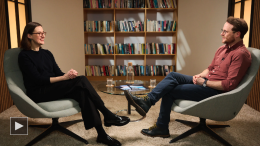

On building trust, never forgetting who the customer is and ‘buying the haystack, not the needle’
In our regular video series, we interview the wealth sector’s key decision-makers to discover how they think about life, both within the world of investment and beyond it; what brought them into the business and what keeps them here; and what makes them and their companies tick
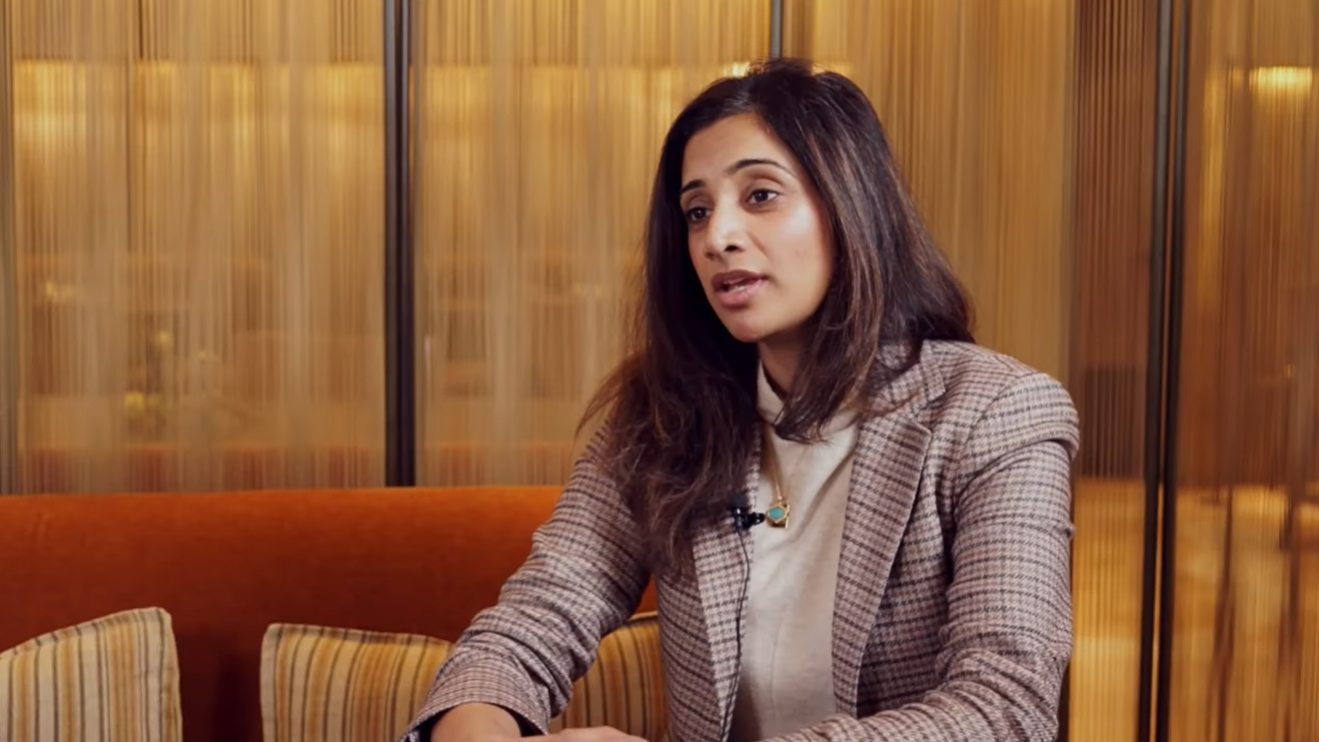
The importance of diversification was a lesson learned early, hard and well by Gillian Hepburn, head of UK adviser solutions at Vanguard. “Years ago, I allowed an adviser I was working with to invest my entire first bonus – which was not a lot but certainly meant a lot to me,” she tells Wealthwise editorial director Julian Marr in the above video.
“It was invested in a single fund because he had just met the salesperson and liked the sound of it – it was quite a fashionable one at the time – and I absolutely felt the pain of what turned out to be a 70% fall.
“It was a massive, sharp lesson in how you really feel about taking risk – while another lesson was on why diversification is so important. And it comes back to a phrase we use at Vanguard a lot – it is about ‘buying the haystack, not the needle’. Essentially, I invested in the needle and it was not a great outcome.”
That prompts the question of how Hepburn, one of the advice sector’s great communicators, would explain risk to somebody who does not actually work in investment – or perhaps even to that former adviser colleague of hers.
Who is the investment for and what are the circumstances? Is it ‘grow’, ‘protect’ or ‘decumulate’?”
“It is all about what you can afford to lose,” she replies. “Diversification is vital in this regard and I like to use my ‘beach shop in Scotland’ analogy: if it just sold ice cream, it might find it hard to stay in business – but, if you add in some umbrellas, then suddenly it is a much better business model.”
And, since we are defining things, what is her take on ‘value for money’ in the context of investment? “We all have different views on that as value is often quite personal but, with an investment, it really depends on the objective,” says Hepburn. “Then, is the investment low-cost and risk-aligned, does it have clear outcomes and is it actually aligned to the target market? At heart, who is it for and what are the circumstances? Is it ‘grow’, ‘protect’ or ‘decumulate’?”
Mind the gap
Later in the conversation, asked what she sees as the best and worst-case scenarios for the future of wealth in the UK, Hepburn is succinctness personified, replying: “The best case is we manage to close the advice gap. The worst case is we make no progress whatsoever.” Sticking with the future, how does she think wealth and asset managers can best attract the next generation of talent?
“How we market the industry and how we recruit is so important here and, looking forward, we have got to watch that the algorithms don’t take over and screen people out,” she says. “As an example, I probably would not get in today: I went to the local comp school, I got an English degree – so why on earth am I here talking to you about investment? “So we just have to be careful in terms of how we recruit. And it goes back to that whole piece around diversity – it is as much about diversity of thought and background as all the other areas we talk about.”
We must never forget who the customer is and why we do what we do.”
In a similar vein, how can financial services firms set about building – or perhaps rebuilding – trust? “This whole question of trust varies across the sector – in terms of the different parts of the value chain, in terms of financial services,” says Hepburn. “At Vanguard, we have just been highlighted as a company most advisers trust by quite some margin – and it is important to understand what that view was based on.
“It was based on transparent and clear communication; it was based on delivering a consistent track record of performance; and also, interestingly, it was based on heritage, brand and scale. That is something we are very proud of – what we were able to deliver for clients in terms of cost because of the growth and the scale of the business.
“But it was also based on service quality and relationships. We are a relationship business in a number of ways and something I always talk about is how we must never forget who the customer is and why we do what we do. Rebuilding trust – if we believe that parts of the sector are struggling here – is all about thinking about all these different points.”
A full transcript of this episode can be found after this box while you can view the whole video by clicking on the picture above. To jump to a specific question, just click on the relevant timecode:
00.00: What excites you about the current investment outlook? What worries you?
01.37: To what degree should professional investors be thinking beyond so-called ‘traditional’ investments? Towards what?
02.48: What drives your approach to client communications? Should professional investors aim to attract the ‘right’ type of client?
03.53: What was your path into investment – and, if you hadn’t taken it, what do you think you would be doing now?
04.51: What was the biggest investment mistake you are prepared to admit to – and what did you learn from it?
05.54: How would you explain risk to someone who does not work in investment? And how would you define value for money in the context of investment?
07.22: Outside of work, what is the strangest thing you have ever seen or done?
08.50: What are your best and worst-case scenarios for the future of wealth in the UK?
09.04: How can wealth and asset managers best attract the next generation of talent?
10.47: How can financial services firms – and indeed the whole sector – set about (re)building trust?
12.20: What advice would you have given your younger self on your first day in this business?
13.01: Two Choice Words recommendations, please – one a book; one a free choice?
Transcript of Choice Words Episode 31:
Gillian Hepburn, with Julian Marr
JM: Well, hello and a very warm welcome to another in our series of ‘Choice Words’ videos, where we get to speak to the great and the good of UK fund research and UK fund selection and find out what makes them tick. I am Julian Marr, editorial director of Wealthwise, and today I am delighted to be talking to Gillian Hepburn, who is head of UK adviser solutions at Vanguard. Hello, Gillian.
GH: Hello Julian.
JM: Let’s get straight into it – what excites you about the current investment outlook? What gives you pause for thought?
GH: Well, let’s start with a pause for thought. The geopolitical landscape is challenging, isn’t it? Already this year, we have seen significant activity globally, which can bring uncertainty and unpredictability. However, it is important to note that many of our clients have now experienced a number of bouts of volatility over recent years – and advisers have actually trained them well to sit tight and essentially weather the storm.
At Vanguard, we do have some great data that demonstrates market recovery after events such as 9/11, Covid and the Russian invasion of Ukraine – and therefore the virtues of staying long-term, disciplined and diversified. In terms of current outlook, meanwhile, I am actually really excited by the industry drive to encourage more people to invest – and we will be part of that campaign, which is kicking off later in the year.
Blockchain’s role
JM: We might come back to that, I think – it certainly sounds like something we would talk about in these conversations – but I am going to stick to my script for the time being. In the great portfolio diversification of life and the way you are seeing things now, how should professional investors be thinking beyond traditional assets – cash, bonds, equities – and anything more alternative? And how would you define that?
GH: Interesting one. We often think of mutual funds as what you have described as ‘traditional’ investments – but we are now seeing a significant rise, for example, in ETFs, which are particularly popular among the younger generations who recognise their benefits.
I also do not think you should discount showing an interest in things like crypto and bitcoin though – and I see you are raising an eyebrow there! – not necessarily as an investment. It is the technology that underpins their delivery that is massively interesting. So, for example, blockchain should have a part to play in the product development of the future, such as personalisation of products – particularly perhaps in decumulation journeys.
JM: Oh, that is interesting. I was not going to point and shout ‘heretic’ when you mentioned crypto – but it is the blockchain aspect …
GH: Yes – the technology is really interesting and something people should really take notice of.
Consumer understanding
JM: Well, we have touched on a few things already that move us into the world of client comms, which I know is a massive part of what you do – and certainly you have written lots of stuff for me in the past. What drives the Vanguard approach to client communications? I know you have not been there terribly long but I suspect you have a fair idea already. Also, do you think there is such a thing as what I call ‘the right type of client’ – somebody who is going to stay with you along the whole journey so they benefit from being in at the beginning and finish when you say, That is enough – we have reached our goal?
GH: Quite simply, Consumer Duty must be at the heart of this – particularly in an intermediated world. So, for example, how do we give advisers soundbites to use with clients in terms of their investment?
And then the same with ‘deep-dive’ information – should they need it – to support consumer understanding. That is just so important – but it is also important to deliver communication in different ways. Digital is playing an increasing role but we also believe it is important to continue to give face-to-face support for clients who really need it.
From MNS to MPS
JM: OK – great stuff. A more personal question now – what was your path into investment? And, if you had not taken it, what do you think you would be doing now?
GH: Oh, great question! Like many people in the industry, perhaps, it was by accident! I was simply part of the way through an English degree and then decided I did not want to teach, which had been the original plan. So I ended up with a summer job at Standard Life – because I was Edinburgh-based – and that led me to their graduate training scheme. And the rest is really history.
Although I started in their customer service division, I ended up doing marketing and distribution and platforms before moving into the ‘MPS’ – the model portfolio service – world. As for your second question on if I had not gone down that route, I would probably be attempting to teach Shakespeare to schoolkids!
JM: Wow – what are the parallels between teaching Shakespeare to schoolkids and teaching investment to people who don’t seem to value that anymore!
‘Buy the haystack, not the needle’
JM: Now, I know this next question is probably going to be more personal to you, rather than a part of your job, but what was the biggest investment mistake you ever made – and did you learn anything from it?
GH: I am really happy to share this one. Many years ago, I allowed an adviser I was working with to invest my entire first bonus – which was not a lot but certainly meant a lot to me! I was very young at the time but it was invested in a single fund because he had just met the salesperson and liked the sound of it – it was quite a fashionable one at the time.
I absolutely felt the pain of what turned out to be a 70% fall. And that was a massive, sharp lesson in how you really feel about taking risk – while another lesson was on why diversification is so important. And it comes back to a phrase we use at Vanguard a lot – it is about ‘buying the haystack, not the needle’. Essentially, I invested in the needle and it was not a great outcome.
Stocking a Scottish beach shop
JM: I have not heard that line before. Very good. And, actually, let’s now try and combine client comms and that last question – how would you explain risk to somebody who does not actually work in investment? And possibly to that adviser of yours!
GH: Great question. Probably, though, the single fund story isn’t such a great example because you could argue it could have been amazing but actually it was genuinely terrible – so it is all about what you can afford to lose in terms of taking risk. I like to use my ‘beach shop in Scotland’ analogy: if it just sold ice cream, it might find it hard to stay in business – but, if you add in some umbrellas, then suddenly it is a much better business model. So diversification is vital.
JM: Very good. And, since we are defining stuff, what is your take on ‘value for money’ in the context of investment?
GH: We all have different views, don’t we, on what represents ‘value’? It is often quite personal but, with an investment, it really depends on what the objective is – and then, also, is it low-cost, risk-aligned, does it have clear outcomes and is it actually aligned to the target market? So who is it for and what are the circumstances? Is it ‘grow’, ‘protect’ or ‘decumulate’?
Walk the walk
JM: Everyone’s favourite Choice Words question now, Outside of work, what is the strangest thing you have ever seen or done?
GH: This is really hard – you are challenging me! I think it was probably the ‘Moon Walk’ – the walk through the night to support breast cancer charity Walk the Walk. It was hard because what I hadn’t really got my head around was, first of all, if it is done during the night, you should really rest during the day!
But I had been running around all day – and also I forgot that doing it in Scotland, despite it being the summer, it was still pretty cold. So I finished completely exhausted – but I finished it because it was so important to make sure I did that because of the people who sponsored me as well as the charity and the cause.
JM: When you said ‘moonwalk’, obviously I didn’t think you were in space but I did have visions of you dancing backwards like Michael Jackson for charity!
GH: No, no – just tramping a marathon distance around Edinburgh in the middle of a Friday night, which feels now quite a strange thing to do. But quite rewarding.
JM: I have staggered around Edinburgh late at night – though usually with the PRs of Standard Life, Aegon and all the rest! OK – different ‘moonwalk’ then.
Mind the gap
JM: Back to the industry, what do you see as the best and worst-case scenarios for the future of wealth in this country?
GH: For me, this is just really simple. The best case is we manage to close the advice gap. The worst case is we make no progress whatsoever.
Recruitment drive
JM: Very succinct! So I will throw in a couple of subsidiary questions. Since we are talking about the future, how do you think wealth and asset managers can best attract the next generation of talent?
GH: That is a good question. It is about making our industry more appealing – and also continuing to bust some of the myths, which I do think still exist. I do get frustrated at this whole discussion – particularly from women – about how we work in a male-dominated industry. If by that we mean, in certain sectors of the industry, there are more men than women, then, yes, absolutely – I would agree with that. But I am just not keen on that word ‘dominated’.
I think how we market and how we recruit is really important and, for me, particularly looking forward, we have just got to watch that the algorithms don’t take over and screen people out. Just as an example, I probably would not get in today: I went to the local comp school, I got an English degree – so why on earth am I here talking to you about investment
So we just have to be careful in terms of how we recruit. And it goes back to that whole piece around diversity – it is as much about diversity of thought and background as all the other areas we talk about in terms of gender and ethnicity.
JM: Absolutely. I just have a terrible feeling we are getting to a world where the applicants use AI to craft their applications and the people in HR use AI to weed them out. I am not quite sure where we end up after that.
Heritage, brand and scale
JM: I am not going to touch on AI specifically – but you can of course bring it into your answer to this question. Looking again to the future – though probably looking to the present just as much – how can financial services firms, or indeed the whole of His Majesty’s financial services industry, set about building or maybe that should be rebuilding, trust?
GH: I think this whole question of trust varies across the sector – in terms of the different parts of the value chain, in terms of financial services. For us at Vanguard, we have just been highlighted as a company that most advisers trust by quite some margin – and we are really proud of that – and it is important then to think about or understand what that was based on. It was based on transparent and clear communication – so something we talked about earlier; it was based on delivering a consistent track record of performance; and also, interestingly, it was based on heritage, brand and scale.
That is something we are very proud of – what we were able to deliver for clients in terms of cost because of the growth and the scale of the business. But it was also based on service quality and relationships. We are a relationship business in a number of ways – from the adviser-client relationship to the way we interface with our clients. So for me, rebuilding trust – if we believe that parts of the sector are struggling here – is all about thinking about all these different points.
‘Enjoy yourself’
JM: OK – we are zooming through here but just two more questions. First one – knowing what you know now, what advice would you have given yourself on your first day in this business?
GH: That it is a really interesting question because it is quite some time ago now! Do you know what – the first point is, Just enjoy it, right? Enjoy it, because the time will pass very quickly. Also, something I have always talked about is, Never, ever, ever, forget who the customer is and why we do what we do. And then, finally, Say ‘yes’ to the pension scheme.
Trust us – it’s not that bad!
JM: Last question. We call this ‘Choice Words’ because of the choices our viewers – or viewer, bless you! – do for a living but this involves more personal choices. We usually ask for a book – it does not have to be on investing, but it can be – and then also a free choice. That can be on anything – I won’t even try and go through the variety of suggestions we have had over the last 30 interviews or so – but over to you.
GH: If I start with the book, I don’t read an awful lot of business books but one that really had an impact on me is The Jelly Effect: How to Make Your Communication Stick by Andy Bounds. He talks about communications – something we have talked about today – and it just taught me a lot about thinking about how we communicate.
And actually, when you read it, you kind of think maybe some of this is very obvious – but we forget. So that was a really important book and then – if I can stick with books, given my background in English – another great book has got to be Hamnet by Maggie O’Farrell. And that is not just because I saw the film recently! It is fabulous.
JM: There you go. Top books. I mean, I don’t think am going to read it! And – we talked about this before – I am not going to go to the movie as I do not like to cry in public!
GH: Trust me – it’s not that bad!
JM: That is a great film review: “Trust me – it’s not that bad”!
GH: Well, I heard before I went: Take your tissues – you’ll need them from about a third of the way through. And I cry at lots of movies – but I didn’t this time. You will be fine.
JM: That sounds good. Meanwhile, that is our new strapline for Choice Words: Trust us – it’s not that bad! Great ‘Choice Words’ choices, Gillian – thank you so much for that. Thank you so much for the entire conversation today. And thank you very much for watching. Please look out for further Choice Words videos as they are published.