


The week that was …
Economic round-up
10% US tariffs ruled illegal
Donald Trump’s 10% global tariffs have been ruled illegal by a US court. The US Court of International Trade concluded the tariffs, imposed under Section 122 of the Trade Act of 1974, were “unauthorised by law”. The court did not suspend the tariffs broadly but only for the two companies that brought the case. Read more from the FT here
Tough month for UK construction
The UK’s construction sector suffered another tough month in April, with activity down and inflation rising. The S&P Global UK Construction Purchasing Managers’ Index (PMI) registered at 39.7 in April – down from 45.6 in March and indicative of a sharp fall in overall business activity. Reduced output has now been recorded in each month since January 2025. Read more from S&P Global here
Energy costs weigh on US households
US consumer sentiment slumped to a record low in early May, with higher energy costs weighing on household finances. The University of Michigan Consumer Sentiment Index fell to an all-time low of 48.2 this month – down from a final reading of 49.8 in April. Economists polled by Reuters had forecast the index dipping to 49.5. Read more from Reuters here
Firms keep hiring in the US
The US economy created 115,000 jobs in April as businesses kept hiring despite the economic fallout from the US-Israel war in Iran. The unemployment rate meanwhile remained unchanged at 4.3%. The latest figures follow months of significant fluctuations in job numbers. Non-farm payrolls fell by 156,000 in February before rising by 185,000 in March. Read more from the BBC here
US business activity holds firm
The ISM Services PMI in the US edged down to 53.6 in April from 54 the previous month. The index measuring business activity and output rose by two points to 55.9, however, indicating some initial resilience of the US economy to the crisis in Iran. Read more from Trading Economics here
Markets round-up
UK bond yields fall
The cost of UK government borrowing fell and the pound rose as Sir Keir Starmer looked set to stay in post in spite of Labour’s punishing losses in last Thursday’s local elections. Gilts were the best-performing sovereign bonds among G10 economies on Friday, pushing down yields, as the prospect of an immediate challenge to the prime minister appeared to fade. Read more from the Times here
US markets hit new highs …
The S&P 500 and the Nasdaq indices hit record highs on Friday, boosted by gains in AI-related stocks. Nvidia climbed 1.8% on the day, while memory and storage sellers Micron Technology and Sandisk jumped more than 15%. The Philadelphia SE Semiconductor index has so far gained 55% in the second quarter. Read more from Reuters here
… but recent rebound narrowly-led
The rebound in US stocks since late March has been driven by the smallest number of stocks on record. The S&P 500 index has soared more than 12% since the start of April, propelled by a handful of Big Tech stocks. Read more in ‘In focus’ and from the FT here
BP profits soar on oil price
BP saw its profits more than double in the first three months of the year, as oil prices jumped in response to the Iran war. The FTSE 100 firm revealed its preferred profit measure – underlying replacement cost profit – surged by over 130% to $3.2bn (£2.4bn) in the first quarter, up from $1.38bn a year earlier. This was ahead of expectations. Read more from the Independent here
Groups sound warning on UK food costs
Farming groups are warning of a “dramatic” rise in food prices as fertiliser costs spike in response to the war in Iran. The British Retail Consortium also warned that supermarkets were already absorbing huge extra costs due to the conflict in the Middle East, adding these would inevitably filter through to consumers. Read more from the Independent here
“Where companies could draw a clear line between AI spend and incremental revenue, particularly through cloud and enterprise channels, stocks were rewarded
Selected equity and bond markets: 01/05/26 to 08/05/26
| Market | 01/05/26 (Close) |
08/05/26 (Close) |
Gain/loss |
|---|---|---|---|
| FTSE All-Share | 5558 | 5504 | -1.0% |
| S&P500 | 7230 | 7399 | +2.3% |
| MSCI World | 4674 | 4757 | +1.8% |
| CNBC Magnificent Seven | 431 | 449 | +4.0% |
| US 10-year treasury (yield) | 4.38% | 4.36% | |
| UK 10-year gilt (yield) | 5.00% | 4.91% |
Investment round-up
Investors turn defensive in March
UK asset managers recorded net inflows of £1.36bn in March – a fifth consecutive month of positive net sales – according to Investment Association data. Investors did shift to a more defensive position over the month, however, favouring cash-like assets and diversified strategies, with record inflows into money market funds.
Aberdeen takes over Herald trust
Aberdeen Investments has reached an agreement with Herald investment trust and US activist Saba Capital to take over the former’s management contract and offer two-thirds of shareholders the opportunity to exit the trust. Investment manager Katie Potts will join Aberdeen and remain in charge of the day-to-day management of the trust.
Retail investors yet to warm to private assets – Morningstar
Retail interest in private markets has remained low, with almost three-quarters (72%) of investors not allocating to the asset class and 52% avoiding alternatives altogether, according to Morningstar’s latest retail investor survey. Just 18% of respondents to the survey said they understood how private market investments work, including risks, fees and liquidity constraints.
Lightyear launches ‘ready-made’ investment plans
Neobroker Lightyear has unveiled three ‘ready-made’ investment plans for UK retail investors, built from ETFs from BlackRock and Vanguard. The three risk-based portfolios – moderate, growth and all-world – are aimed at early-stage investors.
Nine in 10 Schroders funds ‘value for money’
Just seven of 77 Schroders funds failed to demonstrate consistent value, according to its latest Assessment of Value report. These included the group’s European Climate Transition, European Smaller Companies, India Equity, UK Alpha Plus and UK Dynamic Smaller Companies funds.
Chrysalis Investments announces transition
After reporting a sharp drop in net asset value, Chrysalis Investments has announced it will move to a self-managed structure and end its relationship with its external investment adviser. The trust saw particular weakness in two of its largest holdings, Klarna and Starling Bank.
… and the week that will be
US-China meeting
As US president Donald Trump meets with his Chinese counterpart Xi Jinping in Beijing this week, investors will be monitoring any developments between the two nations on access to rare earths and technology, plus any behind-the-scenes progress on Iran. This is set to be the first of four potential meetings over the next year. Read more from the Council on Foreign Relations here
US employment data
The macro-data spotlight meanwhile will be firmly on US employment numbers, culminating in the non-farm payrolls report. This is expected to show a marked cooling in hiring and more moderate wage growth – evidence that could reinforce expectations of interest rate cuts later in the year. Read more from Charles Stanley here
The week in numbers
UK economic growth: Consensus expectations are for the preliminary reading of first-quarter UK GDP to be 0.3%, quarter on quarter – compared with 0.1% in the previous period.
US inflation: Consensus forecasts have US prices rising 0.5% month-on-month and 3.6% year-on-year over April – up from 0.9% and 3.3% respectively in March. Core CPI is expected to be 0.2% month-on-month and 2.6% year-on-year.
US producer prices: Consensus expectations have the US Producer Price Index rising 0.2% in April.
US retail sales: Consensus forecasts suggest US retail sales in April will increase 0.1%.
China inflation: The April reading of inflation in China is due on Monday. The March reading was 1%.
In focus: Tunnel vision
War? What war? Investors have been firmly focused on the latest round of earnings announcements coming out of the US – and they would appear to be delighted by what they have seen. This reaction has helped fuel the current US stockmarket surge, with the S&P500 up 7.5% over the last month. That said, the gains have been narrow – indeed, almost exclusively linked to AI – with markets overlooking any progress made elsewhere.
With the earnings season now two-thirds complete, Factset data shows some 84% of S&P500 companies have reported above-estimate earnings. If this were to be the final number, it would mark the highest percentage of positive results since the second quarter of 2021. The magnitude of ‘earnings beats’ has also supported share prices, with companies reporting earnings 20.7% above expectations, against a five-year average of 7.3%.
The markets have been led by a resurgence from the technology giants – and particularly Alphabet, Amazon.com and Meta Platforms, which have been the largest contributors to the increase in the overall earnings growth rate. “The blended earnings growth rate for the first quarter is 27.1% today, compared to an earnings growth rate of 13.1% at the end of the first quarter,” Factset noted.
Even if the earnings strength has been led by ‘Big Tech’, though, other sectors have also delivered good results. Nine of the 11 sectors are reporting year-over-year earnings growth, with seven reporting double-digit earnings growth, led by the communication services, information technology, consumer discretionary, and materials sectors. Only two sectors have reported a year-over-year decline in earnings – healthcare and energy.
Stockmarket strength has not been as broad, however – indeed, according to the Financial Times, Wall Street’s rally had been driven by the smallest number of stocks on record. The paper cited analysis from UBS, which showed the number of stocks “materially contributing” to the S&P 500’s performance hit a record low of 42 last week. A level of 100 has been typical in recent decades. It also showed just five companies have accounted for half of the S&P 500’s growth since April – Alphabet, Amazon, Apple, Broadcom and Nvidia).
As expectations rise and capital is deployed, market performance typically broadens, with a wider range of companies contributing to returns.”
“As earnings season draws to a close, one theme stands out clearly: market leadership remains narrow,” says Nina Stanojevic, investment specialist at St James’s Place. “A relatively small group of companies has once again driven a significant share of overall returns.” While recent results from the largest technology names have been robust, she adds – particularly in areas such as cloud computing and artificial intelligence – it “raises the bar for delivery at a time when valuations and investor expectations are already elevated”.
“History suggests that periods of narrow leadership are not unusual, but they rarely persist indefinitely,” Stanojevic continues. “As expectations rise and capital is deployed, market performance typically broadens, with a wider range of companies contributing to returns. The key question for investors is not whether today’s leaders remain important, but how quickly that broadening takes hold.”
According to Laura Cooper, global investment strategist at Nuveen, markets have rewarded AI progress and overlooked any other types. “Where companies could draw a clear line between AI spend and incremental revenue, particularly through cloud and enterprise channels, stocks were rewarded,” she explains.
“Where that line blurred – even alongside strong top-line growth – pressure followed as the bar for monetisation has risen.” Cooper points out there have been gains in areas such as industrials, utilities and healthcare – “a sign that markets are beginning to price the second-order effects of the AI buildout: power demand, grid investment and physical infrastructure”.
Even with strong capital spending, the bar to beat earnings expectations is moving higher. Factset says analysts are currently forecasting respective earnings growth rates of 21.3%, 23.0% and 20.6% for Q2 2026 through to Q4 2026. For the calendar year 2026, analysts are predicting year-on-year earnings growth of 21.3%. The forward 12-month P/E ratio, meanwhile, is 20.9x – above the five-year average of 19.9x and the 10-year average of 18.9x.
The spending is fuelling growth, but it is also putting free cashflow, depreciation timelines and returns on invested capital under increasing scrutiny.”
Cooper points out some tensions around the capital-spending boom, noting: “The five largest hyperscalers are on track to deploy close to $700bn (£515bn) in AI capex in 2026 alone, spanning data-centres, chips and networking – a figure that continues to climb each earnings cycle. The spending is fuelling growth, but it is also putting free cashflow, depreciation timelines and returns on invested capital under increasing scrutiny.”
Equally, other parts of the market have seen strong earnings but not necessarily been rewarded. Mark Preskett, senior portfolio manager at Morningstar, says AI spending is helping earnings in other parts of the market and adds: “We have seen companies cutting staff and investing in AI. This transcends sectors and includes banks, accountants, insurers and data providers. The whole business world is doing it and we are seeing incredible earnings growth from that cohort.”
One of the few parts of the market that could now genuinely be considered cheap, Preskett continues, is consumer stocks. “Luxury stocks and automakers have lagged the rest of the market but all the signs are that the top 1% of consumers is still doing pretty well.”
The BlackRock Investment Institute sees other ‘mega-forces’ weighing on markets, suggesting the AI mega-force may be strengthening, but geopolitical fragmentation is also determining returns. “Europe and parts of Asia are vulnerable to Middle East supply disruptions, stoking inflation and weighing on growth,” it elaborates.
“The US, by contrast, is more shielded as a net energy exporter, while emerging market energy and commodity exporters in Latin America are benefiting. This is partly why the US has been leading equity market gains to record levels since the war’s start.”
Earnings for AI-related companies have been extremely strong – and markets have rewarded that. In effect, it has been the easy option for investors rather than attempting to judge the complex impacts of the Iran crisis. AI development may continue at a blistering pace, but it will only grow harder to beat expectations. At the same time, this narrow focus means other areas also delivering strong earnings may have been overlooked.
Read more on this from the FT here
In focus: Local difficulty
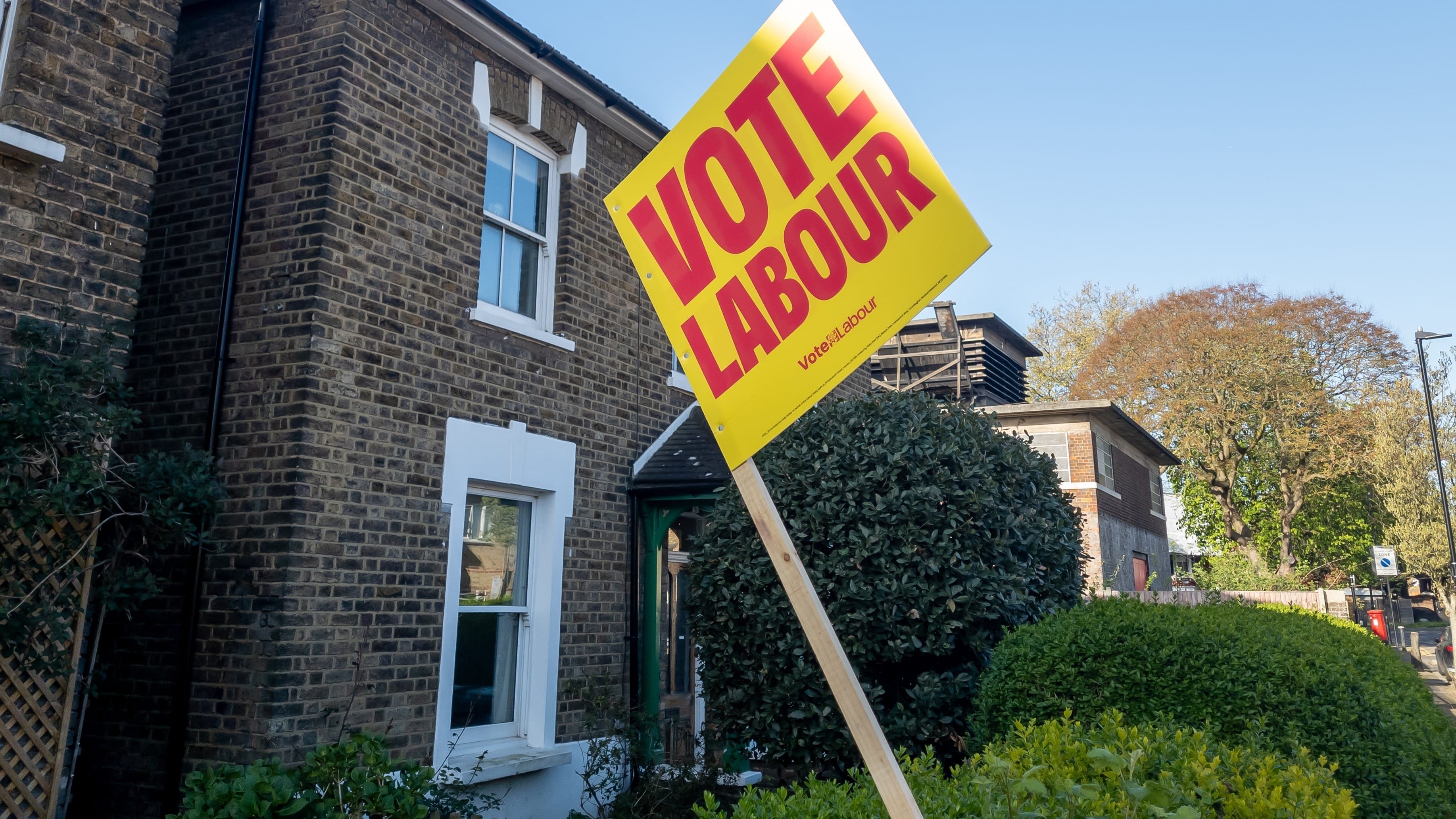
UK gilts have been wobbly in recent weeks as investors have anticipated political fallout from the local elections. Yet the early results seemed to suggest that, while bad, they would not prove existential for the Starmer premiership. Gilt yields duly rallied – only for investors to start to fret again.
For weeks, bond market investors have worried that the fall of Starmer would usher in a left-leaning government and a tax-and-spend era that could prove ruinous for both the UK’s fiscal position and its economic strength – or at least what is left of it. While the mechanism by which Starmer’s exit would come about is difficult to fathom, the prime minister has increasingly looked like a dead man walking.
Initially, it seemed as if the election results would not be enough to topple Starmer. “The gilt market had built up a narrative that today could be the beginning of the end for the PM and, although these results are not positive for the Labour Party they are not – so far – as bad as many in the market feared,” said Matthew Amis, investment director at Aberdeen, on Friday. “At this point, it does not look like these results will be the catalyst for a change of prime minister and, as such, the gilt market is breathing a slight sigh of relief.”
The yield on the 10-year gilt duly fell from above 5% to around 4.9% but Amis conceded: “It does not feel like the end of this political drama just yet and, as such, the market will continue to be on high alert for any further political rumblings.”
So it has since proved, with gilt yields rising again on Monday after a weekend of speculation. “Whether the past few days mark a nadir for gilt weakness remains to be seen,” commented David Roberts, head of fixed income at Nedgroup Investments today.
“Economic numbers suggest, ex Iran, the UK continues to perform acceptably. However, buyers of gilts understand that politics, not economics, has driven bond performance in recent months. Irrespective of where gilt prices end today, for the medium term that looks set up remain the case.”
It is difficult to see an end to UK government bond volatility. Even if Starmer survives this crisis, the media, opposition leaders and his own party smell blood – and not necessarily in that order. The alternatives, however, are likely to be as bad, if not worse, and it is only a matter of time before they too are defenestrated by an electorate increasingly seduced by the mirage of populist solutions.
A UK bond market crisis appears inevitable at some point and, as a result, gilts are likely to remain unappealing to international investors.
Read more on this from the FT here