

The week that was …
Economic round-up
Low-key UK Spring Statement
UK chancellor Rachel Reeves updated MPs on her economic plans in her Spring Statement last week, but the announcement did not contain any major tax or spending measures. The Office for Budget Responsibility also unveiled its latest forecasts for the UK economy. Read more from the BBC here
US gas prices jump
US retail gas and diesel prices leapt higher amid the US/Israel attacks on Iran. Fuel prices jumped more than 10% last week as oil rose above $90 (£68) a barrel, adding pain at the pump for consumers already strained by inflation. US president Donald Trump shrugged off higher gasoline prices, saying “If they rise, they rise.” Read more in ‘In focus below’ and from Reuters here
Surprise rise in Eurozone inflation
Eurozone inflation unexpectedly rose to 1.9% in February. The announcement, which came before the conflict in the Middle East impacted energy prices, was slightly above consensus forecasts of 1.7%. At the same time, it marked the first time since April 2021 that annual inflation has remained below the European Central Bank’s 2% target for two months in a row. Read more from the FT here
US non-farm payrolls disappoint
The US economy shed 92,000 jobs in February, giving up most of the gains of the previous month and well short of the 55,000 gain expected by economists. The unemployment rate increased to 4.4%, creating a tougher rate-setting environment for the US Federal Reserve. Read more from Reuters here
UK construction sector weakens
After showing some signs of a revival at the start of 2026, the UK construction sector recorded an accelerated downturn in February. The seasonally adjusted S&P Global UK Construction purchasing managers index (PMI) registered 44.5 in February – down from January’s seven-month high of 46.4. Anecdotal evidence mostly cited weak order books and a lack of new project starts. Read more from S&P here
US manufacturing sentiment wavers …
The ISM Manufacturing PMI for the US slipped to 52.4 in February 2026 – down from 52.6 in January, but above market expectations of 51.8. It represented a second consecutive month of expansion in the manufacturing sector, albeit at a slightly slower pace. Read more from Trading Economics here
… but services enjoy unexpected boost
The ISM Services PMI for the US climbed to 56.1 in February 2026 –up from 53.8 in January and beating market expectations of 53.5. This was the fastest expansion in the sector since August 2022, following a sharp pick-up in business activity. Read more from Trading Economics here
Holiday week affects China manufacturing
China’s official NBS Manufacturing PMI slipped to 49.0 in February 2026 from 49.3 the previous month, which was below market forecasts. Economists attributed this to disruption from the week-long Spring Festival holiday. Read more from Trading Economics here
Markets round-up
Middle East conflict stokes inflation fears
Global bond markets suffered a significant rout, as investors fretted about inflation in the wake of the Middle Eastern conflict. Traders have been forced to unwind bets on interest rate cuts in the world’s major economies. Read more in ‘In focus below’ and from the FT here
Analysts warns of higher fuel prices …
The US/Israeli war with Iran could leave consumers and businesses worldwide facing weeks or months of higher fuel prices, economists at JP Morgan warned, even if the conflict is short-lived. Suppliers will need to grapple with damaged facilities, disrupted logistics, and elevated risks to shipping. Read more from Reuters here
… yet oil options point to quick resolution
Oil options and futures are signalling the latest Middle East conflict may be short-lived. Traders have been buying structures that profit from a retreat in prices after the initial spike. Options and futures markets have historically provided an early signal of whether traders see a supply shock as fleeting or structural. Read more from Reuters here
Jobs data caps bad weeks for equities
Market sell-offs persisted all week, as fears mounted there would be no quick resolution to the conflict in the Middle East. Despite attempts at a rebound at various points, markets resumed selling and were further dented by weak jobs data in the US. Read more from the Guardian here
US dollar gains on ‘safe haven’ trade
The US dollar saw significant gains over the week as the escalating conflict in the Middle East drove demand for safe-haven assets. In contrast, the euro and yen remained on the back foot as investors worried over the inflationary impact of current events. Read more from CNBC here
“The sell-off has tended to hit interest rate-sensitive areas such as smaller companies and ‘risk on’ areas such as emerging markets hardest while the volatility seems likely to persist until a clearer outlook emerges.
Selected equity and bond markets: 27/02/26 to 06/03/26
| Market | 27/02/26 (Close) |
06/03/26 (Close) |
Gain/loss |
|---|---|---|---|
| FTSE All-Share | 5851 | 5520 | -5.7% |
| S&P500 | 6879 | 6740 | -2.0% |
| MSCI World | 4557 | 4458 | -2.2% |
| CNBC Magnificent Seven | 395 | 393 | -0.5% |
| US 10-year treasury (yield) | 3.95% | 4.13% | |
| UK 10-year gilt (yield) | 4.23% | 4.57% |
Investment round-up
Saba targets Allianz trust
Saba Capital Management has taken a new stake in the £2bn Allianz Technology trust. Saba’s 5.2% position will be held through total return swaps. The Allianz trust is currently trading at a 10.1% discount to its net asset value.
Royal London closes in on £200bn AUM
Royal London reported assets under management at £199bn, up from £173bn the prior year, thanks chiefly to its recent acquisition of Dalmore Capital, which brought in £6bn, and market movements, which contributed £16.1bn. The pensions business also reported “dependable flows”.
AJ Bell expands gilt MPS range
AJ Bell Investments has expanded its Gilt MPS range to include three new portfolios with maturity dates out until 2032. The group launched its Gilt MPS 4 portfolio in December last year, which now accounts for around a quarter of all assets under management across the entire Gilt MPS range.
Aviva reports net inflows of £900m
Aviva Investors saw net inflows of £900m in 2025 – a more-than-fourfold increase on the £200m external net inflows reported in 2024. Aviva described its asset management unit as “a core enabler of growth for the group” while its wealth business also saw a 6% increase in net flows to £10.9bn.
Investors dump equity funds
Investors sold down equity funds for a record ninth consecutive month in February, with outflows accelerating to £927m for the month, according to Calastone data. More than one-sixth of the net outflow (£162m) were attributable to specialist sector funds focused on the technology sector.
… and the week that will be
Developments in Iran
There are plenty of economic updates this week – including inflation data from the US, China and Germany, not to mention US GDP figures – yet any lagging indicator is likely to be of limited use in judging the outlook for the global economy given the situation in the Middle East. Read more from the FT here
UK earnings reports
It is also a busy week for UK companies, with results announcements throughout. Bellwether consumer group John Lewis will also announce its results on Thursday, giving some clues as to the health of the UK consumer. Elsewhere, housebuilders Persimmon and Balfour Beatty update the market. Read more from Hargreaves Lansdown here
The week in numbers
UK economy: Consensus expectations are for the January reading of UK GDP growth to be 0.1%, month on month.
US inflation: Consensus forecasts are that US prices rose 0.3% month-on-month and 2.4% year-on-year in February. Core inflation is expected to have risen 2.5% year-on-year. The US personal consumption expenditures price index meanwhile is expected to show core PCE prices rising 0.3% in January, from 0.4% the month before.
US economy: Consensus expectations have the second reading of fourth-quarter GDP growth left unchanged at 1.4%.
China inflation: Consensus forecasts have prices in China over February rising 0.4%, year on year, compared with 0.2% in January. The month-on-month rate is meanwhile forecast to remain flat, down from 0.2%.
US consumer sentiment: Consensus expectations have the preliminary March reading of the Michigan index of US consumer sentiment dropping to 55 from 56.6 the month before.
In focus: Panic v reality
Global financial markets have spent the past week digesting the various effects the US and Israeli strikes on Iran could have on the world economy. Commodity prices have risen, government bonds have seen a significant sell-off and investors have retreated back to the US dollar, while stockmarket reactions have at best been mixed. It is a sadly familiar pattern for any conflict in the Middle East – but just how worried should investors be this time?
As ever, an important first step is to disentangle panic from reality. The immediate concern is around energy prices. The oil price has moved from $70 (£52.43) a barrel to above $100 over the past week, while natural gas prices have also spiked. This has been more acute for some countries than for others – the UK natural gas price, for example, has more than doubled in a week.
According to Patrick Farrell, chief investment officer at Charles Stanley, the longer-term implications of an energy-price spike are numerous and complex. “The inflationary impact of the supply shock following Russia’s invasion of Ukraine remains fresh in investors’ minds,” he notes. “However, the market reaction so far has been proportionate – and, arguably, relatively muted.
“Global energy systems are better positioned today due to the diversification efforts undertaken in recent years, and markets appear less inclined to extrapolate worst-case scenarios.” For context, the UK natural gas price is currently trading at 135p per therm. At the start of the Ukraine crisis in 2022, it peaked at 640p while the Brent crude oil price touched $120.
Farrell argues Europe and Asia would be the hardest hit should energy prices remain elevated, as both regions are major net importers of oil and gas, but adds: “Nonetheless, the structural improvements made since 2022 mean governments and industries are better equipped to manage such supply disruptions.”
The Institute for Energy Economics and Financial Analysis, for example, found EU member states cut their gas consumption from April 2024 to March 2025 by 15.6% compared with their average annual consumption between April 2017 and March 2022.
For the UK, the conflict may dent the carefully collected fiscal headroom chancellor Rachel Reeves has created.”
Nevertheless, the conflict muddies the outlook on inflation – and therefore on interest rates. David Zahn, head of European fixed income, Franklin Templeton, warns higher gas prices could bring inflation back to Europe – “not massively, but it might be a little bit higher than was originally anticipated”.
He continues: “Many people say that if this war is over in the next couple of days, we can put it behind us, which is possible, but you have to think of all the things that have been shut down, like the liquefied natural gas in Qatar. Iraq is threatening to shut down some of their oilfields because the oil tanks are full. This is the problem when you are pumping something out of the ground – eventually, you run out of places to put it. This is going to create some issues in the supply chain, even if it is over relatively quickly.”
While Zahn believes inflation will probably be higher in Europe – indeed, the ECB has said it may have to react – he suggests rate hikes remain an outside chance. “We do not expect rate hikes in Europe immediately, but our thesis for the last six months has been the ECB was done cutting and it was going to hike rates at the beginning of this year or the start of next year. This may bring that forward though it is nothing that is going to hurt the European economy – one of the good things about the European economy is that it’s growing quite strongly.”
For the UK, however, the conflict may dent the carefully collected fiscal headroom chancellor Rachel Reeves has created. In a note last week, the National Institute of Economic and Social Research (Niesr) said the Bank of England would have to contend with a “shock” to energy costs. It calculated a temporary rise in oil prices to $100 per barrel that subsided within three months would add 0.3 percentage points to CPI inflation for 2026 relative to previous forecasts from its February economic outlook.
Although such a scenario makes a March rate cut less likely, Niesr believes the Bank of England would probably look past it in its interest rate decisions and continue on its current path. The real danger scenario is if energy price rises persist for up to a year before steadying. This could push up CPI inflation 0.7 percentage points, Niesr reckons, and could also knock 0.2 percentage off economic growth.
Against this backdrop, the reaction across global bond markets would seem excessive. The US 10-year treasury yield rose 18.1 basis points (bps) over the week, for example, while the UK 10-year gilt yield rose 33.9bps and the German 10-year bund rose 20.5bps. These spikes do need to be set in the context of a sustained fall in yields over the past month but look overdone – particularly in the UK.
While Trump shrugged off higher gasoline prices in an interview with Reuters, saying “if they rise, they rise”, he may grow less sanguine as November’s mid-term elections loom into view.”
The big question, therefore, is how long the conflict will last. Given there are no clearly-stated aims and the wider implications for the Middle East remain uncertain, this is almost impossible to judge. Markets have grown used to the prospect of ‘TACO’ – but it is harder for US president Donald Trump to ‘chicken out’ of a major conflict. Even if the US withdraws, the conflict in the region may continue.
At the same time, petrol-pump prices are already rising in the US. While Trump shrugged off higher gasoline prices in an interview with Reuters, saying “if they rise, they rise”, he may grow less sanguine as November’s mid-term elections loom into view. Behind the scenes, the US administration appears to be scrambling to find ways to push the oil price lower.
There is much discussion as to whether this is part of a wider attempt by the US to cut off strategic energy sources for enemies such as China. If so, the US might reason they need to do whatever it takes – however, the end-goals remain opaque.
As for stockmarkets, the impact has been relatively predictable. Charles Stanley’s Farrell notes sectors tied to travel, airlines and hospitality have weakened due to disrupted routes. Equally, energy and defence shares have been natural beneficiaries as investors rotate towards areas that could benefit from higher oil prices and elevated geopolitical risk.
In general, the sell-off has tended to hit interest rate-sensitive areas such as smaller companies and ‘risk on’ areas such as emerging markets hardest while the volatility seems likely to persist until a clearer outlook emerges. For investors, it is a moment to grit their teeth and hope it passes. Previous Middle Eastern conflicts have tended not to have lasting repercussions for stockmarkets but it would be brave indeed to assume this will always hold true.
Read more on this from the Guardian here and from MSN here
In focus: Spring brake
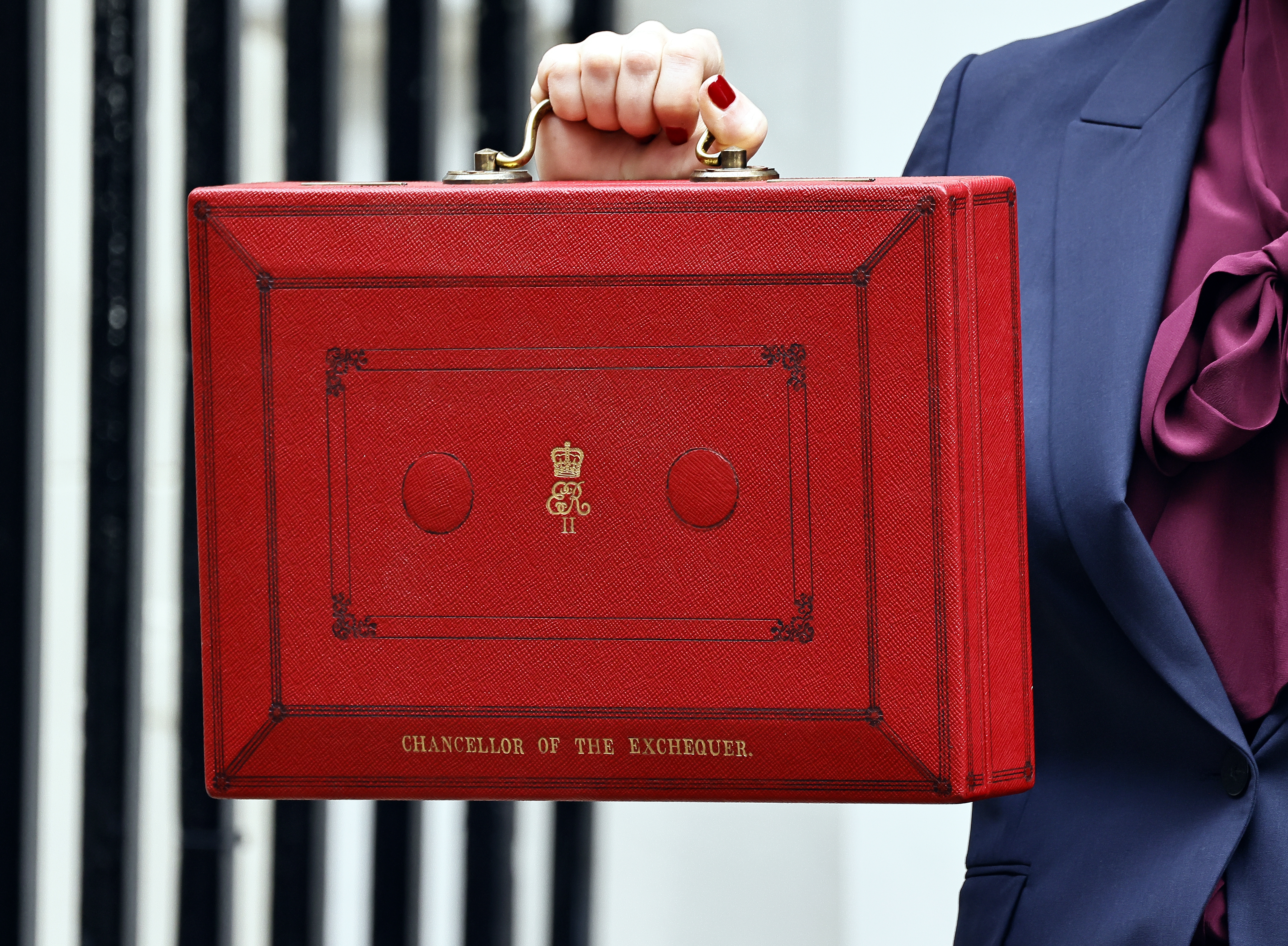
Given the backdrop of a Middle Eastern crisis, the UK Spring Statement did not receive a lot of airtime. It did not help either that it was also studiously boring, with no new announcements. It was merely an update on the UK’s progress and a chance for chancellor Rachel Reeves to hammer home the – debated – view the UK economy is on the right track.
The Office for Budget Responsibility (OBR) revised down expected GDP growth for 2026 from 1.4% to 1.1%, citing a larger-than-expected rise in the unemployment rate. It did, however, lift growth expectations for 2027 and 2028 to 1.6%, from 1.5% previously.
This might have forced further rises in tax receipts but there was at least some good news on borrowing. The OBR forecasts suggest the chancellor will meet her fiscal target of covering day-to-day spending with tax revenues, and she still has £24bn to spare – £2bn more than in November. The projection for overall public sector net borrowing is a drop from 4.3% this year (previously 4.5%) to 1.8% in 2029/30 (from 1.9%).
Still, a lot of the good news on borrowing is wrapped up with lower borrowing costs. That safety net depends on inflation remaining benign and the Bank of England being willing to cut rates – and, as if to illustrate how quickly a chancellor’s best-laid plans can be derailed, the UK 10-year gilt yield jumped 33.9 basis points over the week. The rise in shorter-dated bond yields was less savage, though, and Reeves does not have to panic just yet.
“Given president Trump will want to avoid a rise in global energy prices that generates an unpopular rise in US inflation, we suspect the conflict will be short-lived,” reckons Andrew Wishart, Berenberg’s senior UK economist. “If so, the Strait of Hormuz may reopen in a matter of weeks, enabling energy prices to return to benign levels and the OBR’s forecast to be borne out. This base case is not too different from our own central view.
“A longer-lasting increase in energy prices, however, will impart a fresh stagflationary impulse to the UK economy that means GDP growth is lower, and inflation and borrowing higher. If so, the long-planned reduction in the budget deficit could be blown off-course just as it was getting started.”
Ultimately, the chancellor does not have to panic – just yet – as the OBR predictions still hold and there is breathing space before the next update in October or November. Of course, that does not mean there will not be a few sleepless nights in between.