
Many Americans will shortly be enjoying a second Christmas courtesy of that One Big Beautiful Bill. Or as JPMAM global markets strategist Hugh Gimber observes here when considering what might upset risk sentiment in 2026: “In the US, there is effectively another round of stimulus to come when people receive tax rebates in the post. That should drive another leg of spending – and another leg of US economic growth.”
Weighing up the risks of this “economic experiment”, as he describes it, Gimber continues: “History teaches us excess stimulus can create inflation and asset bubbles – although, to be clear, I see these as tail-risks for 2026. Our base case is continued expansion, continued gains in equity markets and that bond markets are pretty fairly priced today – but there are key factors to track closely to ensure that optimism holds.”
I confess I find myself rather more worried about the inflationary nature of this flood of rebates – though I would immediately acknowledge that, when preparing his address to Wealthwise’s Autumn Wealth Forum back in November, Gimber would not have had access to one key data-set: the impact of the five extra transfers all FPL managers were given ahead of Gameweek 16 to help them manage the exodus of players to AFCON.
The thing is, with Mo Salah having something of an off-season – at least thus far – five transfers turned out to be overly generous for what, for many squads, essentially came down to switching out Brian Mbeumo for another Manchester United midfielder and maybe finding a replacement for Iliman Ndiaye of Everton. (And wouldn’t that have been a lovely time to buy Fulham’s Harry Wilson?)
So does that mean the majority of FPL players are sitting on four or five transfers in preparation for some strategic coup – such as, say, a ‘mini-wildcard’ ahead of the interesting Gameweek 24 fixture swing? Well, maybe – truth be told, without a prohibitive amount of online legwork, I have no way of knowing for sure. I am, however, keenly aware how many transfers I and my peers have left – and it is much nearer zero than five.
That is right – they may well be out there but I have yet to identify a single FPL manager who did not blow their entire hand of pre-AFCON transfers within two, maybe three, weeks of getting their hands on them. The same goes for the various FPL commentators I read and watch, regardless of how much they had urged prudence – austerity even – ahead of actually receipt.
What also went crazy were the prices of various ‘hot’ and ‘cold’ players. Again, whole-of-market data is tough to come by but, thanks to our very own Herdwatch tables, I can offer you some interesting indicative numbers. The four most bought players ahead of Gameweek 16 were Manchester City’s Phil Foden, Brentford striker Thiago Silva, Manchester United talisman Bruno Fernandes and Newcastle counterpart Bruno Guimares.
From that point, their weekly price movements (£m) have been:
Foden: Initially 8.4, then 8.7, 8.9, 9.0, 9.0, 8.9, 8.8 – and currently 8.7
Thiago: Initially 6.8, then 7.1, 7.2, 7.1, 7.0. 6.9, 7.0 – and currently 7.1
Bruno F: Initially 9.0, then 9.2, 9.3, 9.2, 9.1, 9.1, 9.1 – and currently 9.1
Bruno G: Initially 6.8, then 7.0, 7.0, 7.0, 7.0, 7.0, 7.1 – and currently 7.2
As you are probably aware, Bruno F was injured in Gameweek 17 – otherwise he would likely be mid-nines and counting – but you take my point, I suspect: this is not ‘normal’ FPL behaviour. People received an unexpected freebie and, in the blink of an eye, it was gone with some pretty extraordinary consequences for price inflation and market volatility.
Of course, this is merely FPL and has no real-world lessons for the world’s biggest economy – but I hereby reserve the right to crow further down the line. Or else, in proper financial columnist style, to never mention the subject again should my forecast scenario never come to pass. Instead, let’s take a quick look at how the MeanReversionMachine index did in the second half of the busy Christmas period.
“People received an unexpected freebie and, in the blink of an eye, it was gone with some pretty extraordinary consequences for price inflation and market volatility.
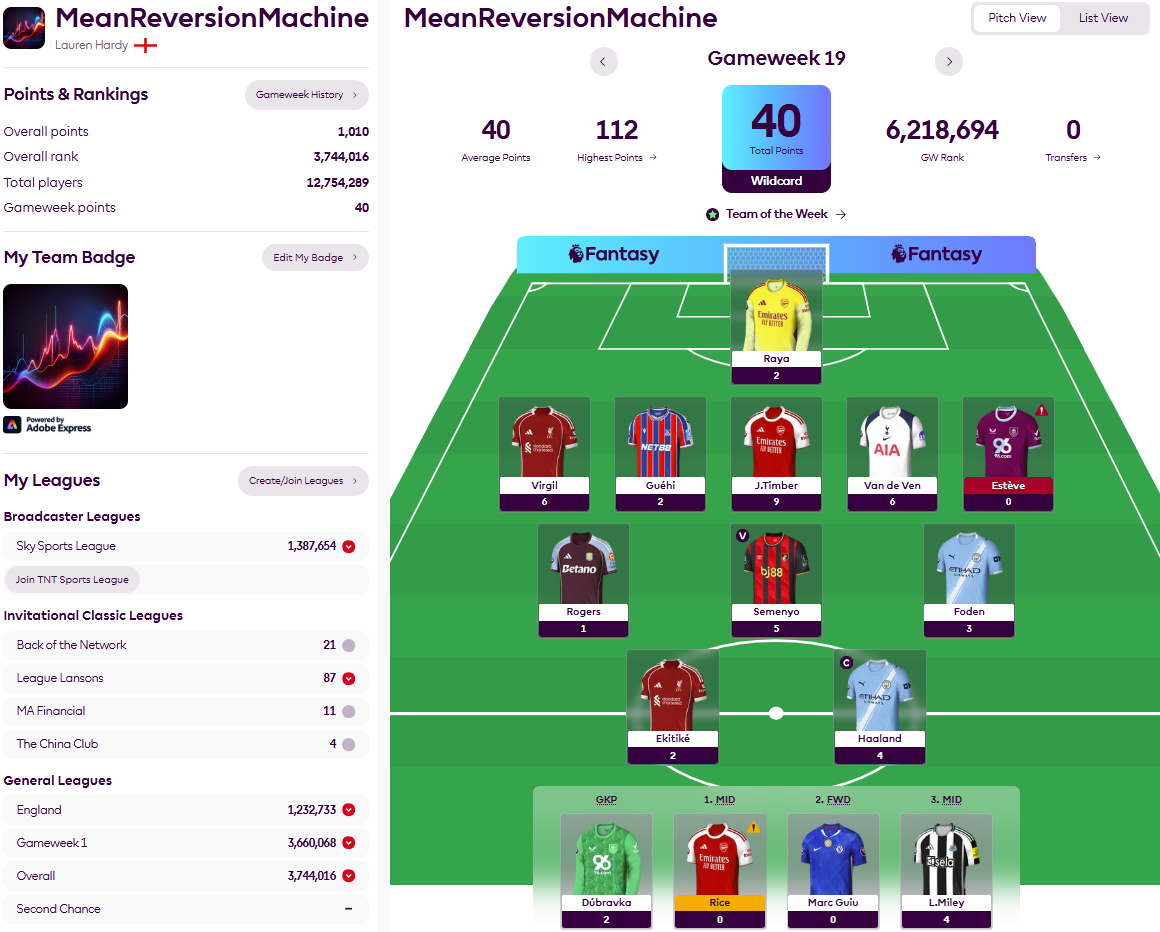
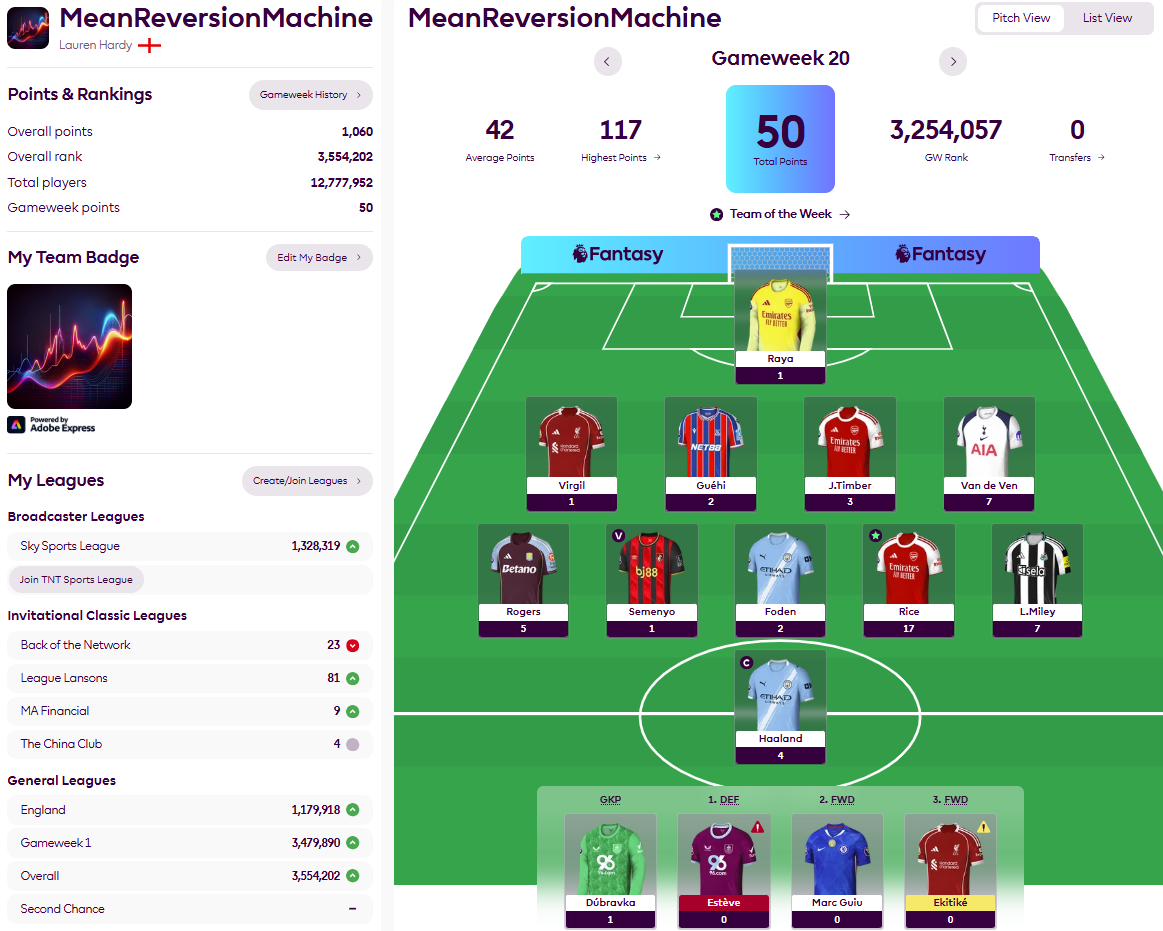
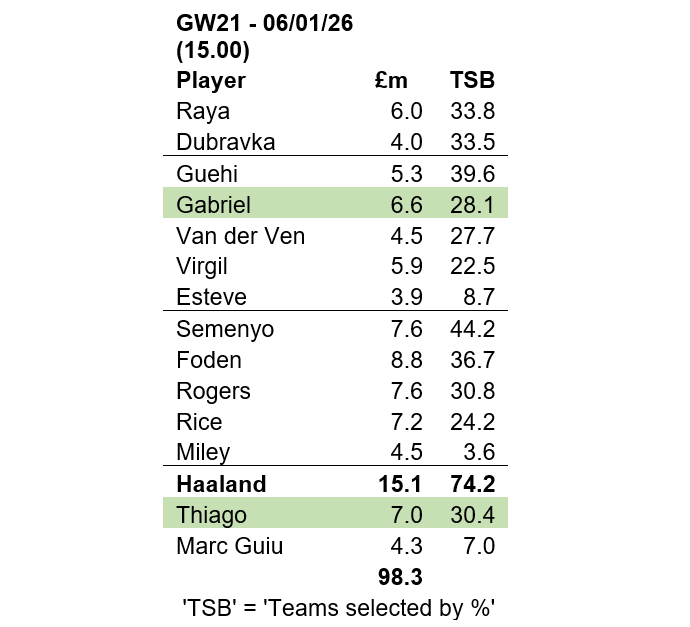
Short answer – not spectacularly but well enough to drag the portfolio dangerously close to first-quartile status. Recent performance has been built on some strong defending and, if I am honest, the portfolio’s advisers waiting as long as possible to crunch the ownership numbers to ensure they could bring in Thiago for Ekitiké. That certainly worked this time but may not seem so clever if the Liverpool striker is fit to face Burnley.
The other recent change to the index, as you can see below, was the reintroduction of Arsenal defender and so-called ‘FPL cheat-code’ Gabriel in place of teammate Timber. The latter’s relegation was largely because we cannot own more than three Arsenal players and there is only so much fancy footwork the portfolio’s advisers can do in a single week. Frankly, they are grateful for the relative peace of an FA Cup weekend.
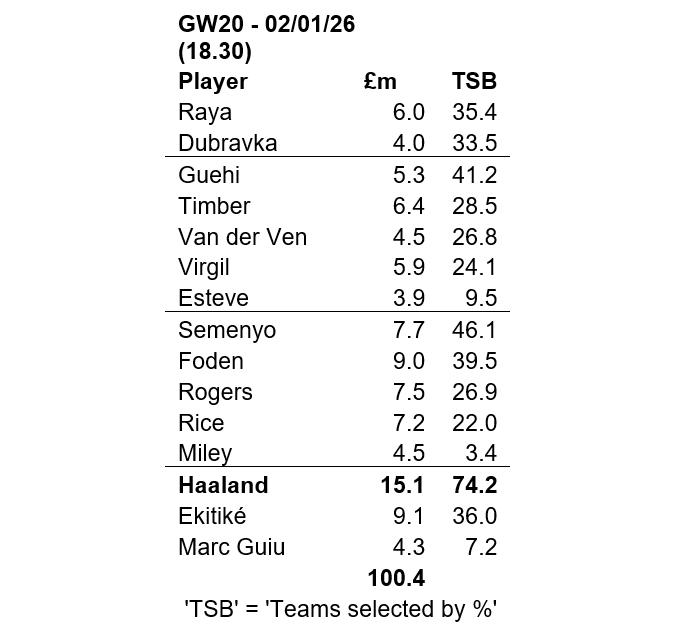
Source: Fantasy Premier League
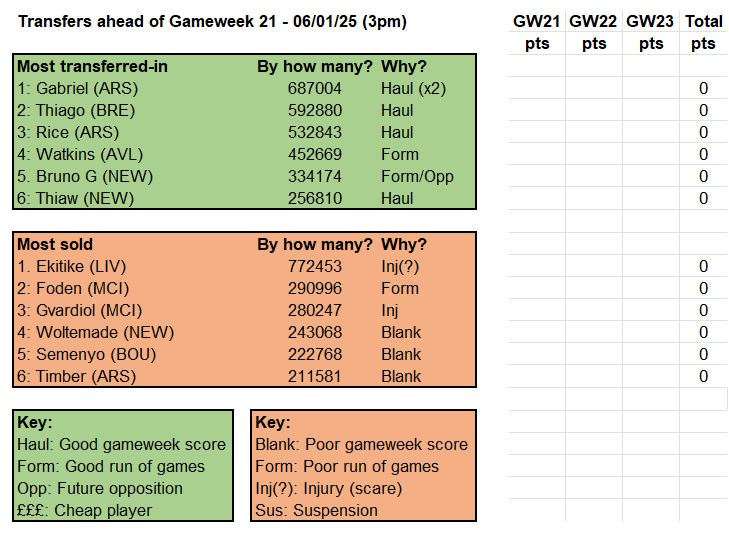
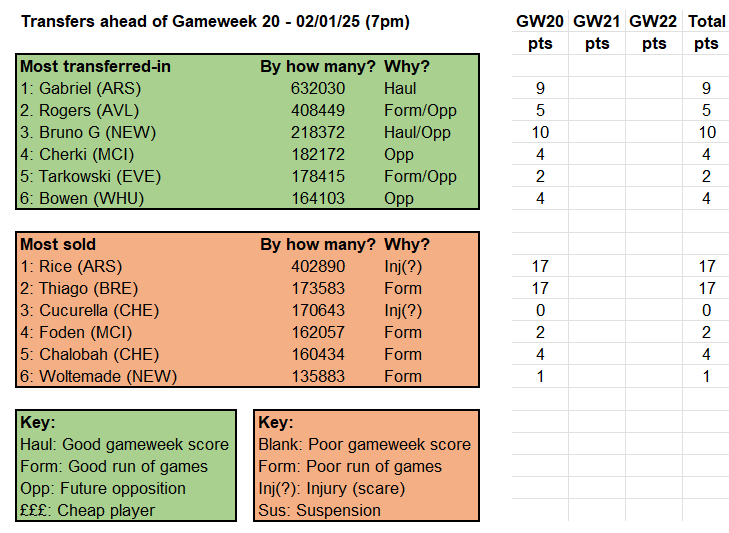
Finally, a quick glance at the Herdwatch tables reveals the market continues to have one eye firmly on the rearview mirror – targeting the likes of the recently-hauling Thiago, Gabriel, Bruno G and Rice. We will see how that works out but the timing of this piece means we do know Newcastle defender Malick Thiaw rewarded the quarter of a million people who bought him after his Gameweek 20 17-pointer with a score of minus one.
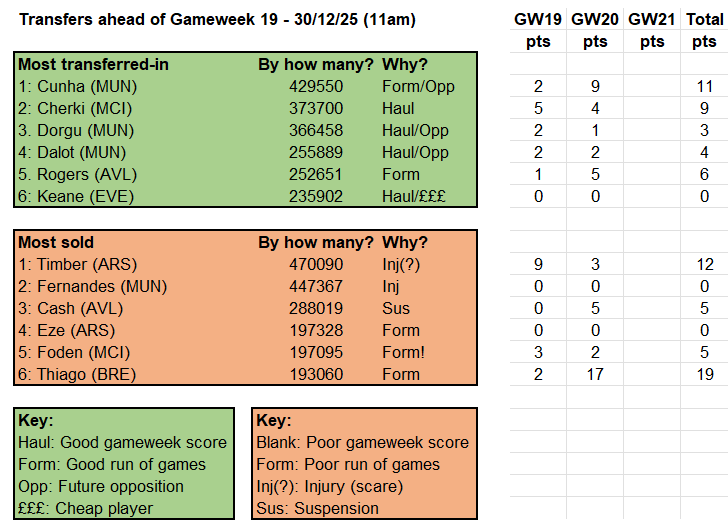
Longer term – or, at least, on a four and five-week basis – Thiago continues to mess with the minds of his various sellers and buyers (delete according to any given week) while all those who sold Bournemouth’s Semenyo in the expectation his imminent move to Manchester City would reduce his playing time and/or motivation have been proved spectacularly wrong. Presumably it is only a matter of time before his price starts inflating again …
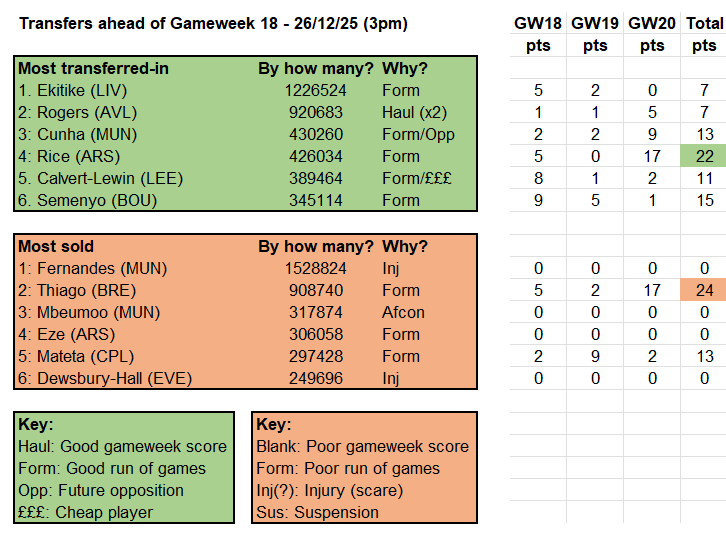
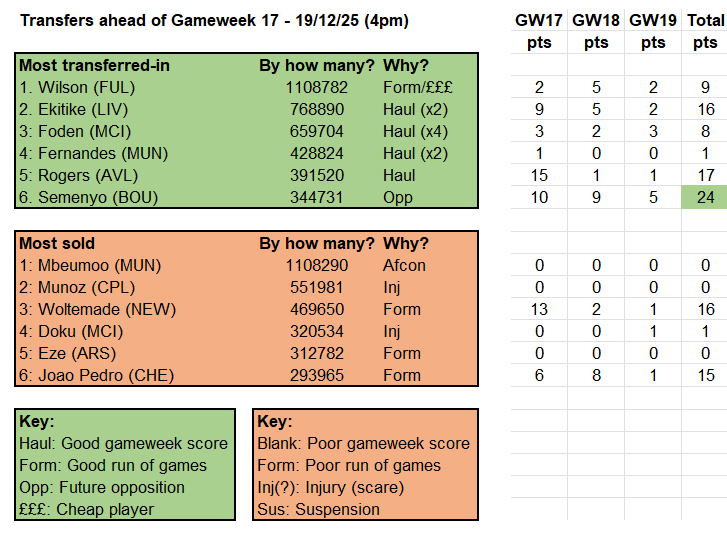
Source: Fantasy Premier League