
It has now been three weeks since the conflict between the US and Iran began – another geopolitical crisis in a world where the ‘peace dividend’ seems to have vanished for good. With every geopolitical incident, it is customary for superlatives to be used to describe the gravity of the situation but, in this specific case, it is no exaggeration to say this is now the most significant crisis in the history of the oil market.
The closure of the Strait of Hormuz had long been a tail-risk scenario in the minds of all investors – and perhaps in that of Donald Trump as well. Even so, the US president’s decision to overthrow the Iranian regime by eliminating its Supreme Leader on the very first day of the conflict has pushed Tehran to effectively block the world’s most important maritime chokepoint.
Before the war, nearly 20% of the world’s oil supply passed through there. For nearly three weeks now, the world has lost nearly 12 million barrels per day (Mb/d) of oil flow, which is by far the largest supply disruption in history – far exceeding the 5 Mb/d lost during the two oil crises in the 1970s or the 4 Mb/d that disappeared during the two previous Gulf Wars in the 1980s and 1990s.
“Unless inflation expectations become unanchored, central banks are likely to remain patient, which will also limit the impact on risky assets.
While Saudi Arabia and the UAE do have two pipelines that bypass the strait, their maximum capacity is far from sufficient to make up for the shortfall.”
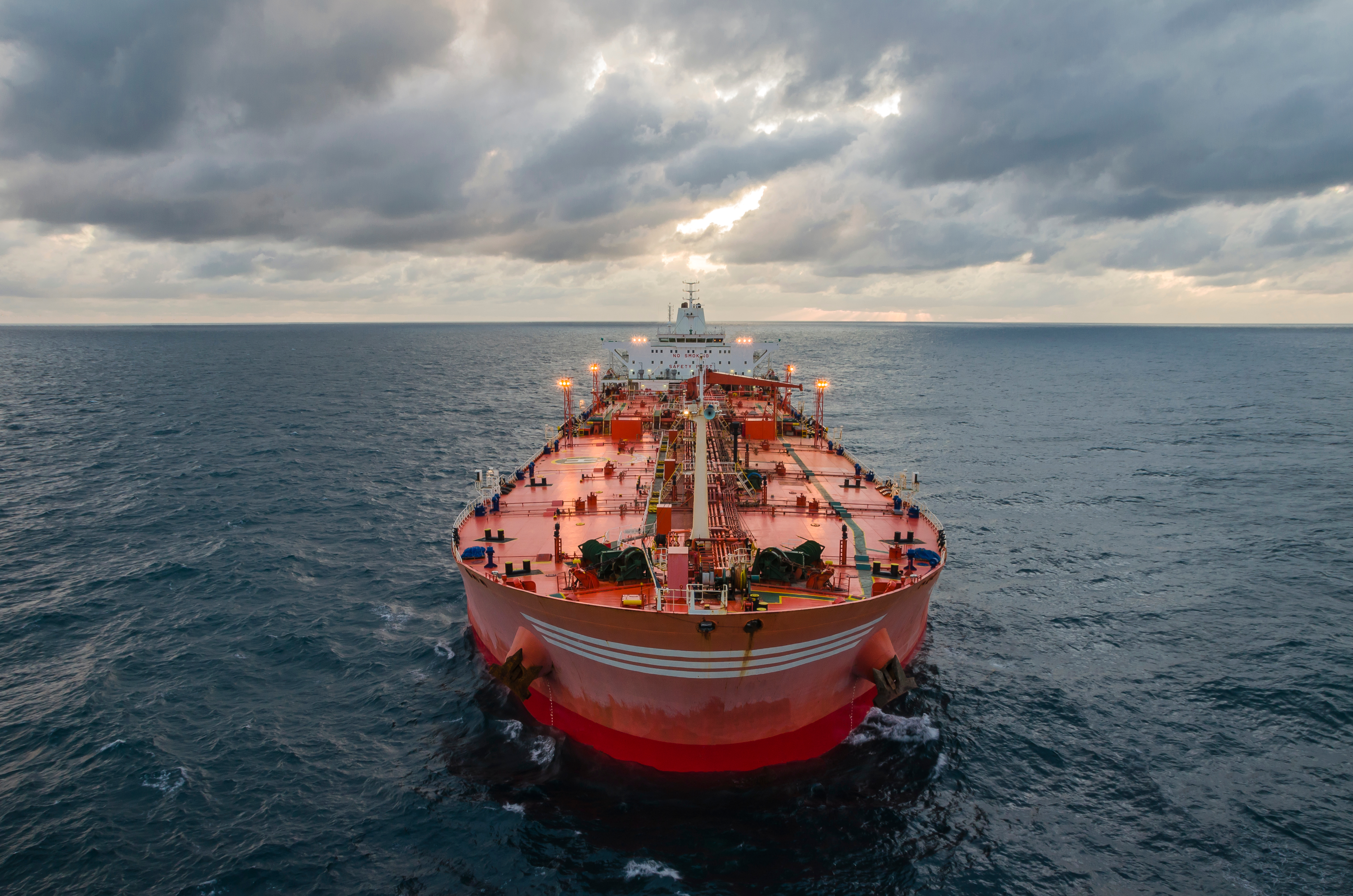
While in the early days of the conflict, soaring shipping costs and insurance premiums contributed to the suspension of maritime traffic through the Strait of Hormuz, today the main reason for the near-total absence of traffic lies in the risk of attacks on oil tankers, with 17 vessels having been attacked by Iranian forces.
Despite the Iranian regime’s weakening, its capacity to cause disruption is expected to remain significant, given the limited resources required to disrupt maritime traffic – much like the attacks by Yemen’s Houthis in the Red Sea, which still force ships to go around the African continent rather than risk passing through the Suez Canal.
What is concerning here is that there are very few alternatives to the Strait of Hormuz. While Saudi Arabia and the UAE do have two pipelines that bypass the strait, their maximum capacity is far from sufficient to make up for the shortfall.
Storage capacities reaching saturation
Even more concerning is that, as time goes on, the storage capacities of oil-producing countries are reaching saturation – forcing them to voluntarily cut production. This is already the case for Iraq, Kuwait, the UAE and even Saudi Arabia, meaning OPEC production has already been reduced by 8 Mb/d.
Even after this conflict is resolved, it will take time to restart production – likely another one to two months – suggesting lasting disruptions to oil supply. Finally, the drawdown of strategic reserves by several major countries is very good news, but the rate of drawdown is only 1.4 Mb/d – again, far too low to absorb the loss of supply in the market.
Read also: Risk, scenarios, oil price – three investment takes on Iran conflict
This development explains the surge in oil prices since the start of the conflict, with Brent crude now firmly above $100 (75) per barrel and expected to continue rising until shipping flows through the Strait of Hormuz return to normal.
The surge in energy prices, moreover, affects not only crude oil but also gasoline, diesel, kerosene and especially natural gas, as a significant portion of the production of all these products also passes through the Strait.
The indirect consequences of this conflict do not end there, as we are also witnessing a surge in the price of aluminium – the production of which is highly energy-intensive – as well as in fertiliser prices, with 13% of global production taking place in Gulf countries, posing a risk of a significant impact on food prices.
Attrition, chaos or regime change?
The stakes are therefore high for the global economy – yet it is currently difficult to see a favourable outcome to this conflict emerging in the short term. At this stage, three scenarios remain possible, each with radically different consequences for financial markets.
The most likely scenario remains that of a war of attrition between Washington and Tehran, which could continue for a few more weeks before president Trump ultimately seeks de-escalation at all costs to avoid a major economic shock that would permanently destroy his party’s chances in the midterm elections.
The global economy, which was re-accelerating before the conflict began, would inevitably slow down, but the worst would be avoided. This would be enough to fuel risk appetite in financial markets and trigger a significant rebound in stock indices once visibility returns.
The very high inflation peak we saw in the 1970s or in 2022 – which prompted central banks to significantly tighten their monetary policies – is unlikely to recur for several reasons.”
The worst-case scenario – the likelihood of which, unfortunately, is growing by the day – is one of prolonged chaos, either with an Iranian regime continuing its all-out attacks against all its neighbours or with the regime’s collapse but no political alternative in place.
In this scenario, investors would be forced to maintain a very high geopolitical risk premium in the valuations of all assets, particularly oil, whose sustained surge could then trigger a full-blown stagflationary shock.
The third, most favourable, scenario remains that of regime change – either in the form of a democratic transition or a regime more conciliatory toward the US. This would mean a structural reduction in geopolitical risk in the region, a renewed appeal for foreign investment, a sustainably lower oil price, and thus a powerful wave of optimism in the financial markets. Given the resilience of the Iranian regime’s structures, however, this option is the least likely at present.
Due to the complete lack of clarity regarding the outcome of the conflict, we have chosen to maintain the optional and credit hedges we put in place even before the conflict began; to remain well-invested in the dollar as the greenback regains its status as a safe-haven asset and protects portfolios during this phase of risk aversion; and to remain neutral on duration as sovereign yields are roiled by fears of an inflationary wave.
In this regard, it is clear inflation is expected to rise worldwide in the coming months due to the mechanical impact of energy prices. Nevertheless, this should primarily affect headline inflation indicators and less so core inflation, which excludes highly volatile components.
Why we expect central banks to exercise restraint
Above all, we believe the very high inflation peak we saw in the 1970s or in 2022 – which prompted central banks to significantly tighten their monetary policies – is unlikely to recur for several reasons.
The first is that, unlike in the 1970s, energy intensity – that is, the number of barrels of oil needed to generate £1 of GDP – has been cut in half or even by two-thirds over the past few decades. The global economy is therefore less sensitive to fluctuations in crude oil prices.
Second, unlike in 2022, this crisis is solely a supply shock. There is no parallel excess demand in the global economy, which at the time was linked to Covid savings and massive government fiscal stimulus. Today, the fiscal response from governments is expected to remain very limited – especially in Europe, where new European budget rules leave only 0.3% of GDP as discretionary room for manoeuvre for member states.
Third, the global economy is not out of balance as it was in 2022, when most consumption was concentrated in the goods sector during lockdowns before shifting to the services sector, while supply chains appear stronger today.
Fourth, the labour market is not under severe strain as it was in 2022. At the time, there were twice as many job openings as unemployed people in the US, which allowed workers to secure significant pay raises to offset rising inflation but led companies to raise prices even further. Today, there are fewer job openings than unemployed people, and the labour market remains very fragile, which should limit these second-round effects.
And, finally, the productivity gains achieved by companies in recent years – which are expected to continue thanks to the rise of AI in the coming years – remain a powerful disinflationary factor, which should partially offset the short-term inflationary shock.
All these reasons lead us to believe central banks should exercise restraint and not overreact to rising inflation in the coming months. Raising key interest rates will not bring barrels of oil back onto the market and would have little impact on energy prices. On the contrary, it risks exacerbating the negative impact on growth by further tightening financial conditions, which would constitute a monetary policy error similar to that of, say, 2008.
Unless inflation expectations become unanchored, central banks are likely to remain patient, which will also limit the impact on risky assets. We remain cautious on equity markets in the short term but continue to expect a significant rebound once there is greater clarity regarding the outcome of the conflict – while hoping it will not drag on for more than a few weeks to avoid more lasting damage to the global economy.
Michaël Nizard is head of multi-asset & overlay, and Nabil Milali is a multi-asset portfolio manager, at Edmond de Rothschild Asset Management