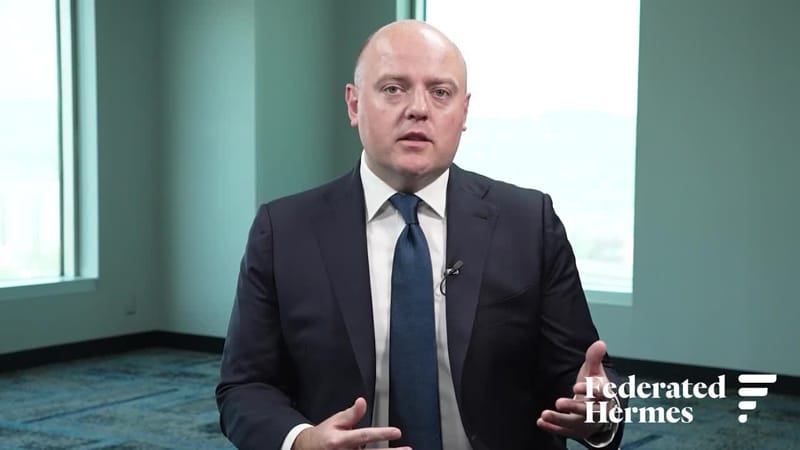


Portfolio Thinking co-founder and director Neil Brown on the rise of the model portfolio, industry pricing pressures and resisting the pull towards the purely transactional
Where – and why – are you anticipating demand or fund-flows from UK-based wealth managers and their clients over the next 12 months?
Looking to the next 12 months, I would expect model portfolios and passive funds to continue capturing a growing share of the UK market – probably at the expense of actively managed funds and those focused on single countries or sectors.
The shift towards model portfolios shows no sign of slowing, as financial advisers turn to the DFM/wealth space to help make informed investment decisions. Model portfolios are a time-saving and cost-effective way for advisers to service multiple, underlying clients. Over the next 12 months we might expect to see more unitised model portfolios popping up, to counter some of the operational challenges of MPS.
Within models there will of course always be winners and losers. Our own capital asset pricing model analysis currently shows Japan as offering good value – particularly from a currency perspective.
How are you planning to address and serve that interest?
At Portfolio Thinking, we are acutely aware of the mounting pressures on financial advisers, who are tasked with excelling as financial planners, skilled investors and effective communicators, all at once.
Our assertion is that we can help advisers with investment solutions, customised investor communications and investment due-diligence to allow them to focus on their core skills of financial planning and business growth. Portfolio Thinking works on a consultancy basis so advisers can effectively ‘insource’ our services while retaining control.
Are you seeing a divergence in the demands of UK wealth managers versus, for example, their peers in Europe or on the institutional side in the UK?
The pressure on pricing for active management is greater in the UK than in many other country across continental Europe and this disparity has its origins in regulatory change – specifically the Retail Distribution Review (RDR) in 2012. The banning of commission-based payments was central to the RDR but is not something that has been widely adopted across Europe.
As UK advisers have transitioned from commission to fee-based models, there has been an increased focus on value for money. This scrutiny has resulted in the rise of passive investing and model portfolios, which have become the preferred choice for many. For larger investors, bespoke mandates rather than funds are also gaining in popularity.
Within the UK institutional sector, many of the large pension fund consultants are trying to grow their outsourced CIO or ‘OCIO’ offerings. This is largely motivated by consultants’ need to offset declining revenues from advising defined benefit pension schemes. Boutique firms such as Portfolio Thinking are a well-positioned alternative in the CIO space, offering investment services that are agile, highly customisable and cost-effective.
As a business, how do you define ‘alternative’ and ‘private’ assets and to what extent should asset managers be looking to service investor demand here?
Private and alternative assets have been the preserve of institutional investors in the UK historically. This feels appropriate, given the complexity and illiquid nature of such assets.
In recent years, asset managers have sought to democratise the ownership of private assets, aiming to make them more widely available to retail customers. It is not, however, clear that this trend is driven by investor demand – indeed, I suspect it may be being driven by management consultants and senior managers of asset management firms, eager to distribute higher-margin products.
In our view, private assets are unsuitable for most retail investors. Experience has shown liquidity mismatches can result in significant challenges, as witnessed by investors in gated UK commercial property funds in 2016 and 2019. Retail investors are accustomed to being able to redeem their investments promptly. Any investment vehicle holding illiquid underlying assets should not be offered to investors who expect immediate access to their funds.
‘ESG is dead – long live ESG 2.0’ – your thoughts as a distributor, please?
Most clients prioritise risk and return when they are making an investment decision. If you believe in active management and fund manager skill, a smaller investment universe is going to be more challenging for a fund manager to make money from consistently. It follows therefore that ESG investors must be prepared to forego investment performance to invest sustainably.
Over the last five years, we have seen that when ESG funds have been performing well, this – together with a sense of social purpose or a ‘feel-good’ narrative – is a winning combination. That said, ESG funds tend to have a growth orientation and, in periods where growth assets fall out of favour, the performance of ESG funds has tended to lag. This is the acid test of whether a positive ESG narrative is enough to compensate for weaker performance – and, in many cases, this has proven not to be the case.
Despite on/off demand for this area – which I fear is not helped by confusing jargon and ever-changing naming conventions – I do think ESG or socially responsible investing is here to stay. As custodians of large amounts of investor capital, the asset management industry certainly has a role to play in holding large companies accountable for upholding standards. As such, I think ESG – specifically poor ESG practice – becomes another risk for analysts to assess when valuing a company.
What drives your approach to client communication? And is there a case for focusing on attracting the ‘right’ type of client?
Communication is incredibly important and there really is not a one-size-fits-all approach here. It is a crowded market and so less can often be more. Experience tells us that, if we want our content to be read, it needs to be interesting, relevant and short.
One of the things we have been experimenting with at Portfolio Thinking is helping advisers to tailor their communications to clients of different levels of investment sophistication. We have recently launched a tool called ‘Voice’ that allows advisers to build investment commentary in minutes, also making use of supervised AI to mimic their own tone of voice or writing style. The ability to customise communications has never been greater.
Beyond target market considerations, I do not think there is a case for focusing on the ‘right’ type of client. Investments should be available to all, not just high net worth individuals.
“At its heart, asset management has always been a people business – built on investment skill, on relationships and, above all, on trust.

Outside of work, what is the strangest thing you have ever seen or done?
A photo popped up on my phone recently of my daughter and I sleeping out under a table-tennis table in our back garden – in late November. If memory serves, she was adamant she wanted to camp out for the night. We didn’t have a tent at the time so I stupidly suggested we could sleep under the table-tennis table – fully expecting her to reject that crazy idea!
Of course, as a Leicester City season ticket holder, I have also witnessed the greatest sporting underdog story of all time at odds of 5,000-1. But I don’t like to talk about it …
May we have two book recommendations, please – ideally, one with an investment connection?
I like to read anything low-brow that helps me with my own novel, a heartwarming romantic comedy with its eyes on the Richard & Judy Book Club.
It is not a new book but The Rosie Project by Graeme Simsion stands out in the heartwarming romantic comedy genre Then, business wise, I am going to give a shout-out to my old M&G colleague Dan Haylett and his book The Retirement You Didn’t See Coming, which is a thought-provoking read for financial advisers and anyone 50-plus who finds themselves out of the workforce.
Gazing into your crystal ball, what does the asset management sector look like 10 years from now?
As my SkyBet account would attest, I am worse than average when it comes to predicting the future. Still, it is probably a safe bet to say that the winning industries from the last 30 years might not be the winning industries of the next 30 – so perhaps that does not bode so well for asset management, given the great run we have had.
With my glass half-full, however, our industry is full of exceptional talent and I believe it will continue to attract vast and growing pools of capital. The consolidation wave we are living through suggests scale has its rewards – but history also tells us that, when choice contracts too far, the pendulum swings back. Innovation reasserts itself and the boutiques rise again.
At its heart, asset management has always been a people business – built on investment skill, on relationships and, above all, on trust. Whatever the next 10 years bring, the firms that remember this – and resist the pull towards becoming purely transactional – will be the ones still standing when this question is asked in 2036.