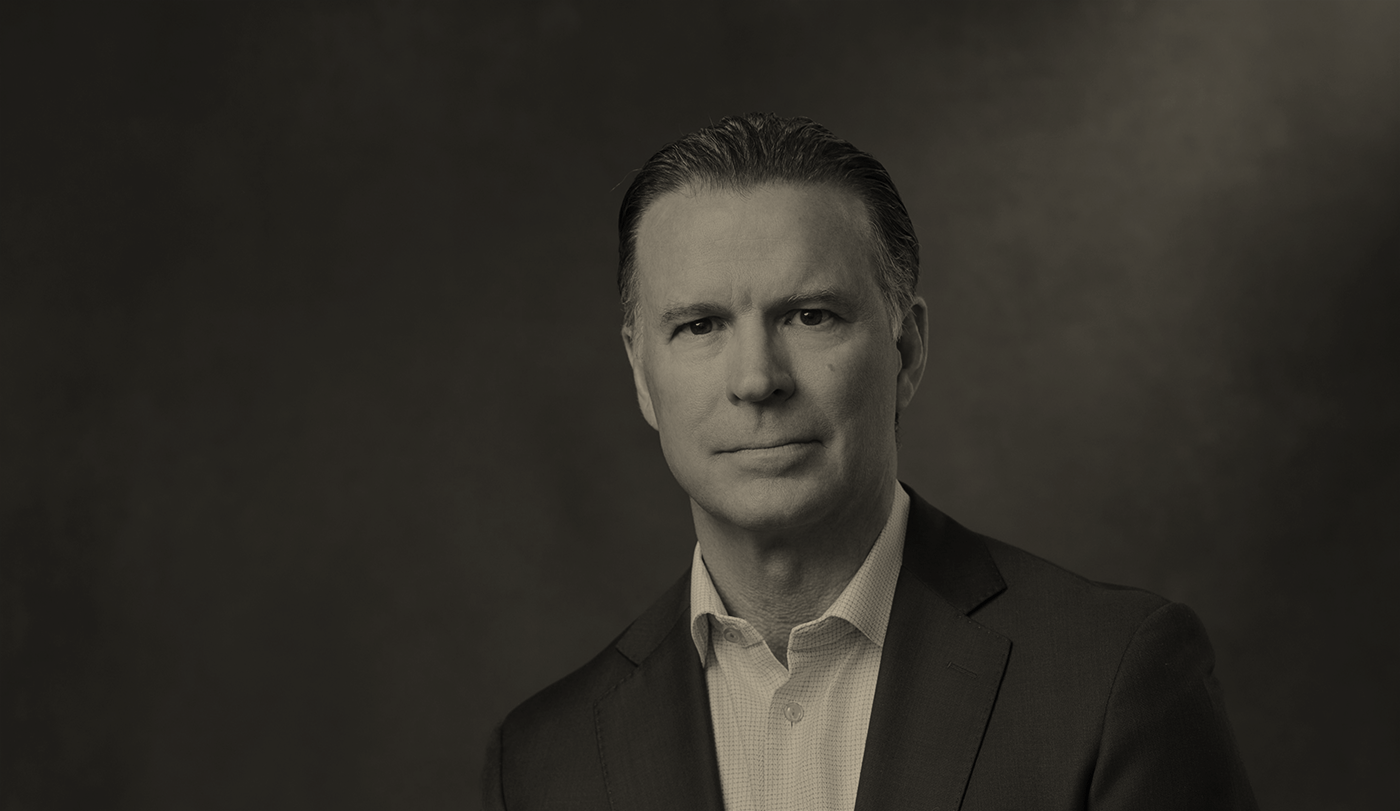


J Safra Sarasin Sustainable Asset Management head of institutional and wholesale UK David Miles on the intensifying global competition for commodities, nuanced communication and improving financial literacy
Where – and why – are you anticipating demand or fund-flows from UK-based wealth managers and their clients over the next 12 months?
2025 has been marked by several key themes that are likely to influence investor decisions in the near term: geopolitical uncertainty; the AI bubble debate; shifting dynamics in global currencies and commodities, including the potential for further dollar weakening; and, closer to home, sticky inflation in the UK. Given these themes, investors and wealth managers are faced with the challenge of balancing risk and diversification.
It seems a reasonable assumption that the AI story continues – potentially leading to increased demand either for broader tech funds or more specialist AI allocations. Then again, there is also evidence investors are seeking a more defensive stance, including reducing exposure to the US and potentially increasing demand for value/equity income funds.
Continued geopolitical uncertainty could support the weak dollar/gold theme. In a multipolar world, countries and trading blocs are increasingly likely to compete to secure access to commodities and so-called rare earths, providing a medium to long-term investment theme for investors to consider.
How are you planning to address and serve that interest?
We will continue to build on the progress we have made in the UK and Irish markets with the JSS Commodity Transition Enhanced Fund, which provides access to a diversified basket of commodities exposure, including assets like gold, natural gas, copper, carbon credits and soybeans – to name a few.
The fund just celebrated its first anniversary and builds on a 19-year track record we have in the asset class. One of my favourite things about it is we do not try to predict the price of individual commodities, but instead, use a systematic process to extract returns. I also anticipate interest in some of the areas our Thematic Equity team focus on: Tech Disruptors and Strategic Materials, for example, as well as the JSS Sustainable Equity Green Planet Fund.
‘ESG is dead; long live ESG 2.0’ – your thoughts as a distributor, please?
ESG is far from dead, but reflecting on the last few years, it is clear it has faced headwinds – however, these challenges also represent opportunities. If this new phase is ‘ESG 2.0’, one of the key features will be more nuanced approaches to the subject and investing.
There is also a need for better communication with investors on the complexities of the subject. One example of this is the strategic materials conundrum investors face, which we highlighted in this whitepaper in mid-2024. It examined the ESG issues for investors hoping to participate and facilitate the transition to a low-carbon economy – the conundrum being that the transition requires enormous amounts of strategic materials extraction. How should investors reconcile the need for these materials with their ESG considerations?
What drives your approach to communicating with your investors? And is there a case for focusing on attracting the ‘right’ type of client?
Our approach shares similarities with other leading asset managers, but we strive to go beyond the basics and connect with our clients. From face-to-face meetings and webinars with portfolio managers, to insightful written content and video on our website, we are dedicated to fostering transparency and ensuring our clarity and accessibility for investors.
Outside of work, what is the strangest thing you have ever seen or done?
One incident in particular that stands out is the time I met Ed Sheeran. He played a small pub gig for a friend’s birthday – and, for context, this was about a year before he made his big break. He stood on a piano in the pub and wowed the audience.
As per the line from one of his early songs, he was selling CDs from his rucksack, and so after the set, I approached him to buy one, but he was busy chatting and said he would come and find me, but never did. When I got home, I relayed the story to my wife and remarked how he would probably never make it, despite the talent. Turns out I was a bit wide of the mark.
May we have two book recommendations, please – ideally, one with an investment connection?
First, The Old Man and the Sea by Ernest Hemingway: This classic novel is a wonderful study of man and his place in nature. It is a short and powerful book that explores themes of perseverance, courage and the human condition.
Then, for something with an investment connection, how about Andrew Ross Sorkin’s 1929: The Inside Story of the Greatest Crash in Wall Street History, an engrossing account of the 1929 stockmarket crash. Sorkin’s writing style is engaging and his expertise in the field makes this book a compelling read. Readers get a real sense of the euphoric and hugely speculative fever that gripped investors.
Gazing into your crystal ball, what does the asset management sector look like 10 years from now?
Rather than a prediction, allow me to express an aspiration. Many commentators and surveys have pointed to a relatively low level of financial literacy in the UK. This cannot be a good thing, and so I would like to see that improve, with the asset management industry playing an appropriate part. In turn, this would hopefully lead to a better understanding of the options savers have and to a greater opportunity for asset managers to engage with investors.
“In a multipolar world, countries and trading blocs are increasingly likely to compete to secure access to commodities and so-called rare earths – a medium to long-term theme for investors to consider.