


The week that was …
Economic round-up
UK GDP edges higher
Britain’s economy eked out 0.1% growth in May as the country’s services industry expanded, in line with a Reuters poll of economists’ views. There was weakness outside services, though, with fragile confidence among businesses against the backdrop of the Iran war and domestic political problems. Read more from Reuters here
US inflation undershoots
The US CPI report for June showed prices rising at a slower pace than expected. US headline prices fell 0.4% month-on-month versus consensus expectations of a 0.1% drop. Core inflation (ex-food and energy) was flat on the month versus expectations of a 0.2% increase. Read more from ING here
Warsh testifies on Fed progress
Federal Reserve chair Kevin Warsh said the improvement on inflation was not “mission accomplished” as he appeared before lawmakers on Capitol Hill. He also reaffirmed the US central bank’s commitment to bringing down inflation and stated the Fed would remain free of political influence. Read more from CNBC here
Surprise drop for US producer prices
US producer prices unexpectedly fell 0.3% in June, posting their biggest decline in 14 months amid a pullback in the cost of energy products. The Producer Price Index data was also revised sharply lower for May. Declines in energy and food prices were key contributors. Read more from Reuters
US consumer spending down in June …
US consumers slowed their spending in June while energy costs fell. Retail sales rose 0.2% month-on-month to $768.6bn (£570.7bn) – in line with analysts’ expectations but notably slower than the 1% reported in May. There was a 5.3% fall in gasoline-station sales. Read more from Yahoo Finance here
… though consumer sentiment recovers
US consumer sentiment rebounded from record lows in June, although households remained worried about the high cost of living, according to the University of Michigan’s Consumer Sentiment Index. The index increased to 49.5 from 44.8 in May. Read more from Reuters here
China’s economic growth slows in Q2
China’s economic growth slowed sharply between the start of April and end of June, rising by just 4.3% –compared with a 5% expansion in the first quarter. Weak domestic demand and the Iran war’s impact on oil prices overshadowed the country’s strong exports. Read more from the BBC here
Markets round-up
Wall Street slips …
Wall Street extended its recent decline on Friday as a pullback on AI stocks evolved into a broader sell-off. Semiconductor shares, which have led the market’s moves in recent sessions, initially led the declines, which broadened as the session progressed. The Philadelphia SE Semiconductor Index logged its steepest weekly loss in more than a year, having tumbled more than 18% so far in July. Read more from Reuters here
… and Korea’s Kospi slides
South Korea stocks plunged as the slump in Wall Street tech names spread into Asia, dragging benchmark indices lower. The Kospi ended Friday’s session 5.54% lower at 8,161, with index heavyweights Samsung Electronics and SK Hynix dropping 6.40% and 9.92% respectively. Read more from CNBC here
Bets against SpaceX
Traders are raising their bets against SpaceX’s equity and debt. The group’s shares slipped below their initial listing price of $135 (£100) this week – some 40% below their intraday high of $225 in mid-June. The shares closed at a fresh low of $123.99 on Friday. Read more from the FT here
Strong Q2 for bank earnings
Wall Street bank earnings powered ahead in the second quarter with a strong lift from fees for advising on mergers and acquisitions and surging trading revenue. Some banks warned about risks ahead to the economy and markets, however. The SpaceX initial public offering alone generated some $500m in fees. Read more from Reuters here
Volatile chip stocks
Chip stocks are more volatile relative to the broader market than at any point in more than 30 years, according to the Financial Times. Its analysis found that semiconductor stocks are almost five times more volatile than the wider index. Read more from the FT here
Oil prices climb
Oil prices rose on Friday after Kuwait said Iran had attacked a power and water desalination plant. Brent crude futures advanced about 4.6% to close at $88.10 per barrel. Kuwait’s Ministry of Electricity, Water and Renewable Energy said the attack damaged the facility, sparking a fire that affected a large number of its electricity generating units. Read more from CNBC here
“This is not to suggest the defence trade is over – if anything, the recent weakness may have brought overstretched valuations down to more realistic levels and created opportunity.
Selected equity and bond markets: 10/07/26 to 17/07/26
| Market | 10/07/26 (Close) |
17/07/26 (Close) |
Gain/loss |
|---|---|---|---|
| FTSE All-Share | 5645 | 5700 | +1.0% |
| S&P500 | 7575 | 7458 | -1.6% |
| MSCI World | 4868 | 4808 | -1.3% |
| CNBC Magnificent Seven | 436 | 431 | -1.1% |
| US 10-year treasury (yield) | 4.56% | 4.55% | |
| UK 10-year gilt (yield) | 4.88% | 4.97% |
Investment round-up
Schroders Wealth announces leadership changes
Schroders Wealth Management and Cazenove Capital have unveiled a series of senior leadership changes. Grace Lavelle has been appointed CIO following more than a decade at Schroders Wealth Management, replacing Caspar Rock, who will move to the role of vice chair of Schroders Wealth Management. Wilaf Moore will become CEO, UK and Channel Islands, for Cazenove.
Redwheel launches global value fund
Redwheel has launched the TM Redwheel Global Value fund in the UK – an OEIC version of its Luxembourg-listed Global Intrinsic Value offering. The UK strategy been seeded with a £100m commitment from an unnamed external investor and will be managed in a similar way to the Luxembourg fund.
Premier Miton reports Q2 outflows
Premier Miton Group reported net outflows of £800m in the second quarter, with continued withdrawals of £436m from its international equity strategies, bringing total international equity outflows since September to more than £1.3bn. The group’s US Opportunities and European Opportunities funds were hit especially hard.
Investment trust fund-raising on the up – AIC
New data from the Association of Investment Companies shows there was a total of three mergers, three acquisitions and six liquidations of investment trusts during the first six months of 2026. A total of £575m was raised by investment trusts, more than double the £221m raised in the same period of 2025.
Guinness boosts fixed income stable
Guinness Global Investors has launched the Guinness Global Dynamic Bond Fund as part of its fixed income offering. The new vehicle, which will not be tied to a specific benchmark, will invest flexibly across global government bonds, investment-grade credit and selected high-yield bonds.
Vanguard launches short-term core bond fund
Vanguard has followed the launch of its Global Core Bond and Global Strategic Bond vehicles last year with the launch of its Global Short Term Core Bond Fund. Domiciled in Ireland, the fund will be co-managed by Ales Koutny, the firm’s head of international rates, and Sarang Kulkarni, lead portfolio manager for Vanguard’s Global Credit and pan-European corporate strategies.
New investor-led infrastructure platform
An investor-led and AI-enabled platform is to launch later this year that will attempt to connect professional investors with curated UK infrastructure and property investment opportunities. The InvestConnect digital platform is aimed at addressing the UK’s “fragmented, inconsistent investment ecosystem”.
… and the week that will be
Burnham ambition
Andy Burnham enters Downing Street today as Britain’s seventh prime minister in a decade, with the country braced for a blitzkrieg of policy initiatives from the new man at Number 10, alongside the unveiling of his cabinet. Current home secretary Shabana Mahmood looks set to be chancellor, which would be welcomed by financial markets, but considerable uncertainty persists about what the new PM’s economic policies will mean in practice. Read more from the FT here
US tech earnings
US corporate earnings season gathers steam over the coming week with Alphabet and Intel set to update the market. This could influence the wobbling AI trade amid high profit expectations and uncertainty over the Iran war. Increasing expectations for profit strength this year have provided bedrock support for investors’ enthusiasm for stocks but S&P 500 earnings expectations are elevated – at an average of 26%. Read more from Reuters here
The week in numbers
ECB rate decision: The European Central Bank is widely expected to hold the euro-area interest rate at 2.4% after this week’s meeting ends on Thursday.
UK inflation: Consensus expectations are that UK consumer price inflation in June will be 2.4% year-on-year and -0.1% month on month, versus 2.8% and 0.2% respectively, while year-on-year core CPI rises to 2.7% from 2.6%.
UK jobs data: Consensus forecasts have the UK unemployment rate for May steady at 4.9%. Average earnings, including bonuses, are forecast to have risen 4% in the three months to May – down from 4.4% last month.
UK retail sales: Consensus forecasts have UK retail sales for June up 0.3% month-on-month, from 1.2% in May.
UK business sentiment: Consensus expectations for the flash July readings of the UK purchasing managers indices (PMIs) are that manufacturing activity will dip to 52, from 52.2 in June, while services activity improves to 49.3 from 48.8.
US business sentiment: Consensus expectations for the flash July readings of the US PMIs are that manufacturing activity will weaken to 53, from 53.9 in June, while services activity falls to 51 from 51.2.
Eurozone consumer confidence: Consensus expectations are that consumer confidence in the Eurozone will fall to -18.6 in July, down from -17.7 in June.
Japan inflation: Consensus forecasts have prices in Japan rising 1.7% year-on-year over June, versus 1.5% in May.
Japan business sentiment: Consensus expectations for the flash July readings of the Japan PMIs are that manufacturing activity will fall to 54.3, from 54.8 in June, while services activity rises to 53 from 52.2.
In focus: Defence’s position
In an era when conflict is entrenched in geopolitics, defence has been an obvious beneficiary. The global sector soared in 2025, outpacing the MSCI World by around 30%, while the performance from European defence stocks was even stronger, as governments committed to multi-decade spending programmes. And yet this year, even as the spending – and the wars – continue, the sector has started to slip.
Certainly there has been no let-up in the money being directed towards defence. EU spending in this area, which reached €418bn (£355bn) in 2025, is expected to reach an estimated €454bn in 2026, fuelled by the ongoing conflict in Ukraine and pledges from European governments to increase defence spending as a percentage of GDP. That is an increase of 8.6% on 2025 – and of 75.3% compared with 2021.
Across the Atlantic meanwhile, president Donald Trump and his War Department are currently seeking approval for $1.5tn (£1.1tn) of defence spending in the 2027 budget proposal. This represents an extra $350bn over the previous year.
The administration had already secured a $150bn hike in defence spending above the base through the One Big Beautiful Bill Act. It has become increasingly clear that, in purchasing power parity terms at least, the US continues to spend less than its three strategic rivals – China, Iran, and Russia – and this is an attempt to address that situation.
And yet defence companies do not appear to have been feeling the benefit. Some of the share price falls have been significant too – for example, last year’s top performer Rheinmetall is down 39% over the year to date, while French group Thales and the UK’s BAE are also significantly lower. The MSCI Europe Aerospace and Defense Index now trails the wider MSCI Europe index by 13% over 12 months.
Hervé Prettre, head of global investment research at Edmond de Rothschild Group, identifies multiple reasons for the weakness, pointing to: “The dominance of technology and space stocks in investors’ portfolios, bottlenecks limiting production growth, development delays due to capacity shortages, concerns about future budgets and – in the defence sector – a shift in priorities away from tanks and ammunition toward ‘more efficient’ spending, given the new key factors for success on the battlefield: air defence, drones, precision munitions, military cybersecurity and so on.”
Part of the problem is that defence spending is messy. Contracts are complex, delays are commonplace and the industry is dependent on government spending”
The conflict in the Middle East and ongoing post-Covid logistical disruptions have also had an impact. At the same time, a higher dollar has weighed on European spending while, in the US, high valuations and fears of an unfavourable political outcome for Republicans in the midterm elections have dented investor enthusiasm.
Part of the problem is that defence spending is messy. Contracts are complex, delays are commonplace and the industry is dependent on government spending, which will always be subject to the caprices of individual administrations. “Fiscal constraints remain significant,” notes Joakim Agerback, manager of the Finserve Global Defence & Security fund. “Public finances are under pressure, economic growth remains subdued and competing priorities will continue to test future defence budgets.”
This can also create a lack of consistency, he adds, explaining: “Investors do not expect certainty around every programme or budget line. They do, however, expect governments to demonstrate that strategic priorities will survive political cycles and be translated into procurement decisions with sufficient consistency to justify long-term industrial investment.”
This can be particularly problematic for smaller companies, which do not have the depth of balance sheet to support delays. Agerback points to a survey by TechUK that found almost three-quarters (73%) of businesses reported a contract suspension or cancellation in the last six months, while 87% have experienced funding delays or reductions.
This is not to suggest the defence trade is over, however – if anything, the recent weakness may have brought overstretched valuations down to more realistic levels and created opportunity. An unusual valuation premium had emerged for European companies relative to their US competitors but, as Prettre says, US companies are traditionally more expensive due to the size of the Pentagon’s budget. That has now normalised.
Agerback points out that Europe is rebuilding its conventional defence industrial base at a pace not seen for decades while Prettre notes: “The modernisation of European defence is expected to continue and the sector offers good medium-term prospects.” Nevertheless, he warns, another surge like that seen in 2025 is unlikely because of the production capacity problem.
This structural growth has a long way to go – and we have seen that in orderbooks, which will flow through in revenue growth going forward.”
“European co-operation is stalling and governments must contend with rising financing costs and other short-term spending priorities,” he adds. “That said, many larger defence companies have remained resilient and recent earnings from QinetiQ, Chemring and Cohort suggest continued confidence that procurement activity will strengthen.”
Fund managers continue to back the sector. “Defence spending as a part of GDP has been trending down for decades,” says JOHCM Global Opportunities manager Rob Lancastle. “It has just recently started inflecting upwards, however, and NATO targets are for it to get towards 3.5%, plus all the infrastructure that goes around it.
“There has been about almost three decades of underspending, which needs to be caught up. This structural growth has a long way to go – and we have seen that in orderbooks, which will flow through in revenue growth going forward.”
For now, Prettre prefers the civil aviation sector, explaining: “It offers better short-term prospects, against a backdrop of lower inflation and lower oil prices, in addition to the normalisation of production lines. In the medium term, the strong desire to travel among individuals in the West since the pandemic, as well as the rise of a middle class in emerging markets travelling increasingly, provide significant support for the sector.
“As a result, the civil aircraft market is expected to surge from nearly $100bn annually in 2024 to $185bn by 2040.” Nevertheless, he believes the European defence sector also offers good medium-term prospects – albeit, again, without another 2025-like jump.
The current weakness in the defence sector appears to be a pause rather than a stop. Spending is still a priority and it will find its way into company profitability – but the mechanisms need to be clearer for defence businesses to take the next step-up. For now, though, valuations are more attractive and fund managers are continuing to back the sector.
Read more on this from the EU here and from Morningstar here
In focus: Meanwhile at No. 11
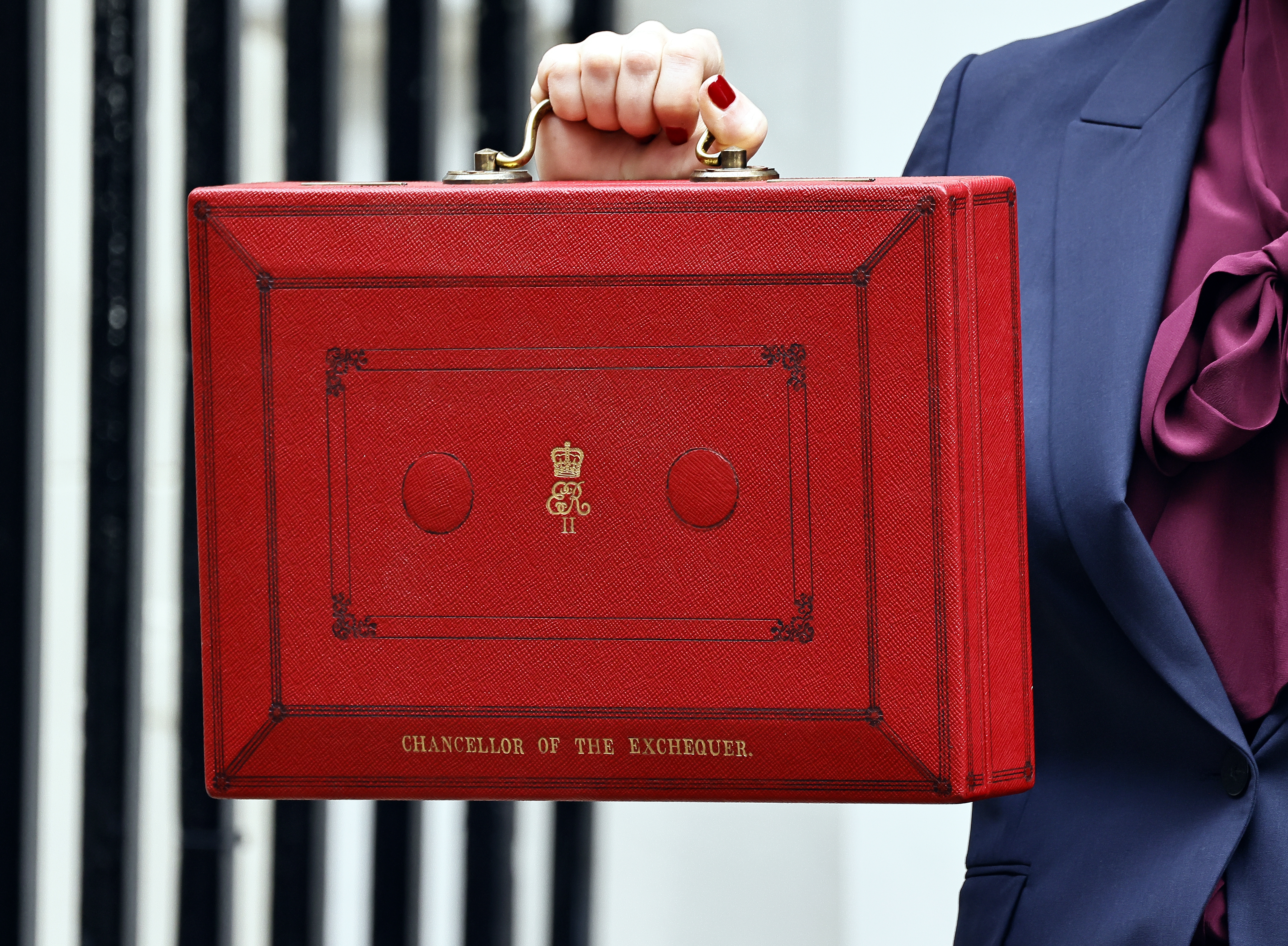
Rachel Reeves always had little hope of remaining as chancellor of the Exchequer in the new Andy Burnham government. As a result, last week’s Mansion House speech presented a moment to defend her record and urge policy stability onto the next incumbent.
Reeves’s legacy is controversial, with many economists believing her raising of National Insurance contributions on employers has slowed UK growth. She has also introduced a raft of other tax increases that have stalled investment, such as changes to capital gains tax and higher taxes on rental income and dividends.
That said, a number of financial reforms introduced over the past two years suggest a more positive legacy for her chancellorship. Charlotte Kennedy, chartered financial planner at Rathbones says: “Measures to encourage greater participation in investing through ISAs; unlock pension capital for productive investment; modernise financial markets through digital innovation; and increase lending to households and businesses are structural changes designed to strengthen the UK’s investment landscape over the long term.” The changes to the cash ISA rules may have been controversial, she concedes, but they were necessary to try and encourage investors to use capital more productively.
There is, of course, more to be done here – for example, the incoming chancellor could impose ‘mandation’, forcing pension funds to invest in UK equities if they want to claim tax relief. As JOHCM UK Equity Income manager Clive Beagles says, the UK is one of the major economies that does not back its own stockmarket.
Domestic equity allocation among UK pension funds sits at just 2.8%, versus a 3.5% weight in the MSCI World index. In Australia, by comparison, domestic pension fund allocation is 37.7%, versus a 1.5% weighting in the benchmark. In Italy, it is 41% versus 0.7%, in France 26% versus 2.2% and in Japan 49.4% versus 4.8%.
For now, it is more important the incoming chancellor does not seek to unpick these existing reforms, which Kennedy says “deepen capital markets, improve access to finance and encourage long-term investment”. Seeking to reverse them would also create uncertainty at precisely the time investors are looking for greater confidence and policy consistency.
In the decade since Brexit, the UK has become a test-case in how to erode a well-established and successful capital markets industry. Domestic investors have been allowed to back away from supporting the UK market. Now some steps have finally been taken to resolve this, they need to be kept in place.