

The week that was …
Economic round-up
BoE keeps UK rates at 3.75%
The Bank of England kept interest rates at 3.75% in June. The central bank’s Monetary Policy Committee voted 7-2 to keep rates on hold. Megan Greene joined chief economist Huw Pill in calling for a quarter-point rate rise. Read more from Reuters here
Fed leaves US rates unchanged
After Kevin Warsh’s first meeting as chair on Wednesday, the Federal Reserve left the US’s benchmark interest rate unchanged at 3.5% to 3.75% but almost half the committee said they would support a rate hike later this year. The ‘easing bias’ was removed from the June guidance. Read more from CBS News here
Japan interest rate up to 31-year high
Japan’s central bank has increased its main interest rate from 0.75% to 1% – a 31-year high. In a continued reversal of the country’s two-decade zero interest rate policy, the Bank of Japan explained it was responding to a rise in energy prices. Read more from the BBC here
UK inflation holds steady in May
UK inflation remained at 2.8% over the year to May, with slower food-price rises offsetting rises in oil prices. Transport costs were the fastest-rising area. Economists had expected inflation to hit 3% in May, with further rises over the next few months. Read more from the BBC here
UK jobs market ‘broadly stable’ – ONS
The UK labour market remained tight in April, with the number of job vacancies falling to its lowest level for five years. The Office for National Statistics said the market remained “broadly stable”, with the number of vacancies in the March-to-May period falling to 707,000. The unemployment rate fell slightly to 4.9% in the three months to April, while regular pay – which excludes bonuses – grew at an annual rate of 3.4% in the three months to April. Read more from the BBC here
UK retail sales volumes surprise over May
UK retail sales volumes rose 1.2% year-on-year in May – significantly ahead of economists’ forecasts – while April’s fall was revised up from -1.3% to -1.0%. Hot weather boosted sales of summer items, such as fans and paddling pools, and suggested households could be shrugging off inflation concerns. Read more from Reuters here
Tax refunds help boost US retail sales
US shoppers stepped up their spending in May as bumper tax refunds offset the inflationary effects of the Iran war. Retail sales in May rose 0.9% from the previous month, ahead of Wall Street expectations. They were up 6.9% versus May 2025. Read more from the FT here
China industrial production up on AI demand
China’s industrial production expanded 4.5% year-on-year in May, beating market expectations. Booming demand from artificial intelligence and resilient exports offset ongoing weakness in the property market. Read more from Caixin Global here
Markets round-up
Pound rises on Burnham by-election victory
The pound rose on Friday as financial markets digested Andy Burnham’s by-election victory. Sterling was last up 25 basis points on the US dollar at $1.3238, bouncing off a near-three-month low. It was also stronger versus the euro. Read more in ‘In focus’ below and from Reuters here
Yen weakens despite Japan rate rise
The yen weakened to a nearly two-year low against the US dollar, in spite of the Bank of Japan lifting interest rates. The USD/JPY pair reached 161.81. If it were to hit 162.00, it would mark a near-40-year low for the Japanese currency. Read more FX Street here
Gold slips for third week in a row
In their third straight weekly decline, gold prices fell on Friday, as the US dollar strengthened and the Federal Reserve issued a relatively hawkish statement. Down 0.9% at $4,169 (£3,153), spot gold has been trading below the 200-day moving average since 5 June. Read more from Reuters here
No bubble in tech, says Schroders
AI technology groups and hyperscalers are not yet in “a bubble situation”, according to Schroders chief investment officer Johanna Kyrklund. She added she was optimistic about the potential for further cashflow and earnings growth from high-flying AI-related stocks, with a low risk of recession. Read more from the FT here
Investor optimism lifts on Hormuz news
Global equity funds enjoyed their strongest inflows in 19 months in the week to 17 June, buoyed by optimism over an interim deal to end the US/Iran war and expectations that reopening the Strait of Hormuz could help ease inflationary pressures. Investors bought a net $55.22bn of global equity funds during the week. Read more from Reuters here
“People do not realise how intensive data-centres are in terms of materials consumption. For the AI revolution, the choke-point is not the chips, it is powering the compute.
Selected equity and bond markets: 12/06/26 to 19/06/26
| Market | 12/06/26 (Close) |
19/06/26 (Close) |
Gain/loss |
|---|---|---|---|
| FTSE All-Share | 5631 | 5576 | -1.0% |
| S&P500 | 7431 | 7501 | +1.4% |
| MSCI World | 4788 | 4828 | +0.8% |
| CNBC Magnificent Seven | 418 | 423 | +1.1% |
| US 10-year treasury (yield) | 4.49% | 4.46% | |
| UK 10-year gilt (yield) | 4.80% | 4.84% |
Investment round-up
Charles Stanley to rebrand
Charles Stanley is to adopt the Raymond James brand, leading to the loss of one of the oldest names in UK wealth management. The rebrand was undertaken with the intention of supporting “the long-term ambition of becoming one of the top five wealth management firms in the UK”, the group said.
IIMI appoints Glover
The Independent Investment Management Initiative (IIMI) has appointed Jock Glover as its next chief executive officer. He joins on 1 July, replacing Dani Hristova. Glover has more than 30 years’ experience across asset management, wealth management, distribution and industry engagement, including senior roles at Square Mile Investment Consulting and JP Morgan Asset Management.
Rathbones pauses taking on high-risk clients after review
Rathbones has halted taking on high-risk clients after a Skilled Person Review found areas for improvement. The review, which followed engagement with the Financial Conduct Authority, found that more work was needed on Rathbones’ implementation and embedding of Consumer Duty, as well as certain aspects of its compliance, oversight and assurance arrangements.
Saba replaces Impax board
The board of Impax Environmental Markets has been replaced by directors nominated by activist investor Saba Capital Management. At general meeting held on 17 June, the board was not re-elected. 80.5% of non-Saba shareholders had exited at the tender offer in April.
Whitestone leaves BlackRock
Former Throgmorton investment trust manager Dan Whitestone has left BlackRock, just two months after the trust merged with BlackRock Smaller Companies. Whitestone had become co-manager of the £791m trust but “decided to leave BlackRock to take some time away from the industry”. Roland Arnold will now take sole responsibility of the trust.
Badenoch urges reappraisal of risk
Conservative leader Kemi Badenoch plans to urge regulators to dial up the risk in financial services in her first big speech focused on the City of London. She will say Britain has become “too risk-averse” and that regulators have become too safety-conscious.
Defiance adds ‘memory ETF’
Defiance has added a fourth ETF to its European range, offering exposure to companies across the memory semiconductor and data storage supply chain. According to HANetf, the Defiance Memory UCITS ETF is Europe’s “first” memory ETF, providing exposure to companies in the development, manufacturing, commercialisation and storage of memory semiconductors and data storage systems.
… and the week that will be
Micron earnings and the AI rally
AI-related companies – and semiconductor stocks, in particular – have been shoring up stockmarket returns in recent weeks. Micron’s results will be a test of that rally, with its quarterly earnings report out on Wednesday. The company’s shares are up almost 300% this year already and its revenues will be taken as a sounding of the strength of AI demand. Read more from Reuters here
Brexit vote’s tenth anniversary
The UK is likely to see some soul-searching 10 years on from the Brexit referendum, this 23 June. Indeed, the country may receive an uncomfortable reminder of the political and economic upheaval it unleashed as it potentially welcomes its seventh prime minister since the vote to leave the European Union, and government bond yields and the currency struggle through another week of turmoil. Read more from the FT here
The week in numbers
UK business sentiment: Consensus expectations have the flash iteration of the UK manufacturing purchasing managers index (PMI) falling to 53.4 in June, from 53.9 in May, but the services equivalent moving back into expansion territory, rising to 51.9 from 49.3.
US business sentiment: Consensus expectations have the flash iteration of the US services PMI edging down to 50.4 in June, from 50.7 in May, and the manufacturing equivalent dropping to 54.5 from 55.1.
US price inflation: Consensus forecasts have the core Personal Consumption Expenditures index, the Federal Reserve’s preferred measure of US inflation, rising 0.2% month-on-month in May.
In focus: Super-cycle me
Commodities have proved one of the strongest growth stories across global markets over the past 18 months. Sources of structural demand – most obviously, data-centres and the energy transition, have helped drive prices higher at a time when supply remains constrained. The Iran crisis has meanwhile delivered its own kind of boost for the energy segment. Could this be the start of a new commodity super-cycle?
According to Erik Norland, chief economist at CME group, commodity super-cycles need to have three main characteristics. “The trend should be broad-based, meaning it should include the majority of major commodities,” he begins. “It should also have a duration of five or more years; and finally the price rise should be ‘super-sized’ – as in a tripling or more.”
There are hints of this already. Over the past year, many commodities have seen double-digit price gains. The strongest appreciation has been in the metals sector, where lithium is up 174% year-on-year, while copper and steel are up 31% and 32% respectively. Since February, the war in Iran has brought about a rally in energy markets. Gas prices are up 75%, heating oil 51% and crude oil 35%. Until recently, gold and silver had also been strong performers, with silver up more than 80%.
Fund managers have been making hay accordingly. Commodities & Natural Resources was second only to Latin America as the best-performing IA sector in 2025, with the average fund up 29.5%. It has continued its strength in 2026, with the average fund up 15.9% over the year to date. The best performers have been those focused on strategic metals, including Abrdn Future Raw Materials fund and WS Amati Strategic Metals.
If this were indeed the start of a new super-cycle, it would be good news for investors as the last one, led by the industrialisation of China, delivered bumper profits. The BlackRock World Mining Trust was the best performing investment trust between 1 January 2000 and 31 December 2009, rising more than 520%. Many funds saw similar strength, suggesting the current gains could run a lot further if the circumstances were right.
Specialist fund managers remain bullish. “Our biggest overweight is metals and mining,” says Albert Chu, a Man Group portfolio manager, focusing on natural resource strategies. “We own a lot of copper, aluminium and a basket of critical minerals, including tungsten, scandium and rare earth magnets.”
History has shown that real and sustainable gains in commodities are made by investing during the development and exploration phases that follow price spikes.”
Pointing to new sources of demand, he continues: “People do not realise how intensive data-centres are in terms of materials consumption. One data-centre requires 40,000 tonnes of copper. For the AI revolution, the choke-point is not the chips, it is powering the compute.” Chu sees an ongoing gulf between supply and demand, adding: “Power driven by AI is likely to be 10% to 15% of overall power. Demand is moving at breakneck speed, but a copper mine takes 20 years to bring online.”
AI is just one megatrend powering commodity demand and deglobalisation and decarbonisation are also likely to play significant roles here for years to come. Deglobalisation is creating ‘resource nationalism’, and driving prices higher, while decarbonisation is supporting demand for certain key commodities – lithium, copper and nickel for batteries; aluminium and steel for new infrastructure.
“The structural tailwinds across metals remain firmly in place,” says George Lequime, manager on the Amati Strategic Metals fund. “If anything, the conflict in the Middle East is accelerating the deglobalisation of the global economy and fuelling supply constraints across a broad array of metals.
“History has shown that real and sustainable gains in commodities are made by investing during the development and exploration phases that follow price spikes. We believe we are currently at the onset of this phase, which will likely last five to 10 years, at least.”
Chu agrees we are likely in the “early innings” of a new cycle. “When we look at previous cycles, typically they last a decade or more,” he says. “The recognition phase is a couple of years. The reaction phase takes years – building pipelines, building mines, building refineries. It can take a decade-plus to bring on supply.”
Commodities remain a small part of the market relative to their strategic importance. Chu points out that, at the peak of the commodities super-cycle, commodities were in the mid-teens as a percentage of the market – at present, energy and materials are around 5% of the market.
Mining-related equities could rally strongly when or if generalist and institutional investors increase their exposure to the sector, which remains near all-time lows.”
Adds Lequime: “The exposure of generalist and institutional investors to the mining sector remains near all-time lows, which suggests mining-related equities could rally strongly when or if generalist and institutional investors increase their exposure to the sector.”
The commodities sector could also see a boost from the changing energy landscape in the wake of the Iran crisis – and, for Jonathan Waghorn, portfolio manager on the Guinness Global Energy fund, that has both short-term and long-term implications.
“Commodity supply chains will need several months to return to pre-conflict traffic and recovery is likely to be uneven across different countries,” he explains. “There has been damage to infrastructure, including downstream facilities, refineries and export and storage terminals. That can be resolved but it will need confidence before the rebuilding process starts. We will not return to normality before the end of 2026.”
Waghorn sees three main legacy impacts, starting with some permanent supply impairment – possibly up to one million or two million barrels a day. He also expects the geopolitical premium for oil to rise, noting: “Iran now has lasting leverage over the strait of Hormuz and any Opec spare capacity has been rendered less relevant.” Finally, there will need to be inventory replacement. This should all serve to keep prices higher.
Chu agrees that what has happened in Iran has changed global energy policy. “Countries have gone from looking for the cheapest model of fuel, to – in the age of ESG – seeking the cleanest model of fuel, to now, in a deglobalising and fragmenting geopolitical world, what is the most secure model?” This evolution is likely to support alternative energy sources as well, including wind, solar and nuclear.
A new super-cycle is plausible though it may not be universal – but instead concentrated on specific bottlenecks, such as uranium, natural gas, copper and silver. These are the commodities where scarcity is structural and demand is well-established. Commodities look set to be a fertile part of the market for some time to come.
In focus: Makerfield or break?
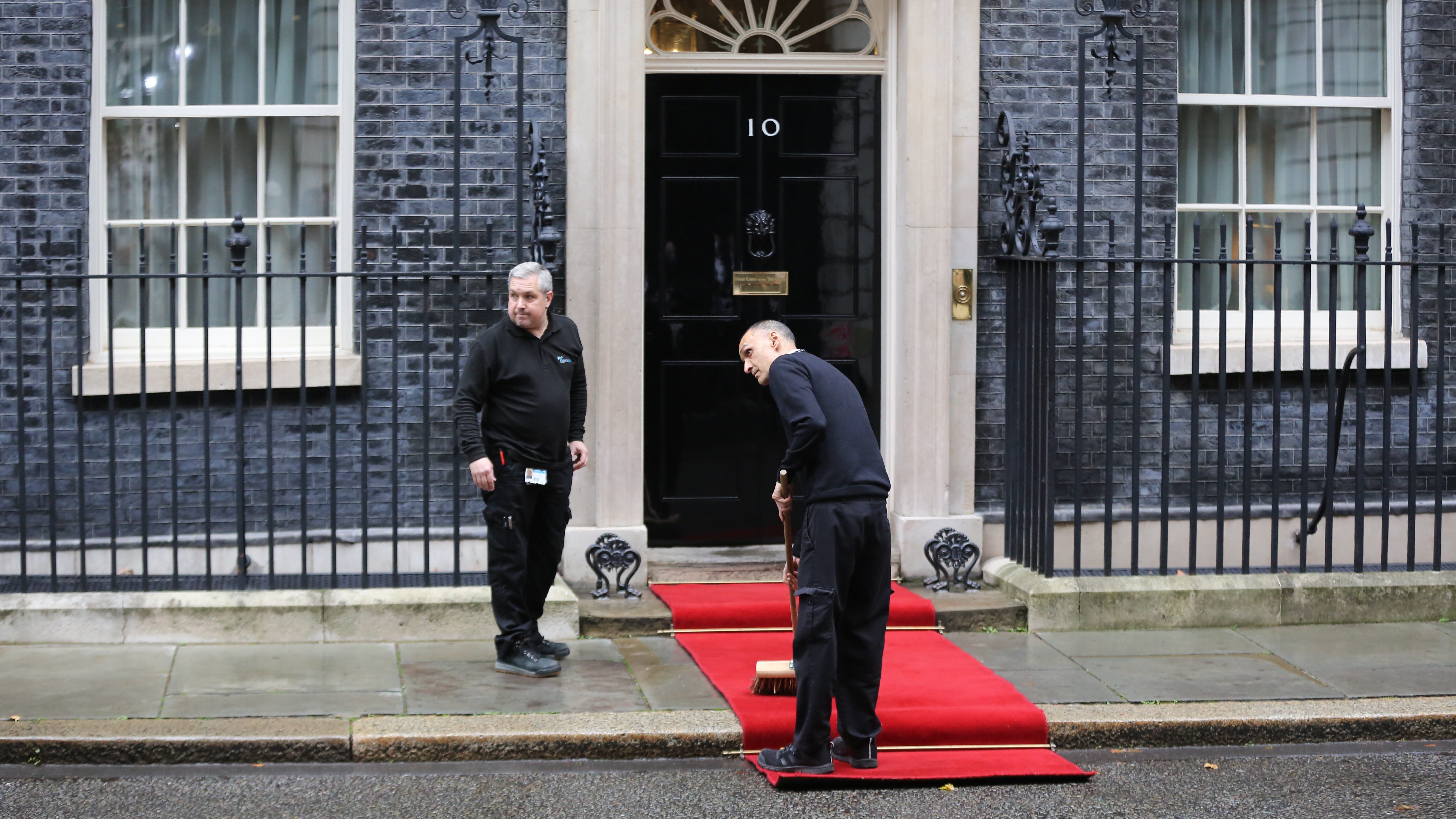
The UK faces another momentous week as the way is paved for the country’s seventh prime minister in the 10 years since the Brexit referendum in 2016. Andy Burnham’s decisive victory in last week’s Makerfield by-election was always likely to start the ball rolling for a change of resident in 10 Downing Street and this morning (22 June) Keir Starmer duly resigned as prime minister and Labour leader.
Investors are nervous. Having recovered somewhat after better news on Iran, gilt yields edged higher after the by-election result. The pound strengthened too, while the main UK indices dipped on a day when global stockmarkets were generally positive. The fear remains that Burnham will irritate bond markets – either through an unwise choice for chancellor of the Exchequer or unfunded spending commitments.
The markets reflect that uncertainty. “Whatever the enthusiasms of Labour MPs, now backed with a by-election endorsement, there is little coherent evidence yet of what Andy Burnham stands for and what he will do differently – while adhering to a manifesto that is still just two years old – that will satisfy the whims of a volatile and uneasy national electorate,” says Stephan Jones, global chief investment officer at Aegon Asset Management.
‘‘Markets are looking for policy – and evidence it will be adhered to through what will be a series of tough decisions and actions rather than the limited test of constituency or even regional level hustings. In the FX market, we are seeing the first signs of scrutiny of that next stage of the journey.”
In reality, the risks around the bond market may be less than investors believe. The bond vigilantes will quickly show any incoming chancellor what can and cannot be done and Burnham has already promised to stick to the manifesto, which means no rises in corporation tax, income tax or VAT. His room for manoeuvre is thus likely to be every bit as limited as those of his predecessors.
“Burnham has already rowed back on some ideas in recent weeks, which hints that he might not lead in such a different way to the status quo should he become prime minister,” says Dan Coatsworth, head of markets at AJ Bell. “He has committed to the current fiscal rules and appears to have backed down from earlier suggestions that he did not want to be told what to do by the bond markets.”
The incoming chancellor may indeed be lucky and receive a tailwind from the resumption of shipping through the Strait of Hormuz. In spite of some setbacks, traffic started to flow again over the weekend, which may be enough to offset the political volatility – at least in the short term. After the summer, however, the prospect of an Autumn Budget under a new chancellor may bring new wobbles for UK assets.