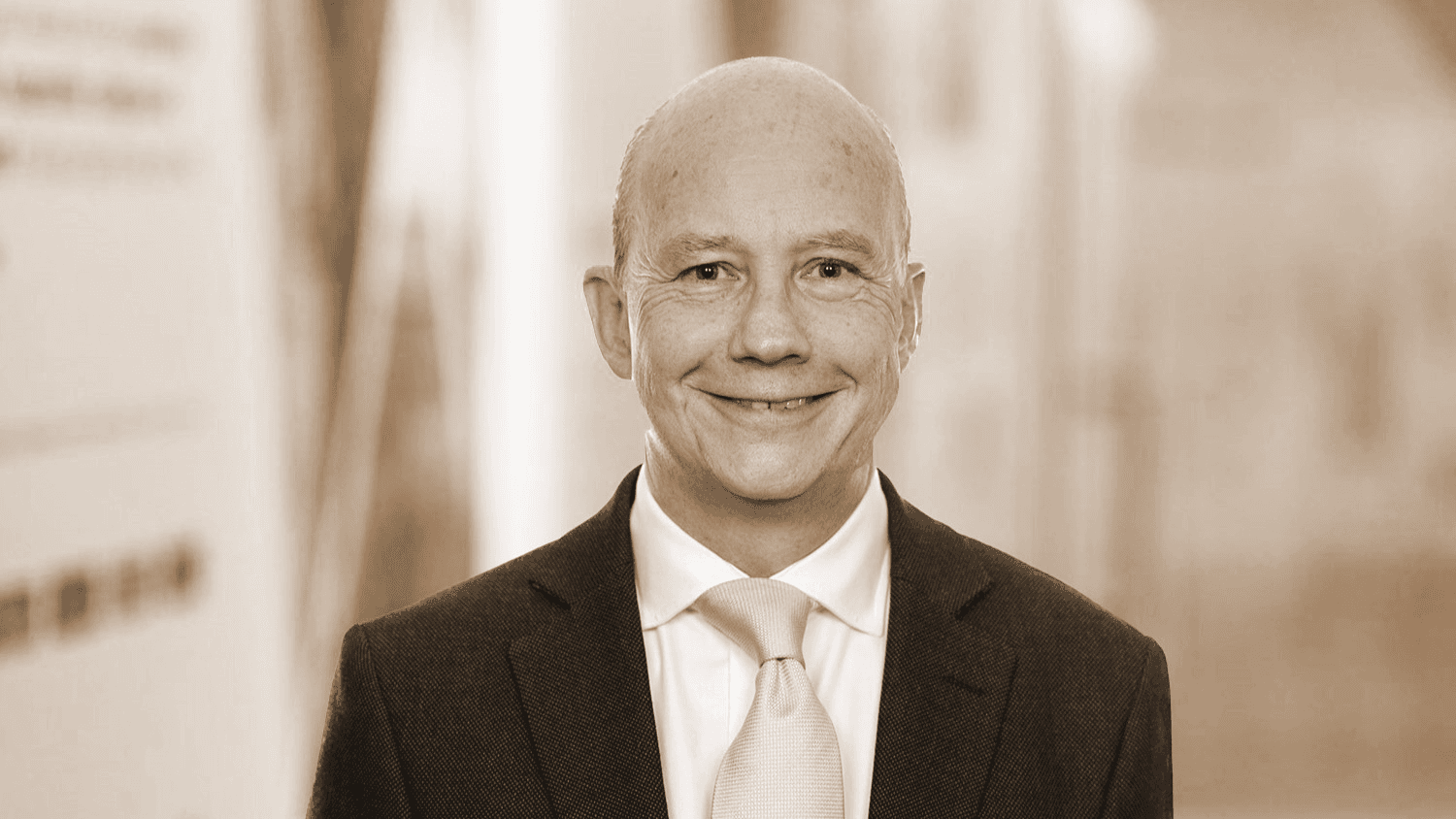


“If you had asked me that 18 months ago, I would have said asset managers will either need to be big and win at scale or small and do what they do really well,” says Fergus McCarthy. The question put is around the sort of businesses he sees emerging as the winners and losers of asset management over the next 10 years – and Aberdeen Investments’ recently promoted head of UK client group has evolved his answer.
“This might sound very obvious – but that does not mean everyone will get it right,” says McCarthy. “The firms that will be successful in this business going forward will be the ones building and delivering the solutions investors want. And so you want to be thinking about your strategy in terms of how you are going to pivot your business in that regard.
“Successful firms could therefore now be small, medium or large – but what they will all have in common is absolutely knowing, and being very good at, what they do. We talk about ourselves as being a ‘specialist asset manager’ at Aberdeen Investments – which in our equity division, for example, means focusing on our specific strengths we think people will need in portfolios, such as listed real assets and emerging market equities.”
In contrast, suggests McCarthy, asset managers who continue to try and be ‘one size fits all’ or ‘all things to all people’ will likely fail. “You need to become really comfortable with what you do, why you do it so well, what price you can charge for that – and then how you leverage it all into raising assets and winning business,” he adds. “Understand the part you play in building clients portfolios and then try and be very good at doing that.”
McCarthy joined Aberdeen as UK distribution director in mid-2019, moving up to be head of UK wholesale in late 2020 and onto his new role at the start of April. Before Aberdeen, he was head of UK and Ireland intermediary distribution at BNY Mellon for five years and, in a career close to spanning three decades, has also held sales and marketing roles at Investec, Martin Currie, Axa Investment Management and Jupiter.
Portfolio building blocks
So how would McCarthy’s evolved worldview characterise the relationship between asset managers, intermediaries and end-investors? “There is a reason it has become a truism the closer you are to the client, the more control you have over the price you receive from that client,” he replies.
“At the same time, where we have seen price reductions – in both the platform space and the asset management space – they are entirely as a result of the change in the wealth landscape, which has been driven by consolidation, a need for greater profitability and the increased regulatory and cost burden.
“From an IFA perspective, I introduce newcomers to the sector by saying, of the roughly 25,000 registered investment advisers, half work for some 50 firms – which all have their own centralised investment propositions – and the other half effectively outsource. In other words, they will be using a model portfolio service or a multi-asset fund of funds or whatever it might be.
“So if you are in the business of selling components or ‘building blocks’ to somebody who is building a portfolio, then you are entirely reliant, first, on the success of what you have in terms of capability – but you will also be dictated, to a degree, by the price fund selectors are willing to pay for that capability. If you are selling a solution, you have more control over that pricing point – albeit that pricing point is very competitive in the marketplace.” (Main article continues after box)
“Fundamentally, it is all about relationships: you build a relationship, you build trust; you build trust, you add value; you add value, you build your business.
Rapid response
Who or what has been the most important influence on your career?
The people I have got to know through the industry, who I would now absolutely consider friends rather than acquaintances or peers. What makes this such a brilliant industry to work in for so many is the people you get to meet through it. For me, this was particularly prevalent during my time at Martin Currie – so 2007 to 2012 – when a group of seven or eight of us were doing sales for different companies and it felt like we spent the summer running round the north of England and Scotland, presenting on equity markets and going to the races!
If you were not in investment, what job do you think you would be doing now?
Air traffic controller. First, it is not necessarily something AI can replace plus, there is apparently a dearth of air traffic controllers in the UK – so job security! But also that dynamic of being on the end of a microphone talking planes around the skies of the UK – I just think it would be so engaging and interesting.
What excites you about the current investment outlook? What worries you?
The answer to both questions is the amount of underinvestment in infrastructure in both developed and emerging markets. I worry we need more schools, more offices, more data-centres, more battery storage and so on. At the same time, there is such a huge opportunity for the private sector to fund infrastructure globally, I just cannot help but get excited about it – both for clients and investment managers. One of the things we can struggle with as an industry is highlighting to people that classic ‘see, feel, touch’ aspect of investment – and infrastructure does all of that.
If you were head of the FCA for a day, what would be your priority?
Financial education in schools – we are woeful at it. Having had two children, who are now 19 and 17, pass through the school system and who – rightly, up to a point – know more about the dangers of drugs than the benefits of financial services, that seems like a real failing. So I would effectively get onto the Treasury and the Department for Education and make sure financial education was embedded and well-taught in the curriculum.
Not unconnectedly then, how can wealth and asset managers best attract the next generation of talent?
You have to be where they are – so you have to get comfortable with being on TikTok, being on YouTube, doing videos. We live in a heavily regulated, compliant environment and so you have to think creatively about how you are going to be where they are and engage with them appropriately.
What advice would you have given your younger self on your first day in this business?
Take the emotion out of everything. At the risk of sounding like Michael Corleone, it is just business.
And how does McCarthy see this updated role as ‘purveyor of building blocks’ affecting the approach of fund distributors? “Part of it is to ask ourselves, How can we stay relevant to what people are building?” he says. “In the equity space, for example, what flavours of equity do they want in their portfolios? Is it active, passive, systematic or indeed enhanced indexes, which is certainly an area we are seeing a lot of traction.
“Similarly, in fixed income, it would be, What types of fixed income do you want? And do you want someone to do it all for you or to choose it yourself? And so on. At the same time, you need to be thinking about areas of specialism where you believe you have an edge which, for us, would be sectors such as emerging market equities, emerging market debt, commodities and listed infrastructure.
“These sorts of areas are what you might categorise as more difficult to cover through passive – or indeed ones where we believe we can demonstrably add value. These are all things we have to think hard about: the relatively small number of decision-makers; the components we have and where we can offer an edge; and where essentially, within portfolios, we might fit and do a job for advisers and their clients.”
Price and behaviour
Given price has become such a focal point for investors, both professional and private, what does McCarthy see as the practical implications of regulatory developments such as Consumer Duty and the Value for Money framework? “In this context, it is worth taking a step back to the Retail Distribution Review, which was probably the regulator’s first step in this particular ‘journey’,” he suggests.
“We can debate whether the FCA is a regulator of price or behaviour but what we can all agree on is the importance of delivering good outcomes for clients, with those outcomes being framed in the context of price – the price the client pays, that is, rather than the actual value the client is receiving. So, within that, we just have to be very cognisant of the price the client is prepared to pay.
“That considers what they pay for the advice, for their investment portfolio, for the platform – all of which puts downward pressure on price across the value chain. What we then have to think about, as asset managers, is twofold. First, How do we retain our existing book of assets at an appropriate level so we can at least have a conversation about how they are priced, value for money and delivering good outcomes for investors.
“Equally, as we consider new products, we have to think, What price should we launch these at? And then on the multi-asset side, if you have a index-led fund-of-funds range, say – as we do with MyFolio – where is your competitive edge in that? Ultimately, that comes down to price and your ability to do strategic asset allocation really well.”
When thinking about asset managers, what tends to be paramount for wealth managers and other fund selectors is the individual fund managers and the culture within the investment teams.”
Since McCarthy has just referenced Aberdeen’s MyFolio multi-asset range, it seems appropriate to ask what McCarthy believes makes for a good brand in asset management. “What tends to be paramount for wealth managers and other fund selectors is the individual fund managers and the culture within the investment teams,” he suggests.
“There might be a feeling – much like the old IBM analogy – that you do not get fired for recommending certain groups but, really, is that because of their brand or because of their product set and their performance? I think you can argue it either way in that space but, as you move into the retail investor landscape, brand becomes far more important.
“Clearly, there is now more information available to retail investors than there ever has been – YouTube, TikTok, Instagram, whatever it might be – but, even so, this level of research does not really allow them to look into the culture of an investment team per se. So they are still looking at a fund’s performance and whether it align to their interests, values and so on.”
By extension, then, McCarthy sees culture as “massively important” across the whole sphere of financial services. “Back in lockdown, I read Work Rules! by Google’s former head of HR, Laszlo Bock, and you can sum up the chapter on recruitment as, Hire the right people and build a structure for them to flourish and they will create the culture. Of course, that is not just true of investment teams but all other business areas too.”
Build trust, add value
It is not a huge leap from brand and culture to client communications, so what approach does McCarthy advocate here? “I never stop being surprised when clients tell me about asset management sales people effectively becoming invisible in periods of volatility,” he replies. “Equally, of course, others can have a tendency to overcommunicate.
“So the key here is to understand where you can add value through your communications – which starts by actually asking the client upfront at the start of the relationship, What do you value here? Fundamentally, it is all about relationships: you build a relationship, you build trust; you build trust, you add value; you add value, you build your business.
Is this one of the areas wealth and asset managers might make better use of technology in general and AI in particular? “Certainly, asset managers could use technology better at the front-end for client communication,” McCarthy agrees. “Historically, asset managers have not been great at building tech that allows clients to ‘self-serve’, which maybe stems from a historical fear they risk losing personal contact.
“Yet that level of reporting is available now so asset managers should be looking to leverage and use more technology here – for client portals, practical communications and so on – allowing people to come online to help themselves. If we are running a segregated mandate for a client, for example, they can now log on and see all the attribution in one place.
The UK has trillions of pounds just sitting in bank accounts – and losing money in real terms – and so we have to find a way of encouraging people to become more comfortable with investing.”
“As for AI, it will undoubtedly replace some jobs – and, where appropriate, it should do – but the winners in this space will be businesses that pair people and AI together to deliver the best outcome. If a human being can use or learn to use AI effectively, then obviously your ability to do more increases, which can give you a competitive edge over your peers.
“Take AI’s ability to assimilate lots of data very quickly and come up with summaries and reports and so on. The amount of time it could save a human, particularly as it relates to research, portfolio management, stock notes or whatever, could be, if not life-changing, at least ‘job-changing’.
“Equally, the sales side of asset management will need to be conversant in AI. I am not sure AI ever replaces the sales profession but, if it does allow clients to research funds more quickly, it raises a number questions. When the client does reach out to us, how do they do that – and how do we know about that? And, importantly, how do we then get that information into the hands of a salesperson, who can have a conversation with the client?”
Beyond savings
Concluding our look into the future of wealth and asset management in the UK, what does McCarthy see as the best and worst-case scenarios for the space? “Worst case, we continue to be a nation of savers,” he says simply. “What I mean by that is, the UK has trillions of pounds just sitting in bank accounts – and losing money in real terms – and so we have to find a way of encouraging people to become more comfortable with investing.
“Here, the FCA’s upcoming changes to the PRIIPs and KIDs regulation should be a great opportunity for the industry to think about how they engage with people more broadly and constructively around investing. The fact the government is launching a campaign trying to get people to invest more is very positive in itself – personally, I am looking forward to seeing the ‘Tell Sid’ version of how and why you should be investing!
“So the best-case becomes, if more people just invested, as an industry we can potentially deliver better outcomes in the accumulation phase of their life and thus their retirement. At the same time if the Treasury gets it right and that wall of money sitting on deposit heads into UK PLC, that has to be a good thing for all of us. We are an ageing population and most people do not have the comfort blanket of a DB scheme.
“And, of course, financial advisers and wealth managers should have a massive role to play in all this. I was going to say ‘we are in the foothills’ but we have not even reached the foothills of that income-retirement-decumulation journey. So, what looks good in the future is we see less money languishing on deposit, more people moving into investments and more people taking advice around the retirement phase of their life.
“Incidentally, the reason we are seeing all the consolidation among financial advice firms and US private equity now getting involved is precisely because people recognise this as a huge opportunity. They see this as entirely natural – Look, there is this wave of people retiring who will not have that DB comfort blanket, perhaps will not be able to look to their property to provide their pension and so will need that advice.
“And asset managers have a very important part to play here too – both in helping people accumulate wealth and then helping them decumulate it. If we do help more people become comfortable with investing some of their savings and see more people naturally needing advice as they approach retirement, that should all lead to quite a healthy picture for asset management in the UK.”
Genuine diversifiers
“When BlackRock boss Larry Fink talks, as he does so eloquently, about the opportunity in infrastructure, it is quite difficult ignore,” observes Fergus McCarthy immediately, when asked to what degree investors and, by extension, their advisers should be considering exposure to alternative investments. “When we think about private markets or alternatives, there are two elements at work,” he continues.
“You have a convergence of what the Treasury wants to do and therefore what the regulator wants to encourage – and then you have the question of how the assets end up in client portfolios. At Aberdeen, we consider the private markets piece comprises four broad categories: private equity, private credit, infrastructure and real estate – and our main focus is on the last two, the ‘real assets’.
“Given what I said about the aims of the Treasury and the regulator, though, there is a very clear mismatch on liquidity and so where we have landed is that private markets, in their current format, are not necessarily for retail investors. Could they be in the future? Yes – but it is probably going to need tokenisation for private assets to be able to be included directly in retail investors’ own portfolios.
“For wealth managers and institutions, however – particularly those running discretionary or fund-of-funds programmes – we believe private markets can meet the challenge of being genuine portfolio diversifiers. And all at a time when there is a sense of real government and regulatory intent – as illustrated by initiatives such as the Mansion House and Leeds reforms and calls for pension funds to up their allocations to private assets.
“So we think there is a real opportunity for wealth and asset managers – particularly, in our case, as it relates to infrastructure and real estate as core asset classes. Furthermore, while the aim of private equity and private credit is arguably just to create more money, investing in infrastructure and real estate has a big societal impact on top of the potential to deliver a great outcome for investors – and that sits very comfortably with us.”
Not to pass up the obvious segue – how does McCarthy see the evolution of ESG in asset management? “On ESG specifically, we need to stop talking about it as an outcome,” he replies. “ESG is an input – and should be an input in every investment process. If your fund manager is not now factoring environmental, societal and governance considerations into how they invest then, frankly, you should not be entrusting your money to them!
“All managers should be able to talk about, and evidence, how ESG fits into their process, which means the conversation now is more about sustainable investing and asset managers thinking, OK, can we have a more sustainable, more societal impact – and demonstrably so – in terms of the companies we invest in through, for example, climate funds. At which point, are we in the realms of thematic investing?
“Well, maybe – and maybe we should be talking about sustainable investing, or indeed climate investing, as a thematic pillar, as we might with AI or infrastructure or data-centres. Everybody has their own individual idea of exactly what constitutes ‘ESG’ – and if people do want to express a specific, sustainable characteristic then, as I said at the start, we should look to build a portfolio accordingly that allows them to do so.”