
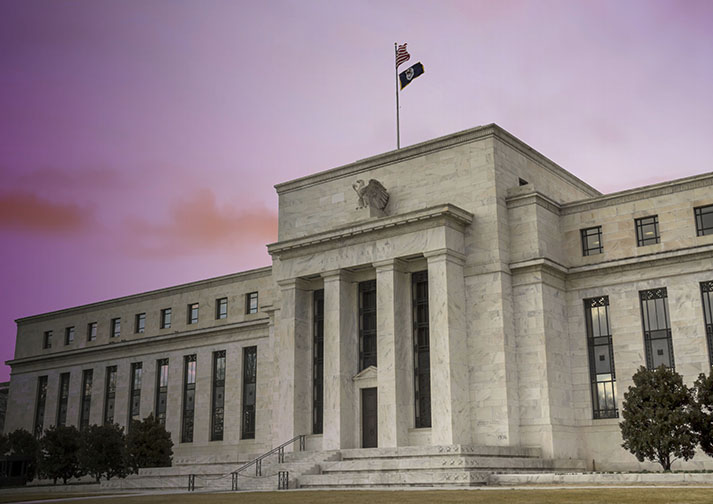
On 30 January, after a lengthy process, the Trump administration finally announced its intention to nominate Kevin Warsh for the role of chair of the US central bank, the Federal Reserve. That nomination will now need to be confirmed by the Senate.
Much has already been written about what Warsh may or may not think. Our view – given Warsh himself has made very few public comments on monetary policy in recent times – is that some of the initial assumptions may prove incorrect and there is likely to be more nuance to his thinking.
That said, until we receive a clearer steer from Warsh on how he views the current stance of US monetary policy, we would view the following factors as the most relevant for the positioning of fixed income portfolios.
What we need versus what we may get
The need for further easing in the US economy is limited. Growth is healthy and downside risks to the labour market, which were visible in the second half of 2025, are now diminishing.
Nonetheless, what the economy needs and what policymakers deliver are not necessarily the same. Though Warsh has shown himself to be independent-minded, it seems unlikely the role would be given to anyone who did not make a compelling case in interviews for why policy rates could be lowered further. We believe the current administration would like rates to move towards 3%.
Warsh is far less likely than some alternative candidates to desire aggressive rate cuts far below what is needed. Simultaneously, though, as an astute political operator with prior experience of how the Fed functions, he does appear better able to deliver moderate further easing than some of his rivals.
Changing the longer-term Fed architecture
Warsh’s views on balance sheet policy look to be more nuanced than the early market narrative. Immediately following the news of his nomination, yields of long-dated bonds climbed amid an assumption Warsh would plan to shrink the Fed’s balance sheet.
Although he is likely to favour a smaller and cleaner balance sheet over time, this is more of a long-term objective and we highly doubt it would be implemented in a way that seriously disrupts the US treasury market. After all, why would he do that?
Instead, his caution towards balance sheet policy seems likelier to reflect a longer-term desire both to move away from quantitative easing, if and when further monetary stimulus is required (not, in our view, on the near-term horizon); and to coordinate more closely with the US Treasury to ensure policy is better-aligned.
While that latter desire would raise concerns around ‘fiscal dominance’ of the central bank, we are not instinctively opposed to a more holistic approach to policymaking across government functions – indeed, it could help it function better.
As an example, if in the longer term the Fed was to allow its longer-maturity US treasury holdings to wind down – but with regulatory changes creating offsetting increases in demand for these assets – this is not necessarily a bad policy.
Could there be changes to the Fed’s policy framework?
We will be watching closely for any changes Warsh may propose to the Fed’s monetary policy framework – particularly with respect to the labour market. This is crucial for bond investors. Congress mandates the Fed’s objectives of “stable prices and full employment” but it is the Fed itself that interprets them – for instance, by defining “stable prices” as 2% inflation.
To maintain a dovish tilt while retaining credibility, one could argue that “maximum employment” implies a lower unemployment rate than the Fed’s current “natural rate” estimate of 4.2%. All else being equal, a lower assumed natural unemployment estimate would call for lower policy rates.
Potential justifications for this include the structural change of AI adoption or the 2018 example of unemployment below 4% with very muted wage pressures. We await further evidence Warsh is thinking this way but some of his comments on AI and productivity as disinflationary forces hint at it.
What does this all mean for portfolios?
This, of course, is the important bit. We retain a moderately bearish view on US duration – that is, interest rate risk – reflecting a still strong growth outlook, signs of stabilisation in the labour market and fiscal support feeding through to the economy in 2026.
Given we expect Warsh both to want and to be able to deliver further rate cuts, however, we believe the scale of any sell-off is likely to be limited. We would turn more constructive on US duration if markets were pricing one cut or fewer for the remainder of 2026, but we are not there yet.
We see the long end of the bond market as remaining vulnerable to fiscal indiscipline – but yields have risen there since the Warsh announcement, as markets have extrapolated his historical balance-sheet views into future policy as weighing on long-end demand.
Again, we are not there yet but, if this dynamic continues, it will provide attractive opportunities – 30-year yields above 5% would make valuations much more compelling.
James Bilson is fixed income strategist, global unconstrained fixed income at Schroders
“Given Warsh himself has made very few public comments on monetary policy in recent times, some initial assumptions may prove incorrect and there is likely to be more nuance to his thinking.